Cuandixia Village
Seventy Ming and Qing courtyard houses terraced up a hillside in Beijing's western mountains, largely unaltered.
Updated 19 October 2026
AI illustration
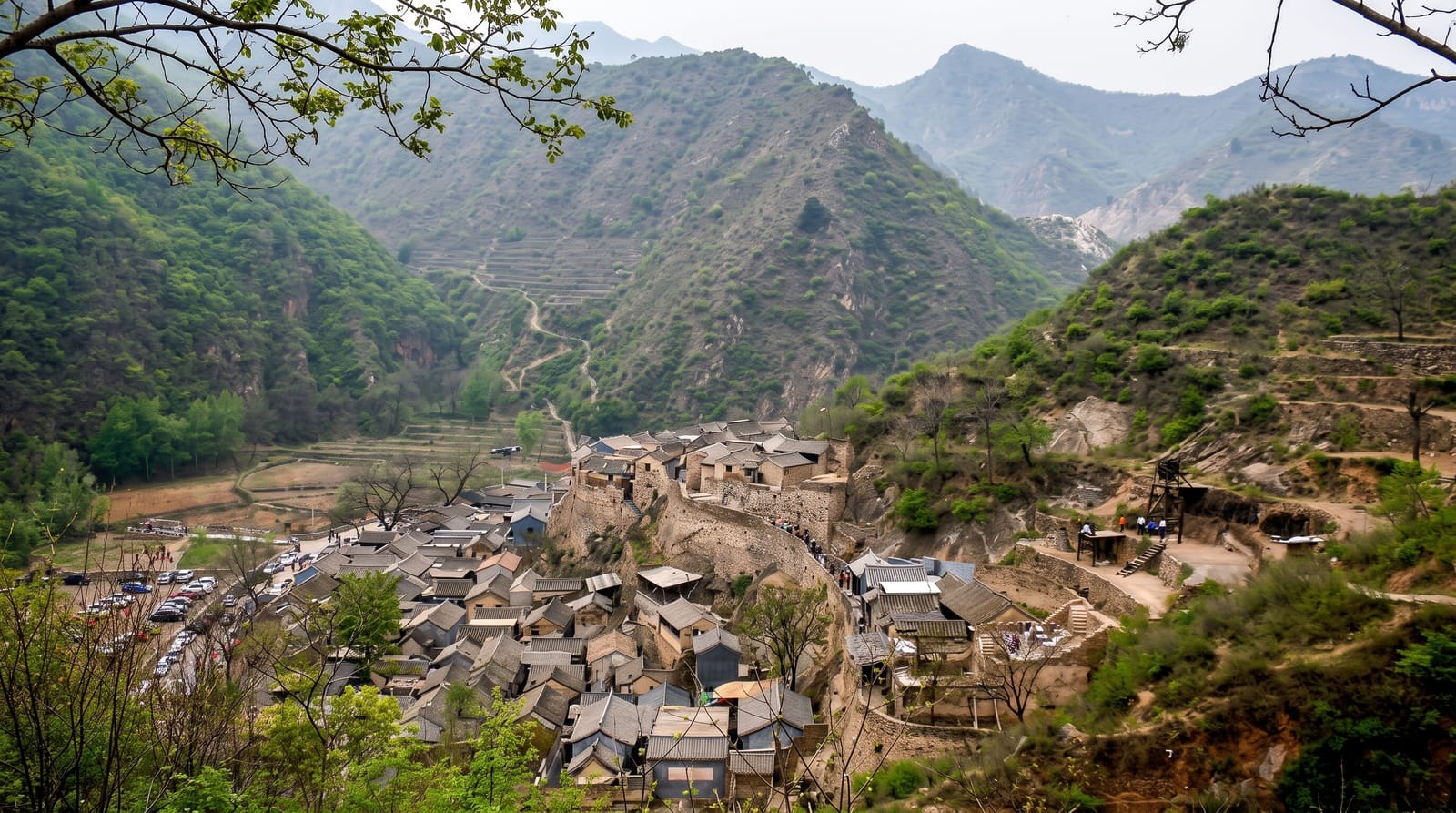
Cuandixia was founded in the Ming dynasty on the old trade route west from Beijing, and because the route declined and the village was too remote to modernise, around seventy courtyard houses from the Ming and Qing periods survive terraced up a steep hillside in grey brick and stone, with carved gate piers, screen walls and slogans painted during the twentieth century still on the walls. Around thirty families remain, many running simple guesthouses and serving local food, and the village has become a weekend destination for Beijingers and a location for period films. A path climbs above the village for the view down over the stacked roofs.
History
Cuandixia was founded in the Ming dynasty by members of the Han clan who moved here from Shanxi Province, and towards the end of the Qing dynasty the village prospered on trade in coal, fur and grain (Wikipedia, Cuandixia).
What you'll find
- The terraced courtyards - seventy Ming and Qing houses stacked up the slope.
- The carved details - gate piers, screen walls and window lattices.
- The painted slogans - twentieth-century political slogans left on walls.
- The viewpoint - the path above showing the village's layered roofs.
When to go
April to May and September to October; autumn colour in the hills is strong in late October. Winter is cold and many guesthouses close. Weekends bring crowds from Beijing, and weekdays are far quieter.
Before you go
The journey takes two to three hours each way from central Beijing on winding mountain roads. Accommodation is basic guesthouse rooms in old houses, often with shared facilities and limited heating. The village is small and can be walked in an hour.
Nearby
Tanzhe Temple lies back toward the city; the Western Hills surround the village.
Key facts
Source: Wikidata, item Q954362, read on 18 October 2026.
What to pack for Cuandixia Village
Chosen from what this place is for. Tap a kit for the full checklist.
- Comfortable walking shoes - Sightseeing means kilometres of pavement and cobbles daily. Find on Amazon
- Modest clothing - Shoulders and knees covered - the single most common requirement. Find on Amazon
- A slim anti-theft daypack - Zips that close properly; keep it in front in crowds and on transit. Find on Amazon
- A scarf or shawl - To cover the head or shoulders on entry; women especially at mosques. Find on Amazon
Some links on this page are Amazon affiliate links - if you buy through them we may earn a small commission at no extra cost to you.
All packing kitsPlan your trip
Where to start if Cuandixia Village is going on the list.
Booking links on this page are affiliate links - if you book through them we may earn a small commission at no extra cost to you. It never changes what we write about a place.
Opening times, ticket prices and seasonal closures change - check the official source before you go: official site.