The East End Blowholes
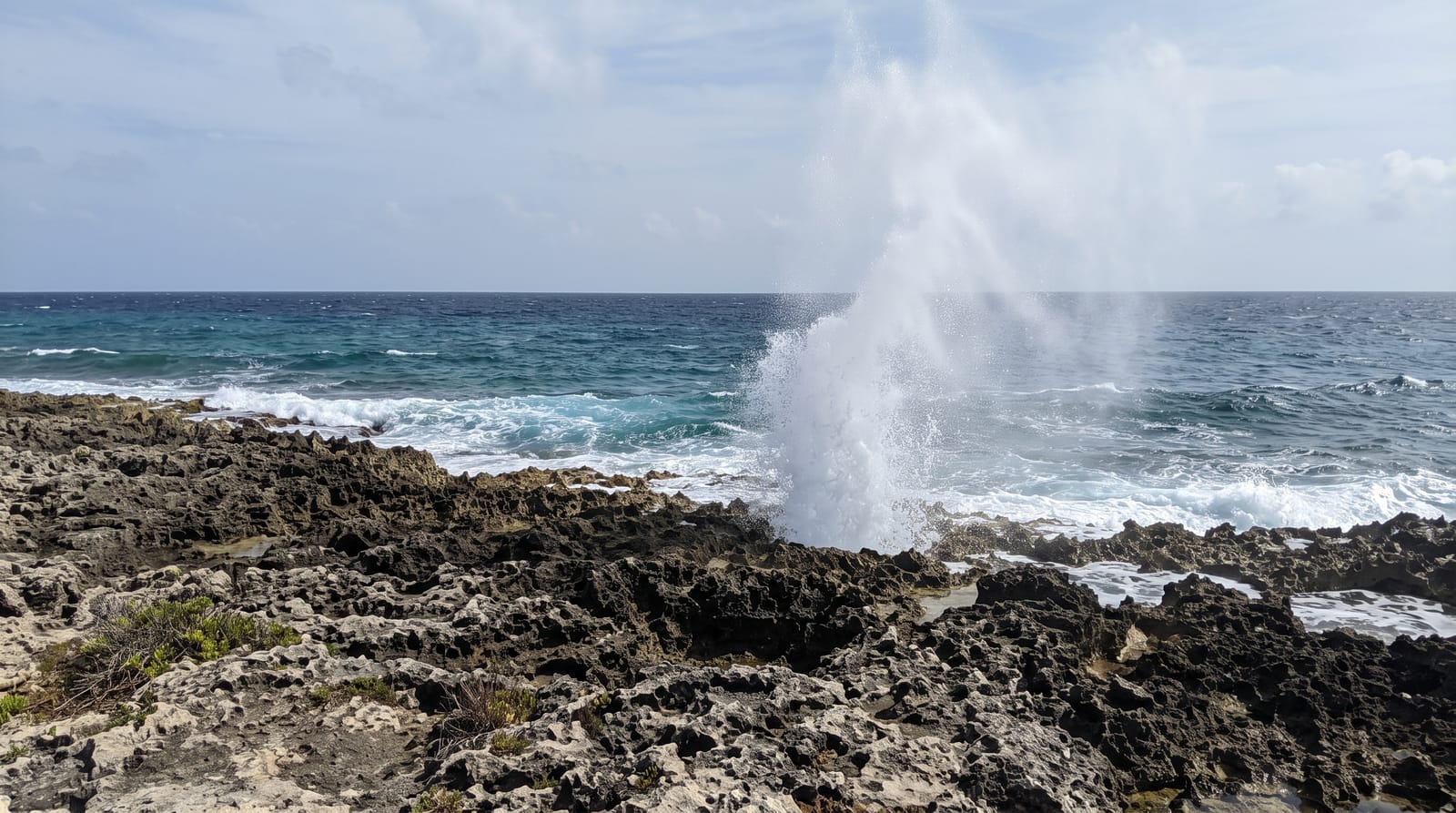
Ironshore on the windward coast where the swell forces up through holes in the rock and throws spray across the road.
Updated 3 September 2026
AI illustration
The eastern end of Grand Cayman takes the trade winds and the Caribbean swell full on, and the shoreline there is ironshore, ancient reef rock eaten into a black honeycomb of spikes, ledges and holes. Where the sea has undercut it and found a vent, the swell drives water up through the rock in spouts several metres high, with a boom and a rush of spray. The best of them are on a short stretch of the coast road where there is a pull-off and a set of steps. It works best when the wind is up, which is exactly when the rock is most dangerous to be on.
Highlights
- The spouts - swell forced up through vents in the ironshore.
- The ironshore - black honeycombed reef rock along the coast.
- The windward coast - open Caribbean and constant trade wind.
- The nearby wreck of the Ten Sail memorial - along the same coast.
When to go
November to March brings the biggest swell and the most dramatic spouts; in flat summer conditions they barely work. Any time of day; the light is best in the morning with the sun behind you.
Practical notes
Ironshore is razor sharp and slippery when wet, and it cuts badly; wear proper shoes and do not go near the edge when the sea is up, which is precisely when people are tempted. The spray reaches the road. On a calm day there is very little to see. There are no facilities.
Nearby
The Wreck of the Ten Sail memorial is nearby; Rum Point is across the island.
What to pack for The East End Blowholes
Chosen from what this place is for. Tap a kit for the full checklist.
- Broken-in walking shoes or boots - Grip and ankle support matter more than looks; never hike in brand-new boots. Find on Amazon
- Spare batteries + cards - Cold and long shoots drain power; never run out at the good light. Find on Amazon
- Layers + a waterproof shell - Mountain weather turns fast; a packable rain jacket saves the day. Find on Amazon
- A compact tripod - Essential for night skies, aurora, waterfalls and low light. Find on Amazon
Some links on this page are Amazon affiliate links - if you buy through them we may earn a small commission at no extra cost to you.
All packing kitsPlan your trip
Where to start if The East End Blowholes is going on the list.
Booking links on this page are affiliate links - if you book through them we may earn a small commission at no extra cost to you. It never changes what we write about a place.
Opening times, ticket prices and seasonal closures change - check the official source before you go: official site.