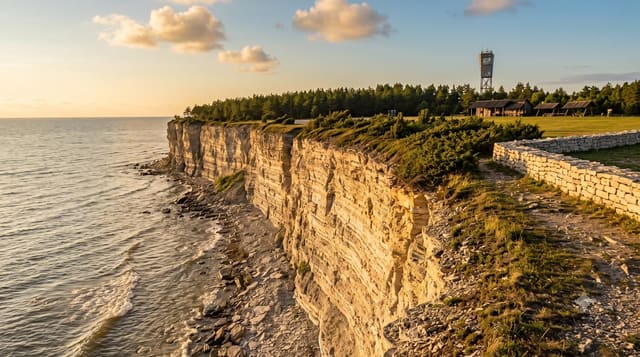
Cliffs of Moher
Ireland's most famous sea cliffs - a two-hundred-metre wall of dark rock rising sheer from the Atlantic on the coast of County Clare.
Updated 18 October 2026
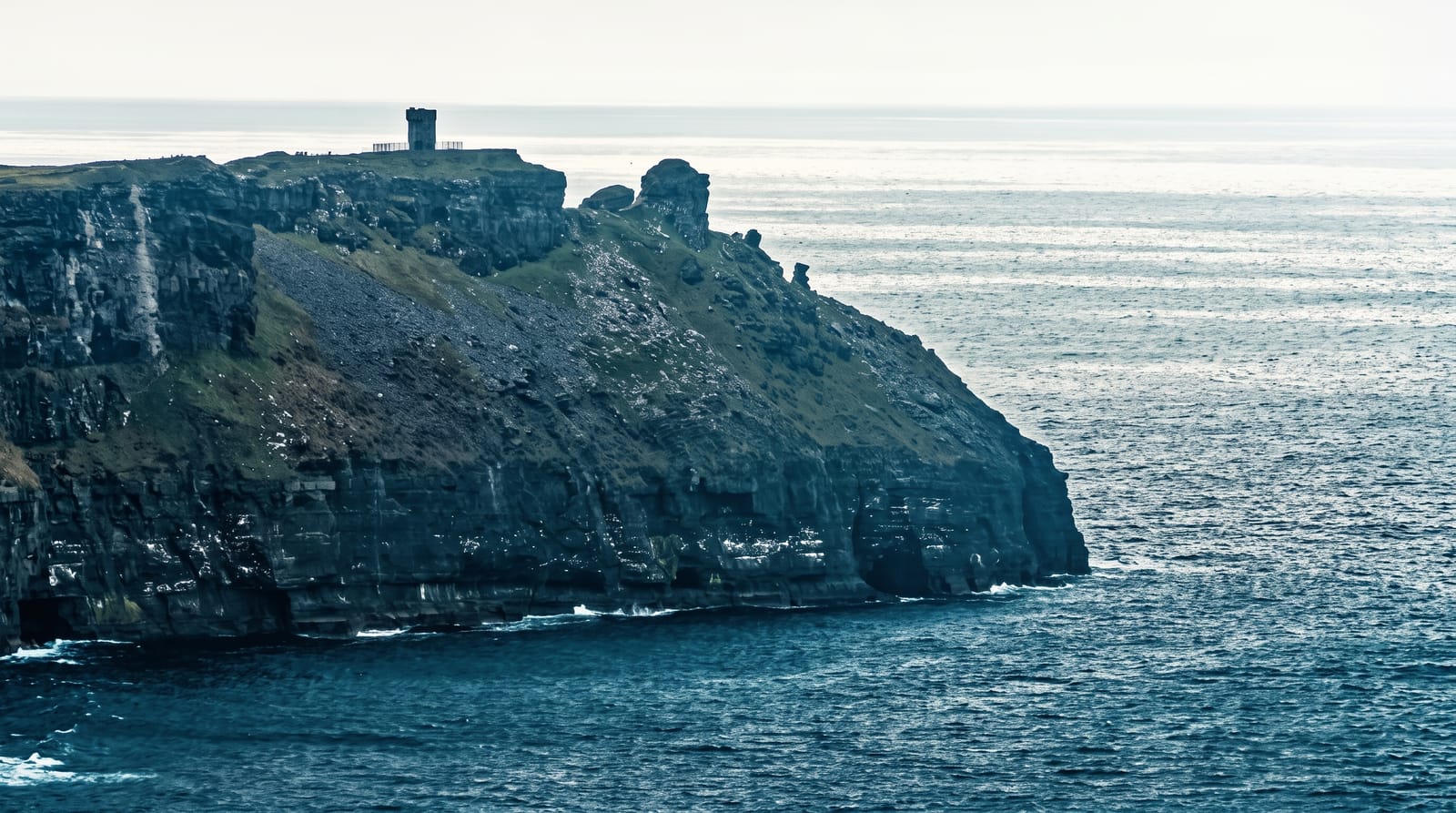
AI illustration
The Cliffs of Moher rise sheer from the Atlantic along the coast of County Clare, a dark wall of rock stretching eight kilometres and reaching over two hundred metres at their highest. Battered by waves and wheeling with seabirds, crowned by O'Brien's Tower, they are the most famous cliffs in Ireland and a highlight of the Wild Atlantic Way.
Highlights
- The cliff-edge path - the walkway along the top with the Atlantic far below.
- O'Brien's Tower - the old viewing tower near the highest point.
- Seabirds - the puffins, guillemots and other seabirds nesting on the cliffs in summer.
- The wider coast - the views to the Aran Islands and Galway Bay on a clear day.
When to go
Late spring to early autumn for the mildest weather, seabirds and clearest views; the cliffs are dramatic in any weather, and storms are spectacular but wild. Early or late avoids the coach crowds.
Things to know
It is extremely popular, so the visitor centre and paths are busy in season. The unfenced cliff edges are genuinely dangerous, especially in wind, so keep to the path and behind barriers. On 1 August 2026 the official site listed the southern section of the coastal walk, from Liscannor to the visitor centre, as fully closed for safety; from the north the walk was open from Doolin only as far as Surfers Path, and an 800-metre stretch north of O'Brien's Tower had reopened. Check the current status before planning the longer cliff walk. Fog and rain often hide the view, so a clear day is a bonus.
Nearby
The Burren limestone landscape is inland; Doolin village and the Aran Islands ferries are close.
Key facts
Source: Wikidata, item Q239477, read on 18 October 2026.
What to pack for Cliffs of Moher
Chosen from what this place is for. Tap a kit for the full checklist.
- Broken-in walking shoes or boots - Grip and ankle support matter more than looks; never hike in brand-new boots. Find on Amazon
- Quick-dry clothing - Board shorts or synthetics that shrug off spray and dry fast. Find on Amazon
- Spare batteries + cards - Cold and long shoots drain power; never run out at the good light. Find on Amazon
- Layers + a waterproof shell - Mountain weather turns fast; a packable rain jacket saves the day. Find on Amazon
Some links on this page are Amazon affiliate links - if you buy through them we may earn a small commission at no extra cost to you.
All packing kitsPlan your trip
Where to start if Cliffs of Moher is going on the list.
Booking links on this page are affiliate links - if you book through them we may earn a small commission at no extra cost to you. It never changes what we write about a place.
Opening times, ticket prices and seasonal closures change - check the official source before you go: official site.