Mingan Archipelago
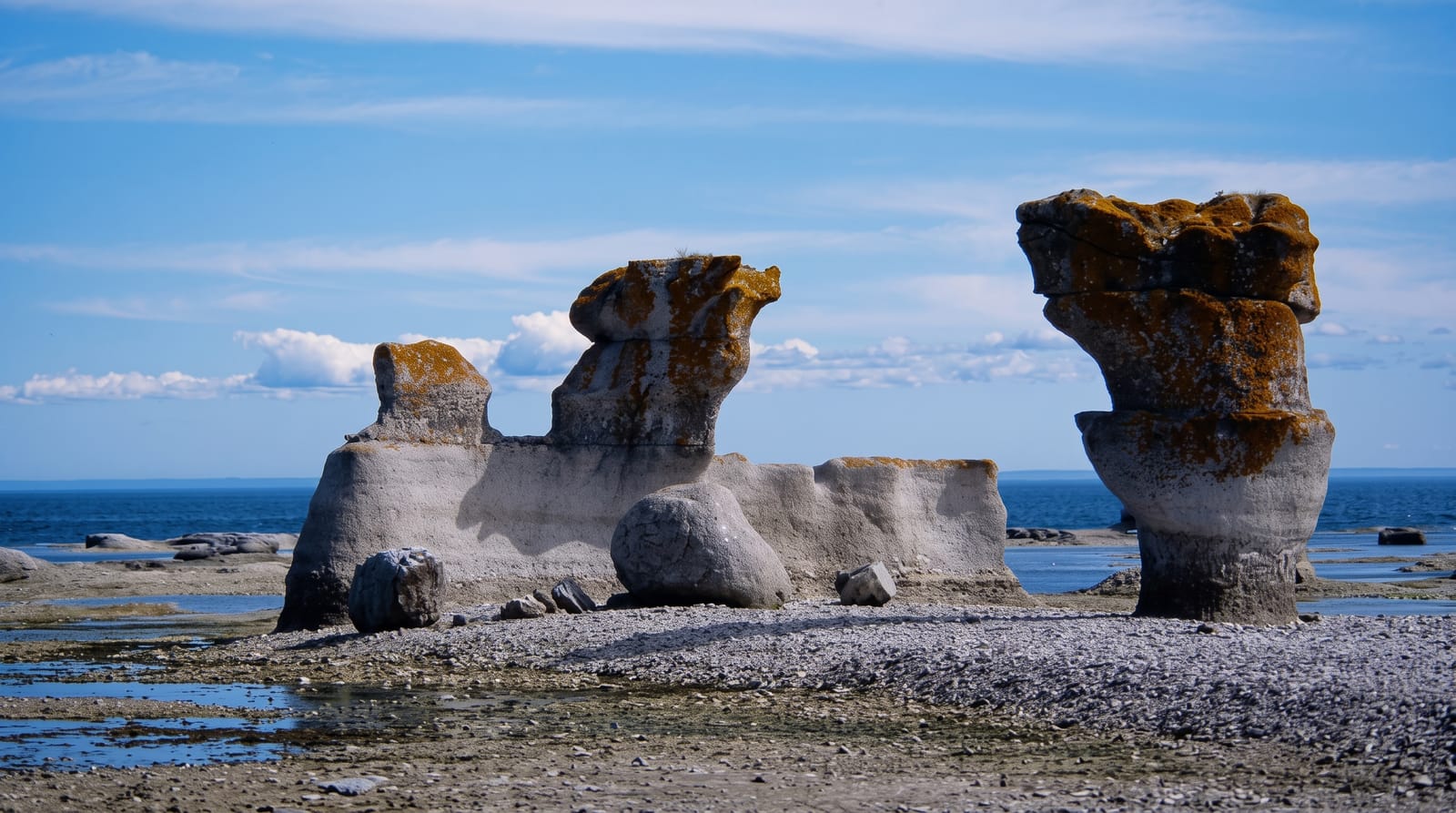
Limestone monoliths shaped like figures and mushrooms, standing on the shores of a long chain of islands.
Updated 21 October 2026
AI illustration
A thousand or more islands and islets run along over a hundred and fifty kilometres of the Côte-Nord, and their distinction is the monoliths: limestone stacks eroded by sea, ice and frost into shapes that read as figures, mushrooms and flowerpots, some over ten metres, standing on the beaches. They are the largest concentration of such formations in Canada. The limestone also holds fossils around four hundred and fifty million years old. Puffins nest here at one of their most southerly colonies in eastern North America, and the islands hold a surprising alpine and arctic flora on their exposed limestone barrens.
What you'll find
- The monoliths - eroded limestone stacks in figure and mushroom shapes.
- The fossils - marine fossils about 450 million years old in the rock.
- The puffin colony - a southerly Atlantic puffin breeding site.
- The limestone barrens - arctic and alpine plants growing at sea level.
When to go
June to September; boats run only in that window and cancel in fog and swell, both frequent here. Puffins are present from about May to August. Winter access is nil.
Good to know
Boat trips are weather-dependent and fog cancels many. There are no services on most islands and camping is basic. Route 138 to get here is a very long drive.
Nearby
Anticosti lies offshore; Havre-Saint-Pierre is the main port.
Key facts
Source: Wikidata, item Q6864692, read on 18 October 2026.
What to pack for Mingan Archipelago
Chosen from what this place is for. Tap a kit for the full checklist.
- Broken-in walking shoes or boots - Grip and ankle support matter more than looks; never hike in brand-new boots. Find on Amazon
- Reef-safe sunscreen - High SPF that will not bleach the coral you are swimming over. Find on Amazon
- Warm base layers - Merino or synthetic against the skin - never cotton, which chills when damp. Find on Amazon
- Shelter suited to the place - Tent, tarp or hut booking - match it to the terrain and rules. Find on Amazon
Some links on this page are Amazon affiliate links - if you buy through them we may earn a small commission at no extra cost to you.
All packing kitsPlan your trip
Where to start if Mingan Archipelago is going on the list.
Booking links on this page are affiliate links - if you book through them we may earn a small commission at no extra cost to you. It never changes what we write about a place.
Opening times, ticket prices and seasonal closures change - check the official source before you go: official site.