Fort Steele
A gold rush town that died when the railway went elsewhere, rebuilt as a working 1890s settlement.
Updated 4 September 2026
AI illustration
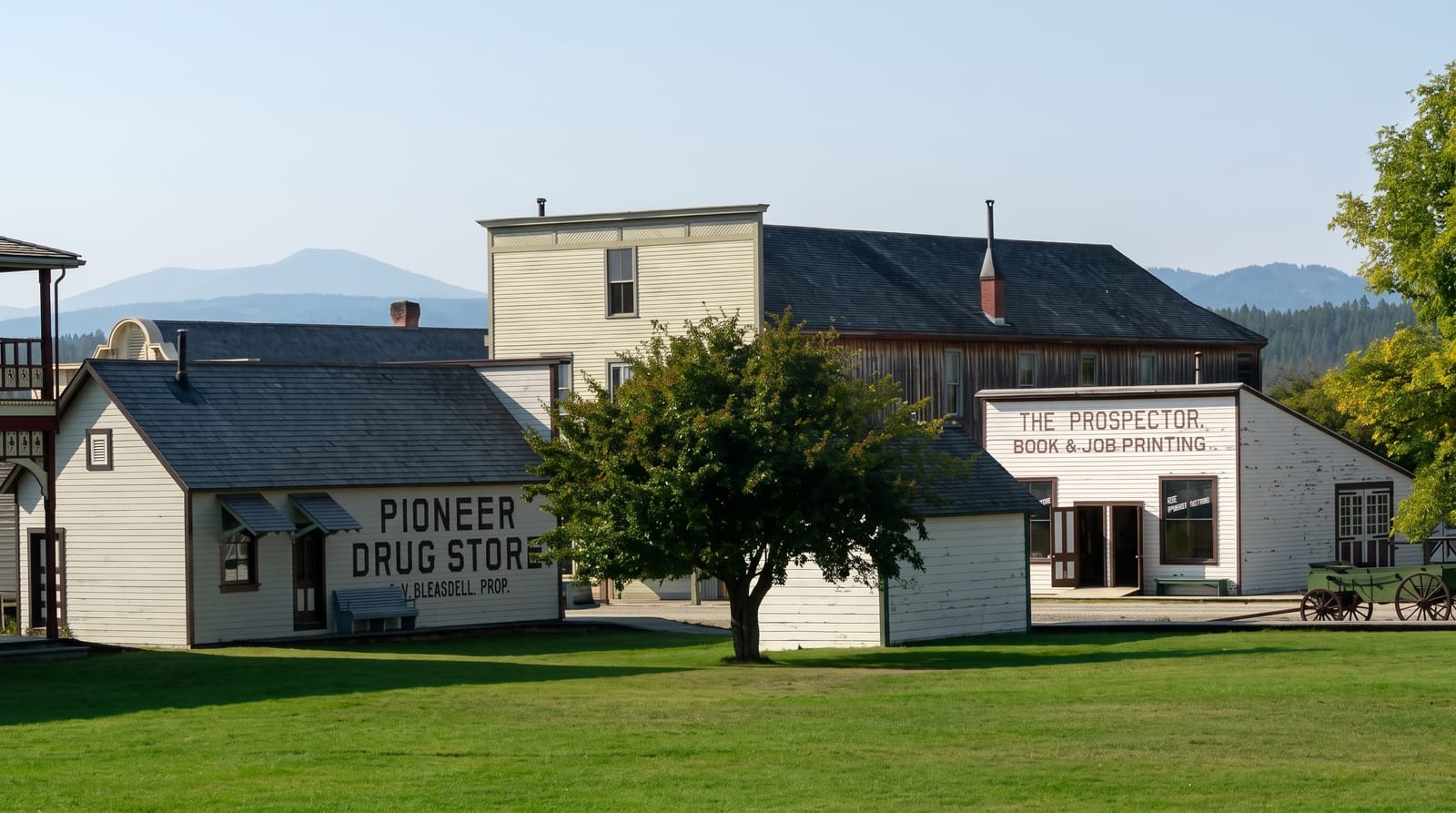
Fort Steele grew from an 1864 gold rush on Wild Horse Creek and was named for Sam Steele, the North-West Mounted Police superintendent who defused a confrontation between settlers and the Ktunaxa in 1887 without a shot. The town expected the Crowsnest railway and did not get it; the line went to Cranbrook in 1898 and Fort Steele emptied within years. It was made a heritage town in 1961 and now has over sixty buildings, some original and some moved in, with costumed staff working a bakery, blacksmith, print shop and dry goods store, a steam locomotive running in season and horse-drawn wagons.
Highlights
- The 1890s streets - over sixty buildings with costumed staff at work.
- The steam train - a locomotive running a short line on the site.
- The working trades - bakery, blacksmith, printer and general store.
- The Ktunaxa and NWMP story - the 1887 standoff settled without violence.
When to go
May to September for full operation with staff, animals and the train; the site opens with reduced programming in shoulder seasons and largely closes in winter apart from Christmas events.
Practical notes
Outside summer most buildings are shut and there are no staff, which makes the ticket poor value. The site is large and involves a lot of walking on gravel. The steam train runs limited times.
Nearby
Kimberley lies northwest; Cranbrook is south.
Key facts
Source: Wikidata, item Q5472101, read on 18 October 2026.
What to pack for Fort Steele
Chosen from what this place is for. Tap a kit for the full checklist.
- Comfortable walking shoes - Sightseeing means kilometres of pavement and cobbles daily. Find on Amazon
- A slim anti-theft daypack - Zips that close properly; keep it in front in crowds and on transit. Find on Amazon
- A refillable water bottle - Many cities have public fountains; save money and plastic. Find on Amazon
- A light layer + compact umbrella - For museum air-con and a sudden shower. Find on Amazon
Some links on this page are Amazon affiliate links - if you buy through them we may earn a small commission at no extra cost to you.
All packing kitsPlan your trip
Where to start if Fort Steele is going on the list.
Booking links on this page are affiliate links - if you book through them we may earn a small commission at no extra cost to you. It never changes what we write about a place.
Opening times, ticket prices and seasonal closures change - check the official source before you go: official site.