The Cardamom Mountains
One of Southeast Asia's largest remaining rainforest blocks, now the base for community-run river camps and elephant tracking.
Updated 19 October 2026
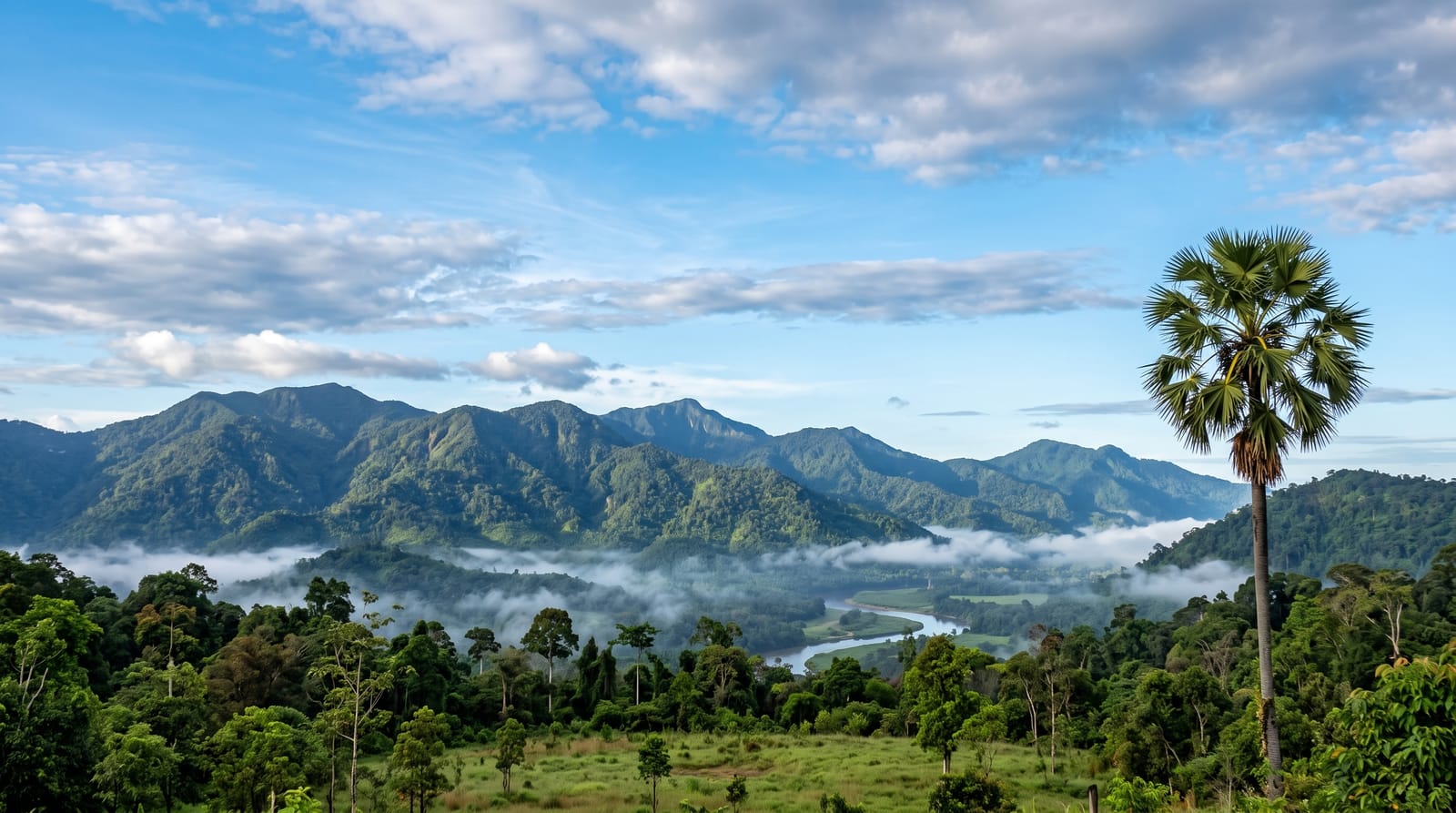
AI illustration
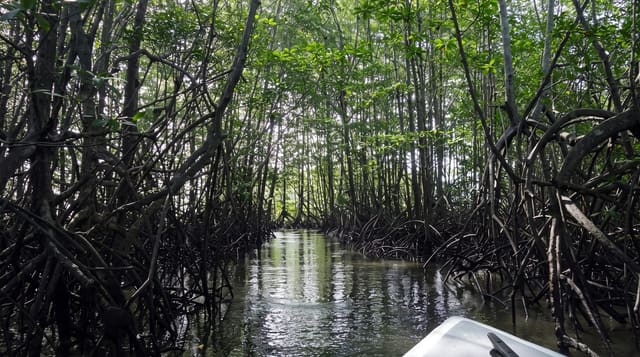
The Cardamoms cover a large stretch of southwest Cambodia in rainforest, mangrove and river systems, and they hold Asian elephants, gibbons, sun bears, clouded leopards and one of the region's last populations of Siamese crocodile. For a long time the story here was logging, poaching and wildlife trafficking. What has changed is the arrival of community-based ecotourism, most visibly at Chi Phat, a village reached by boat where former loggers and hunters now work as guides, boatmen and homestay hosts, and where the income is explicitly tied to leaving the forest standing. Visitors trek to waterfalls and burial jar sites, kayak the river, cycle forest tracks and sleep in hammocks at jungle camps.
History
The mountains hold many sites of the 15th to 17th centuries, above all jar burials, a practice not otherwise recorded in Khmer history: ceramic jars about 60 centimetres tall and rough log coffins set on remote rock ledges, with glass beads probably traded for forest products such as wood and resin, and local legend calls the bones royal. In the Kanam cave near Kravanh, red ochre paintings show elephants with riders, deer and wild cattle, likely tied to the capture and training of wild elephants, a tradition that lasted among the peoples here until the 1970s (Wikipedia, Cardamom Mountains).
Highlights
- Chi Phat community project - homestays, guided treks and river trips run by the village.
- Jungle hammock camps - overnight stays deep in the forest with local guides.
- The burial jar sites - mysterious highland jar and coffin sites in the mountains.
- River kayaking and mangrove trips - paddling the Preak Piphot and coastal mangrove channels.
When to go
November to April, the dry season, when tracks are passable and the rivers are safe. From June to October rain makes trekking and river travel difficult, and some camps close.
What to expect
This is basic travel: hammocks, cold water, long humid walks and leeches, with genuinely rough roads to reach the trailheads. Wildlife sightings are uncommon; the appeal is the forest, not a safari. Check that any project you book is genuinely community-run, since the label gets attached loosely, and be wary of anything offering close elephant contact.
Nearby
Koh Kong and the coast lie west; Sihanoukville and the southern islands are along the coast.
Key facts
Source: Wikidata, item Q1089661, read on 18 October 2026.
What to pack for The Cardamom Mountains
Chosen from what this place is for. Tap a kit for the full checklist.
- Broken-in walking shoes or boots - Grip and ankle support matter more than looks; never hike in brand-new boots. Find on Amazon
- Quick-dry clothing - Board shorts or synthetics that shrug off spray and dry fast. Find on Amazon
- Head torch + spare batteries - Hands-free light is essential; caves are truly dark. Find on Amazon
- Binoculars - The single best wildlife tool - even a compact pair transforms a sighting. Find on Amazon
Some links on this page are Amazon affiliate links - if you buy through them we may earn a small commission at no extra cost to you.
All packing kitsPlan your trip
Where to start if The Cardamom Mountains is going on the list.
Booking links on this page are affiliate links - if you book through them we may earn a small commission at no extra cost to you. It never changes what we write about a place.
Opening times, ticket prices and seasonal closures change - check the official source before you go: official site.