The Salina Reserve
Interior dry forest and wetland on Grand Cayman where the blue iguana was brought back from the edge of extinction.
Updated 3 September 2026

AI illustration
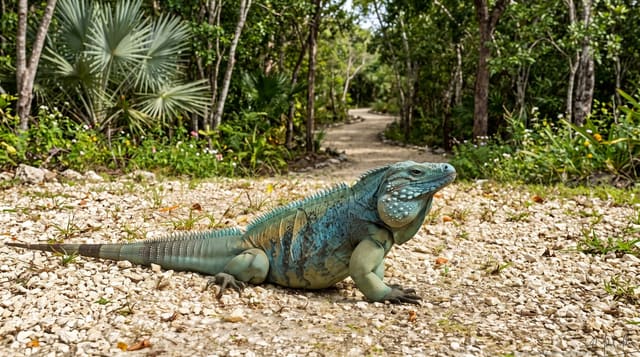
The blue iguana lives only on Grand Cayman, and by 2002 a survey found fewer than twenty-five left in the wild, which made it one of the most endangered lizards on earth. A recovery programme run from the botanic park has since bred and released well over a thousand, and the Salina Reserve, a block of dry shrubland and seasonal wetland in the island's interior, was one of the main release sites. It is not set up for casual visitors: the terrain is rough karst, there are no trails to speak of, and access is by arrangement. The programme's visitor side runs at the botanic park instead.
What's there
- The blue iguana recovery - one of the more successful reptile programmes anywhere.
- The dry shrubland - the habitat the species depends on.
- The seasonal wetland - flooding and drying through the year.
- The botanic park programme - where the story is told to visitors.
When to go
November to May is the driest. Access to the reserve itself must be arranged with the National Trust and is not routinely available; the botanic park's blue iguana programme runs tours and is the practical way to see the animals and understand the work.
Good to know
This is a conservation reserve rather than a visitor site and casual access is not available; anyone wanting to see blue iguanas should go to the botanic park. The terrain is jagged karst that shreds boots. Habitat loss to development remains the main threat to the species despite the breeding success.
Nearby
The Queen Elizabeth II Botanic Park is nearby; the Mastic Trail crosses the interior.
What to pack for The Salina Reserve
Chosen from what this place is for. Tap a kit for the full checklist.
- Broken-in walking shoes or boots - Grip and ankle support matter more than looks; never hike in brand-new boots. Find on Amazon
- Layers + a waterproof shell - Mountain weather turns fast; a packable rain jacket saves the day. Find on Amazon
- Daypack with rain cover - 20-30 litres holds water, snacks, layers and a first-aid kit. Find on Amazon
- Offline maps + a power bank - Download the trail before you lose signal; carry backup charge. Find on Amazon
Some links on this page are Amazon affiliate links - if you buy through them we may earn a small commission at no extra cost to you.
All packing kitsPlan your trip
Where to start if The Salina Reserve is going on the list.
Booking links on this page are affiliate links - if you book through them we may earn a small commission at no extra cost to you. It never changes what we write about a place.
Opening times, ticket prices and seasonal closures change - check the official source before you go: official site.