Queen Elizabeth II Botanic Park
Grand Cayman's garden and conservation centre - orchids, native woodland trails and the blue iguana breeding programme that saved the species.
Updated 7 August 2026
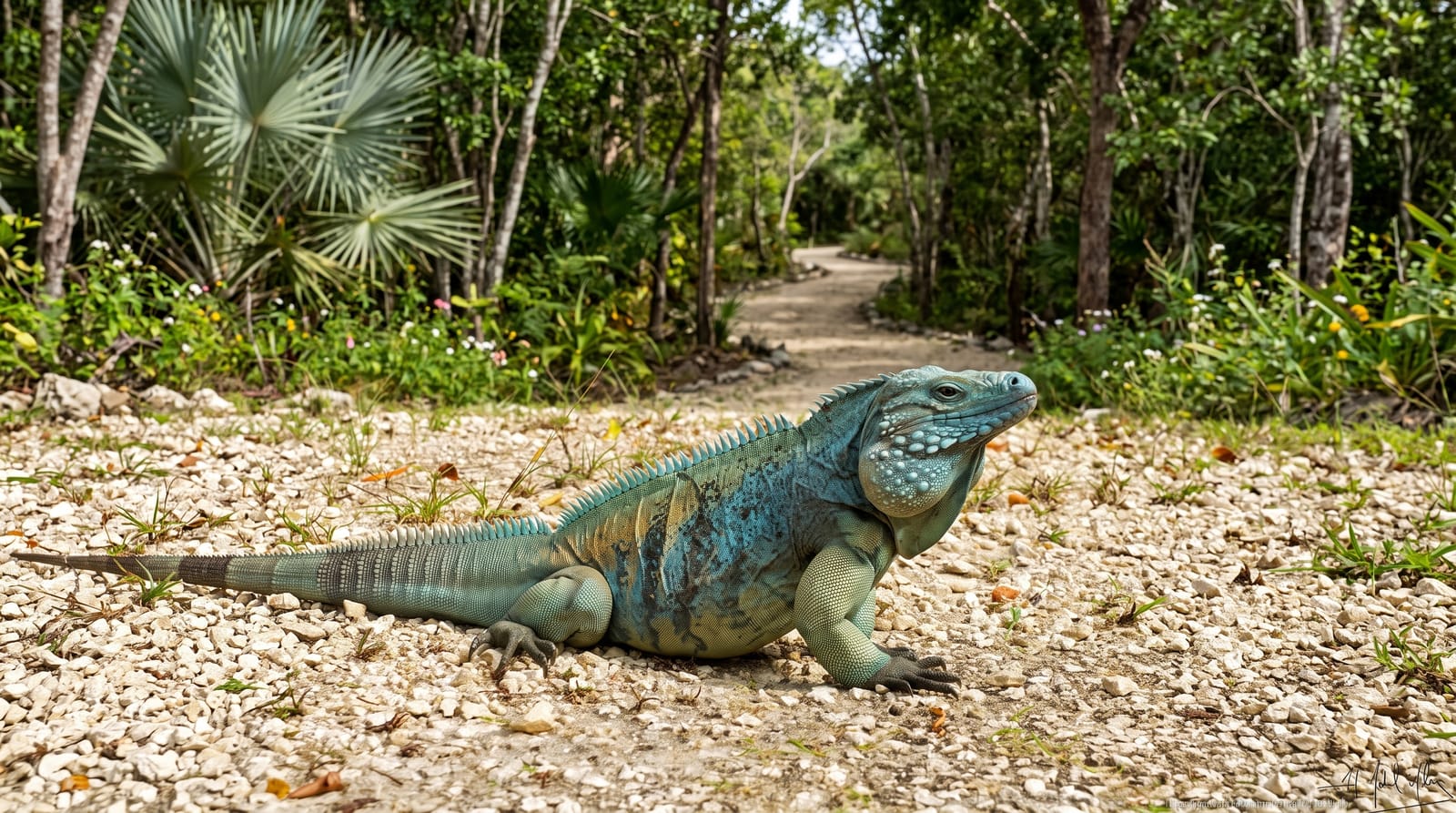
AI illustration
The botanic park spreads across a stretch of Grand Cayman's interior with themed gardens, a lake, native woodland trails and a heritage Caymanian house, but its most important work is behind the scenes: the blue iguana, endemic to the island, was down to a couple of dozen animals in the wild in the early 2000s and a captive breeding and release programme here pulled it back from the edge. Visitors see them free-ranging through the gardens and can take a tour of the breeding facility. The woodland trail also gives the best chance of seeing native orchids and the island's dry forest habitat.
What you'll find
- Blue iguanas - the endemic species, free-ranging and in the breeding centre.
- The colour garden - themed planting beds through the seasons.
- The woodland trail - native dry forest, orchids and birdlife.
- The heritage house - a traditional Caymanian home and garden.
When to go
The cooler dry months from November to May are the most comfortable for walking. The Wild Banana orchid, the national flower, blooms in late spring. Mornings are best for iguana activity and for avoiding heat.
Practical notes
It is a garden rather than a wilderness, and visitors expecting dramatic landscape will find something quieter and more horticultural. The iguana breeding tours run at set times and need checking ahead. Trails are exposed and hot by midday. Mosquitoes appear after rain. Cruise-ship excursions arrive in blocks on some days.
Nearby
Rum Point, the Mastic Trail through old forest and the East End blowholes.
Key facts
Source: Wikidata, item Q7270347, read on 18 October 2026.
What to pack for Queen Elizabeth II Botanic Park
Chosen from what this place is for. Tap a kit for the full checklist.
- Broken-in walking shoes or boots - Grip and ankle support matter more than looks; never hike in brand-new boots. Find on Amazon
- Binoculars - The single best wildlife tool - even a compact pair transforms a sighting. Find on Amazon
- Comfortable walking shoes - Sightseeing means kilometres of pavement and cobbles daily. Find on Amazon
- Layers + a waterproof shell - Mountain weather turns fast; a packable rain jacket saves the day. Find on Amazon
Some links on this page are Amazon affiliate links - if you buy through them we may earn a small commission at no extra cost to you.
All packing kitsPlan your trip
Where to start if Queen Elizabeth II Botanic Park is going on the list.
Booking links on this page are affiliate links - if you book through them we may earn a small commission at no extra cost to you. It never changes what we write about a place.
Opening times, ticket prices and seasonal closures change - check the official source before you go: official site.