Sozopol
An old Black Sea town of wooden houses on a rocky peninsula, with sandy beaches on either side and a fishing harbour between them.
Updated 19 October 2026
AI illustration
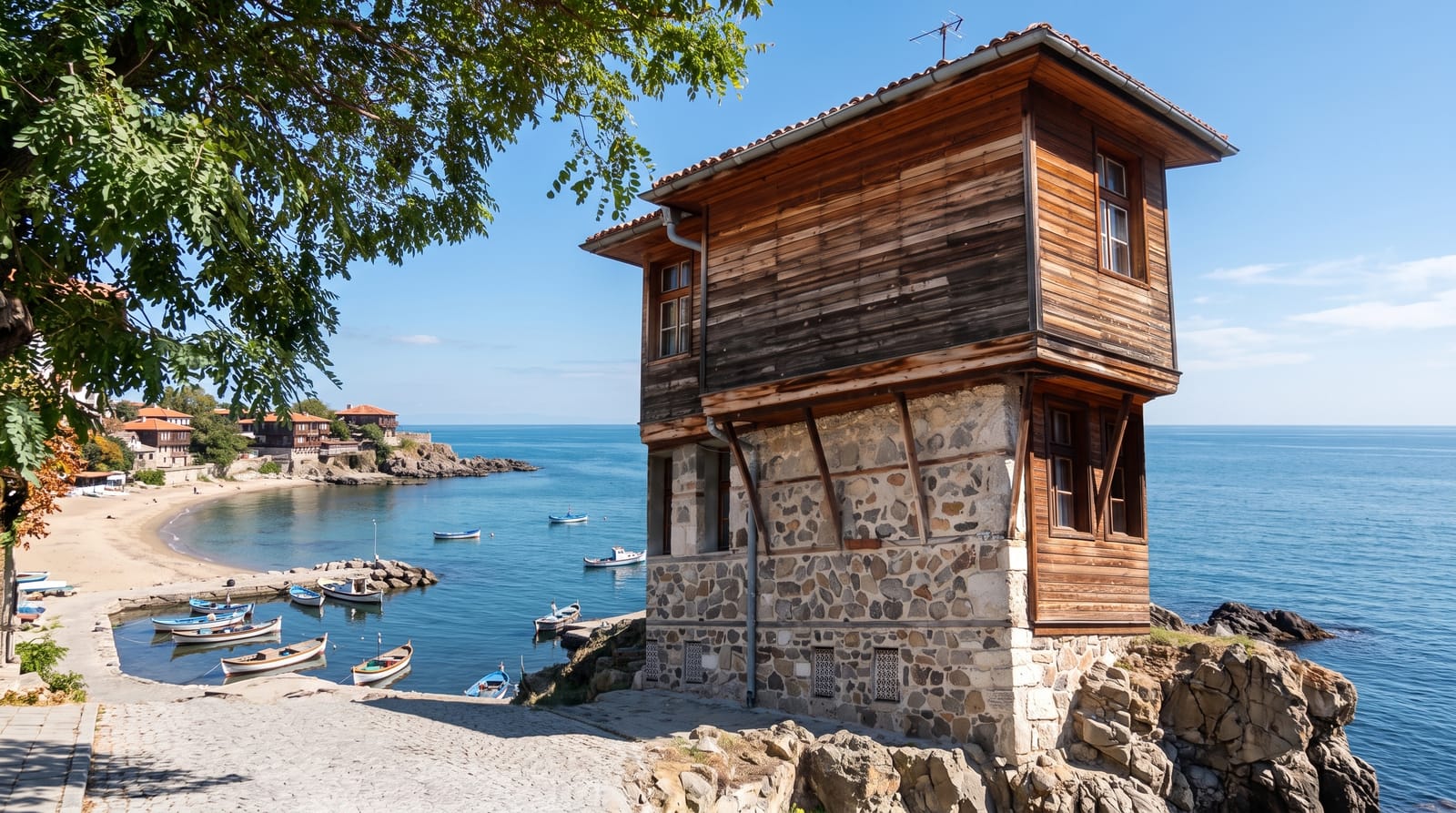
Sozopol was founded by Greek colonists from Miletus as Antheia, soon renamed Apollonia, and has been a port ever since, and its old town occupies a small rocky peninsula covered with nineteenth-century houses in the Black Sea style, stone at ground level with an overhanging timber upper floor clad in dark wooden boards. Narrow lanes run between them to the sea walls, and a working fishing harbour sits at the neck. On either side of the peninsula are beaches, the town beach close in and the longer Harmanite strand just south, with warm shallow water and none of the high-rise development that has swallowed parts of the coast further north. An arts festival fills the town at the start of September, and boats run to the island of St Ivan, where archaeologists found a reliquary that made international news.
History
Bronze Age dwellings lie under the harbour, and the town was founded in the 7th century BC by Greek colonists from Miletus as Antheia, later named Apollonia for its temple of Apollo, and grew into one of the richest Greek colonies on the Black Sea, minting coins with an anchor from the end of the 6th century BC. It kept its independence through the wars of Philip II and Alexander, but in 72 BC the Roman general Marcus Lucullus sacked it and carried its statue of Apollo to the Capitol; the name Sozopolis appears by the 1st century AD, and in 1328 it was described as a large and populous town (Wikipedia, Sozopol).
The landscape
- The old town - timber-clad houses on the rocky peninsula.
- The beaches - the town strand and the longer Harmanite beach south.
- The fishing harbour - working boats between the old town and the new.
- The Apollonia arts festival - the September festival that fills the streets.
When to go
June to September is the swimming season, with July and August busiest and hottest; early June and September are pleasant and much quieter. The arts festival falls in early September. Outside summer the town largely closes down.
Before you go
In peak August the old town lanes are shoulder to shoulder and prices rise sharply. The new town beyond the peninsula is ordinary resort building with little charm. The Black Sea here is warm but the beaches, while good, are not the Mediterranean, and jellyfish appear some summers. Out of season much of the town is shuttered.
Nearby
Burgas and its lakes are 40 minutes north; Nessebar lies further up the coast.
What to pack for Sozopol
Chosen from what this place is for. Tap a kit for the full checklist.
- Travel rod + reel - A packable multi-piece rod fits in a case and covers most holiday fishing. Find on Amazon
- Reef-safe sunscreen - High SPF that will not bleach the coral you are swimming over. Find on Amazon
- Modest clothing - Shoulders and knees covered - the single most common requirement. Find on Amazon
- A small tackle selection - Hooks, weights, line and a few lures or flies suited to local waters. Find on Amazon
Some links on this page are Amazon affiliate links - if you buy through them we may earn a small commission at no extra cost to you.
All packing kitsPlan your trip
Where to start if Sozopol is going on the list.
Booking links on this page are affiliate links - if you book through them we may earn a small commission at no extra cost to you. It never changes what we write about a place.
Opening times, ticket prices and seasonal closures change - check the official source before you go: official site.