Khama Rhino Sanctuary
A community-run reserve that brought rhino back to central Botswana - white and black rhino on Kalahari sandveld, with easy access off the main road.
Updated 18 October 2026
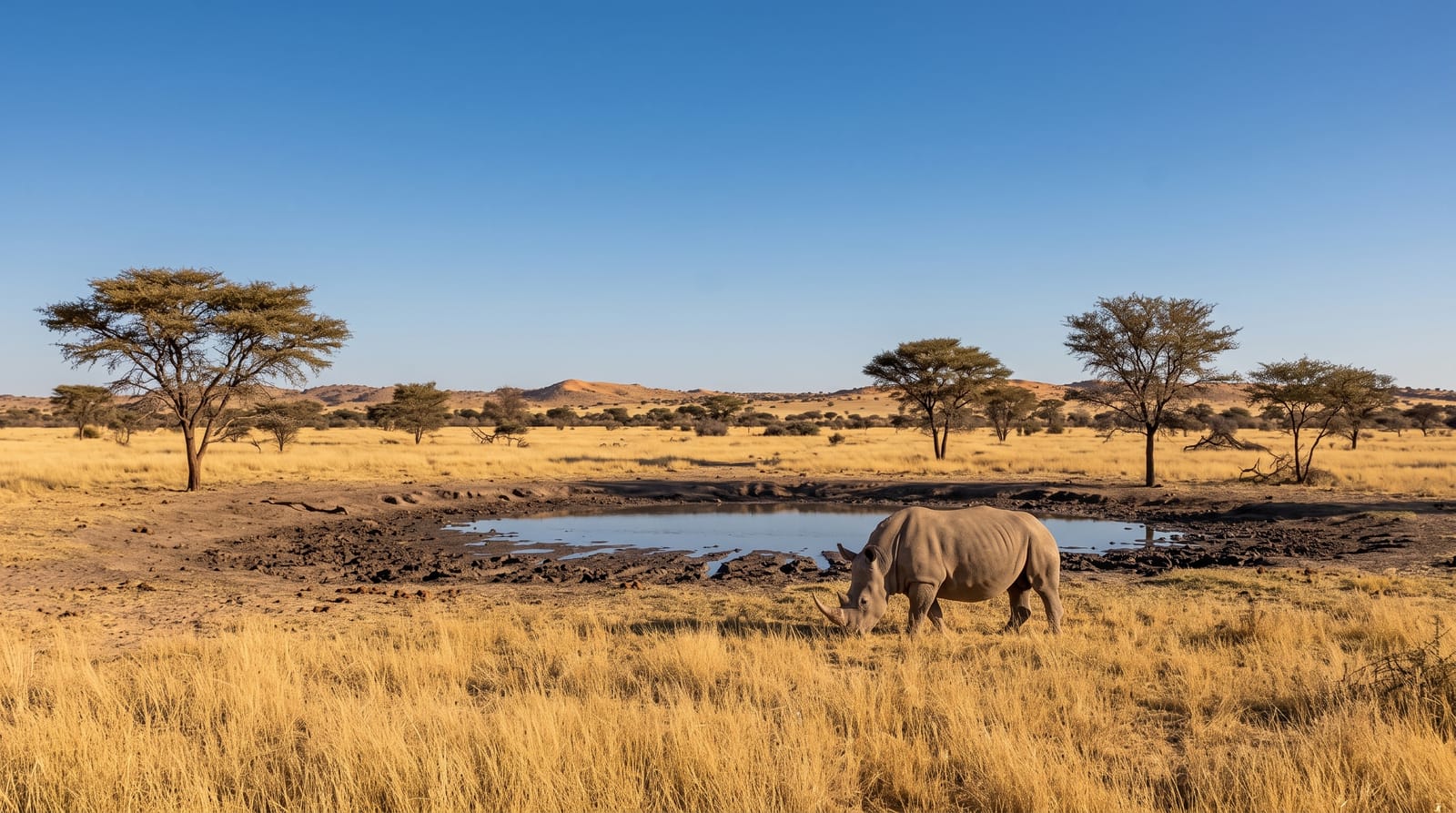
AI illustration
Khama Rhino Sanctuary was established in 1992 by the community at Serowe on traditional grazing land, with the aim of restoring rhino to an area where poaching had wiped them out. It worked: the sanctuary now holds a solid population of white rhino and a smaller number of black rhino, alongside zebra, wildebeest, eland and over two hundred bird species, on rolling Kalahari sandveld with pans that fill after rain. Being right beside the main north-south road makes it the easiest rhino viewing in the country and a natural overnight break on a long drive, with proceeds going back into the community and conservation.
History
In 1989, worried by rhino poaching, residents of Serowe set up a wildlife reserve with the support of Ian Khama. The first four white rhinos arrived in 1992, the Ngwato Land Board formally granted the land around the Serwe Pan, a dry lake, in 1993, and the critically endangered black rhino was reintroduced in 2002; the first black rhino calf was born here in 2007 and two white rhinos in 2009. By 2014 the breeding programme had sent 28 rhinos to other wild areas of southern Africa, and patrols by rangers and the Botswana Defence Force had kept poaching off the land since the opening; since then two white rhinos were reported killed by poachers in 2022, which the sanctuary says did not happen on its property, and in April 2023 four rhinos were shot, two of them fatally (Wikipedia, Khama Rhino Sanctuary).
What you'll find
- White rhino - the sanctuary's flagship population, often seen at the pans.
- Game drives and self-drive tracks - accessible routes on sandveld.
- The waterhole hides - viewing platforms at the pans.
- Birdlife - over two hundred species across the reserve.
When to go
The dry months from April to October bring animals to the waterholes and easier viewing. Summer rains green the sandveld and fill the pans, with excellent birding. Early morning and late afternoon are the productive hours in any season.
Before you go
This is a sanctuary rather than a vast wilderness - the area is fenced and the experience is more contained than a national park, which is exactly why sightings are reliable. Sand tracks need reasonable clearance; a normal car manages the main loops in dry conditions but 4x4 is safer. Accommodation is simple chalets and campsites. Rhino locations are not published, for obvious anti-poaching reasons.
Nearby
Serowe's Khama III memorial museum and the road north toward Francistown.
Key facts
Source: Wikidata, item Q55615899, read on 18 October 2026.
What to pack for Khama Rhino Sanctuary
Chosen from what this place is for. Tap a kit for the full checklist.
- Broken-in walking shoes or boots - Grip and ankle support matter more than looks; never hike in brand-new boots. Find on Amazon
- Binoculars - The single best wildlife tool - even a compact pair transforms a sighting. Find on Amazon
- Shelter suited to the place - Tent, tarp or hut booking - match it to the terrain and rules. Find on Amazon
- Layers + a waterproof shell - Mountain weather turns fast; a packable rain jacket saves the day. Find on Amazon
Some links on this page are Amazon affiliate links - if you buy through them we may earn a small commission at no extra cost to you.
All packing kitsPlan your trip
Where to start if Khama Rhino Sanctuary is going on the list.
Booking links on this page are affiliate links - if you book through them we may earn a small commission at no extra cost to you. It never changes what we write about a place.
Opening times, ticket prices and seasonal closures change - check the official source before you go: official site.