Junkerdal National Park
A mountain park near the Arctic Circle whose lime-rich soil supports an exceptional concentration of rare arctic plants.
Updated 4 September 2026

AI illustration
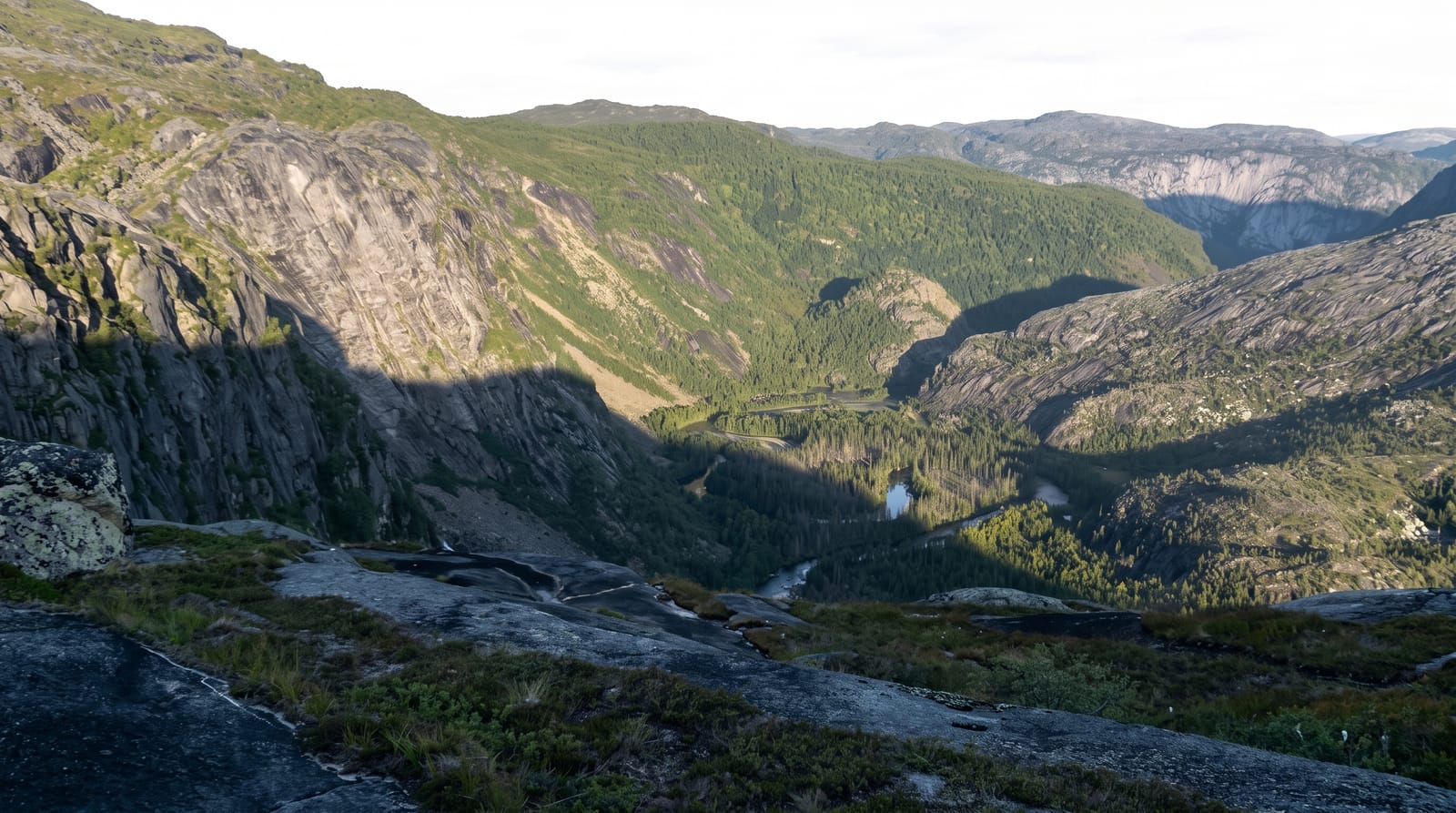
Junkerdal is known among Norwegian botanists as one of the richest sites in the country: the bedrock includes limestone and other calcium-rich rock, which combined with the local climate supports a flora of arctic and alpine species far more diverse than the surrounding mountains, including rare orchids and plants otherwise found much further north or east. Collectors have come here since the eighteenth century, and the area was protected partly for that reason, becoming a national park in 2004 covering about 682 square kilometres. Beyond the plants it is ordinary northern mountain country: birch forest in the valleys, bare rock above, lakes and long walking routes toward the Swedish border and the Padjelanta parks beyond.
What you'll find
- The rare flora - orchids and arctic-alpine species on lime-rich ground.
- The valley birch forest - woodland along the lower rivers.
- The border routes - trails linking through to the Swedish national parks.
- The high plateau - bare rock and lakes above the treeline.
When to go
July and early August for the flowering, which is brief and the main reason to come; June to September for general walking once the snow has gone. Autumn colour in the birch is good in September.
Practical notes
The flora is the point, and without an interest in plants the park is scenically similar to many others nearby. Picking or digging plants is prohibited. Marked routes are limited and cabins few, so navigation and self-sufficiency matter.
Nearby
Rago National Park lies north; Saltdal, Fauske and the Arctic Circle centre are on the E6.
Key facts
Source: Wikidata, item Q182981, read on 18 October 2026.
What to pack for Junkerdal National Park
Chosen from what this place is for. Tap a kit for the full checklist.
- Broken-in walking shoes or boots - Grip and ankle support matter more than looks; never hike in brand-new boots. Find on Amazon
- Binoculars - The single best wildlife tool - even a compact pair transforms a sighting. Find on Amazon
- Warm base layers - Merino or synthetic against the skin - never cotton, which chills when damp. Find on Amazon
- Layers + a waterproof shell - Mountain weather turns fast; a packable rain jacket saves the day. Find on Amazon
Some links on this page are Amazon affiliate links - if you buy through them we may earn a small commission at no extra cost to you.
All packing kitsPlan your trip
Where to start if Junkerdal National Park is going on the list.
Booking links on this page are affiliate links - if you book through them we may earn a small commission at no extra cost to you. It never changes what we write about a place.
Opening times, ticket prices and seasonal closures change - check the official source before you go: official site.