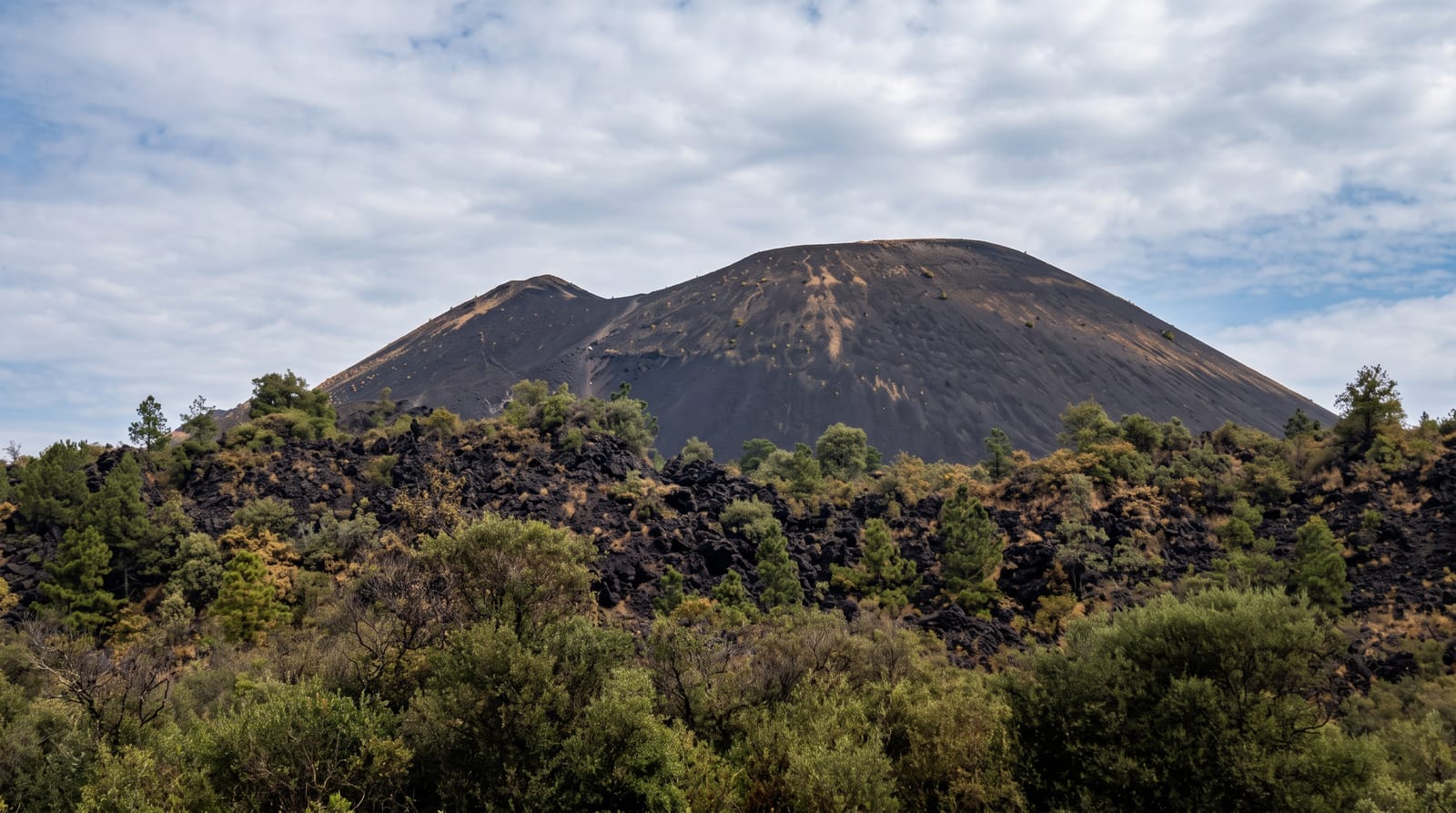
Tunupa Volcano
An ochre and red volcano rising from the northern shore of the Salar de Uyuni, climbed for the view over the salt.
Updated 1 September 2026
Tunupa stands at around 5,320 metres on the northern rim of the Salar de Uyuni, and it is coloured: bands of ochre, red, cream and green run across its flanks from different mineral deposits, unusual among the grey and brown volcanoes of the altiplano. Andean tradition treats Tunupa as a figure as well as a mountain, with stories accounting for the salt flat itself as her tears or her milk. A track climbs from Jirira and Coquesa to a mirador at around 4,300 metres in three to four hours, with the salar spreading white to the horizon below; continuing to the crater rim is a longer and harder day. Nearby caves hold pre-Columbian mummies, shown by local guides.
What you'll find
- The coloured flanks - bands of ochre, red and green across the slopes.
- The salar from above - white plain running to the horizon.
- Chullpa mummies - the pre-Columbian burials in caves at the foot.
- The crater route - the harder continuation above the mirador.
When to go
May to September for firm tracks and clear air; the wet season floods the salar edge and makes access difficult. Mornings are clearest. It is severely cold before dawn at this altitude.
Things to know
The climb to the mirador is at over four thousand metres and hard work; the crater is a long day needing acclimatisation. There is no shade and no water. The mummy caves are burials and warrant respect rather than photographs of remains. Facilities in the villages are basic.
Nearby
The Salar de Uyuni lies south; Coipasa is northwest.
Key facts
Source: Wikidata, item Q849364, read on 18 October 2026.
What to pack for Tunupa Volcano
Chosen from what this place is for. Tap a kit for the full checklist.
- Broken-in walking shoes or boots - Grip and ankle support matter more than looks; never hike in brand-new boots. Find on Amazon
- Head torch + spare batteries - Hands-free light is essential; caves are truly dark. Find on Amazon
- Layers for big temperature swings - Warm sun by day, near-freezing at night, even near the equator. Find on Amazon
- Layers + a waterproof shell - Mountain weather turns fast; a packable rain jacket saves the day. Find on Amazon
Some links on this page are Amazon affiliate links - if you buy through them we may earn a small commission at no extra cost to you.
All packing kitsPlan your trip
Where to start if Tunupa Volcano is going on the list.
Booking links on this page are affiliate links - if you book through them we may earn a small commission at no extra cost to you. It never changes what we write about a place.
Opening times, ticket prices and seasonal closures change - check the official source before you go: official site.