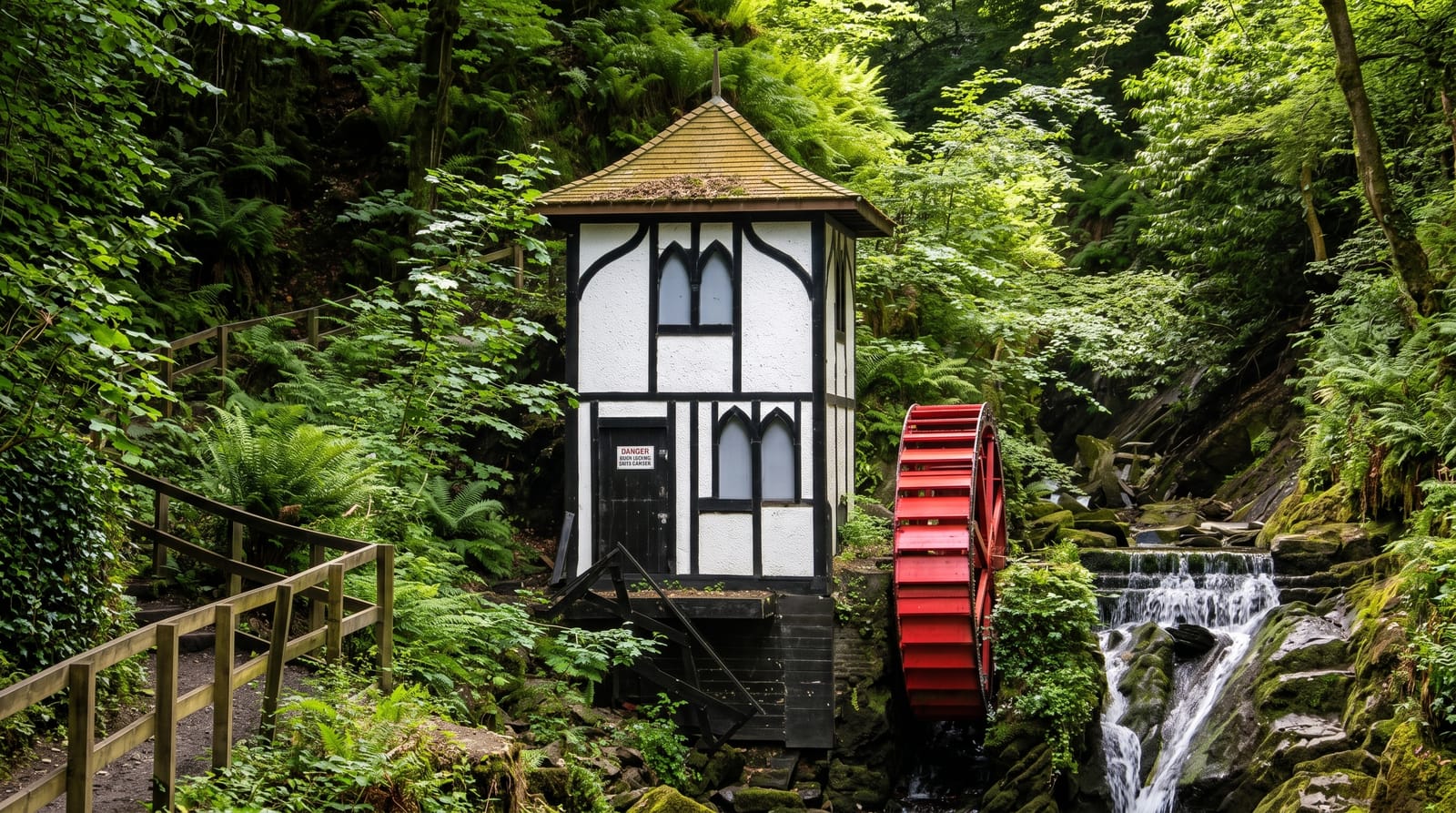
Welchman Hall Gully
A collapsed cave system turned into a green gully of tropical planting, with wild green monkeys coming through morning and evening.
Updated 3 September 2026
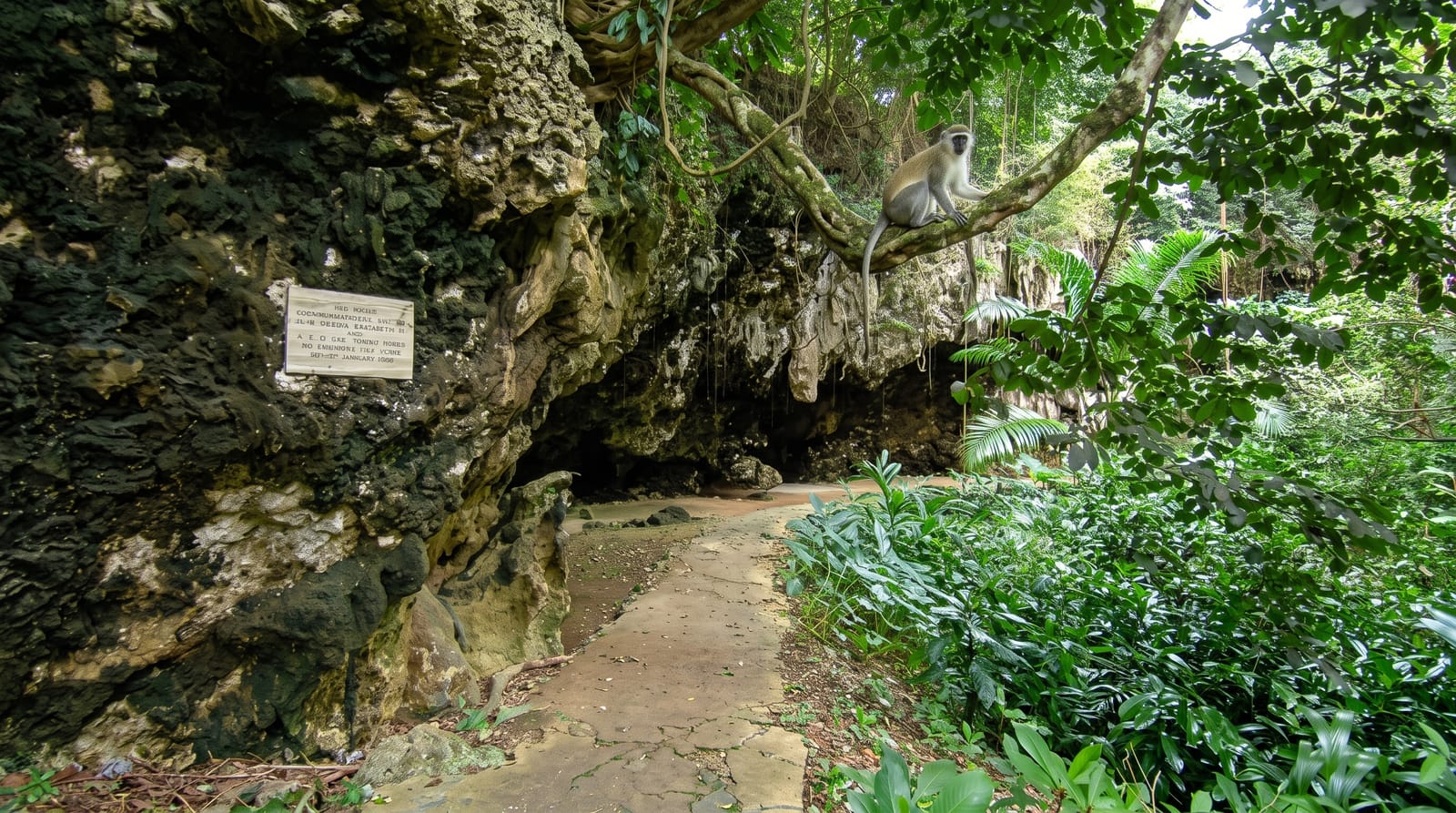
AI illustration
Welchman Hall Gully is part of the same limestone cave system as Harrison's Cave next door, except that here the roof fell in, leaving a deep narrow ravine with cave formations still visible in the walls and stalactites meeting stalagmites in places to form columns. A Welsh settler's descendants planted it in the nineteenth century with tropical species from around the world, and the National Trust maintains it as a walk of about eight hundred metres through the gully floor under a closed canopy. The island's green monkeys, brought from West Africa in the seventeenth century, come through in troops early and late.
What's there
- The collapsed cave - formations and columns in the gully walls.
- Green monkeys - troops moving through morning and late afternoon.
- The planted collection - tropical species gathered since the 1860s.
- The canopy - closed overhead for most of the walk.
When to go
December to April is the dry season. Green monkeys are most reliable early in the morning and in the late afternoon, when they come through to feed. The walk takes about an hour on a made path.
What to expect
Monkey sightings are not guaranteed and midday visits usually see none. The gully is short and the walk takes an hour. It is next door to Harrison's Cave, which most visitors do instead. Feeding the monkeys is discouraged and has caused problems where it happens.
Nearby
Harrison's Cave is five minutes; the Flower Forest is ten minutes.
What to pack for Welchman Hall Gully
Chosen from what this place is for. Tap a kit for the full checklist.
- Broken-in walking shoes or boots - Grip and ankle support matter more than looks; never hike in brand-new boots. Find on Amazon
- Head torch + spare batteries - Hands-free light is essential; caves are truly dark. Find on Amazon
- Layers + a waterproof shell - Mountain weather turns fast; a packable rain jacket saves the day. Find on Amazon
- Grippy closed shoes - Cave floors are wet, muddy and slick with formations. Find on Amazon
Some links on this page are Amazon affiliate links - if you buy through them we may earn a small commission at no extra cost to you.
All packing kitsPlan your trip
Where to start if Welchman Hall Gully is going on the list.
Booking links on this page are affiliate links - if you book through them we may earn a small commission at no extra cost to you. It never changes what we write about a place.
Opening times, ticket prices and seasonal closures change - check the official source before you go: official site.