Ivanovka
A Molokan village in the Ismayilli hills that kept its collective farm going long after the Soviet Union ended.
Updated 18 October 2026
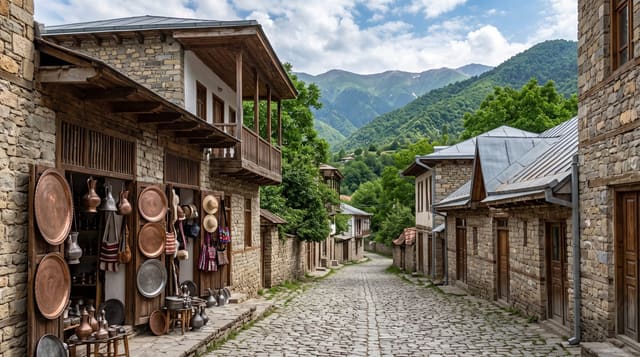
Ivanovka was settled in the nineteenth century by Molokans, a Russian dissenting Christian group exiled to the Caucasus, and it is one of the few places where that community remains substantial. The village kept its collective farm long after they were dissolved everywhere else - the last one in the country - which is why the fields, dairy and machinery yards look the way they do. Wooden houses with painted shutters, kitchen gardens and a Molokan prayer house give the village an appearance quite unlike anything around it.
History
Russian peasants, mostly Molokans from central Russia, founded the village in 1834, resettled in the Caucasus under Tsar Nicholas I after the Treaty of Turkmenchay, and more Spiritual Christians from central Russia, the Volga and Novorossiya followed; in 1840 it was named after Ivan Pershiy, who had chosen the site. Three artels merged into one collective farm in 1936, its chairman Nikolay Nikitin was made a Hero of Socialist Labour in 1971, and in 1995 the farm, then the only remaining collective farm in Azerbaijan, was named after him (Wikipedia, İvanovka).
Highlights
- The village houses - Russian wooden architecture with painted shutters and fenced gardens.
- The collective farm - fields, dairy and workshops of the country's last kolkhoz.
- The prayer house - the Molokan meeting house, plain and without icons.
- The food - Molokan home cooking, sold and served in village houses.
When to go
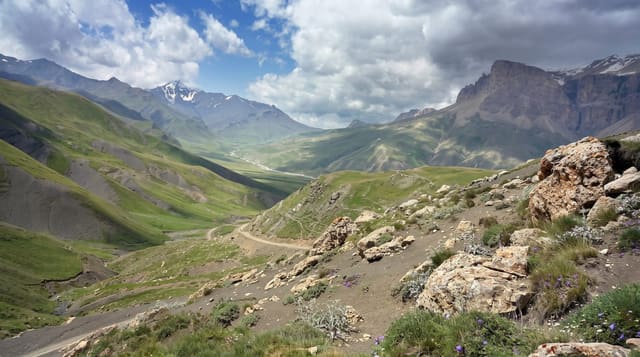
May to October is the season, with the harvest in late summer and autumn the most active. The village is high enough to be cool in summer. Winter is quiet and cold with snow on the surrounding hills.
Things to know
This is a working village, not a heritage site, and there is nothing laid on for visitors beyond a couple of guesthouses. The Molokan population has fallen sharply through emigration and the community is much smaller than it was. Photographing people and the prayer house should be asked about first.
Nearby
Lahij is over the ridge to the east, and Ismayilli is twenty minutes away.
Key facts
Source: Wikidata, item Q50800, read on 18 October 2026.
What to pack for Ivanovka
Chosen from what this place is for. Tap a kit for the full checklist.
- Warm base layers - Merino or synthetic against the skin - never cotton, which chills when damp. Find on Amazon
- Comfortable walking shoes - Sightseeing means kilometres of pavement and cobbles daily. Find on Amazon
- An insulated + windproof jacket - A down or synthetic layer under a hard shell handles most cold. Find on Amazon
- A slim anti-theft daypack - Zips that close properly; keep it in front in crowds and on transit. Find on Amazon
Some links on this page are Amazon affiliate links - if you buy through them we may earn a small commission at no extra cost to you.
All packing kitsPlan your trip
Where to start if Ivanovka is going on the list.
Booking links on this page are affiliate links - if you book through them we may earn a small commission at no extra cost to you. It never changes what we write about a place.
Opening times, ticket prices and seasonal closures change - check the official source before you go: official site.