Hahndorf
Australia's oldest surviving German settlement, founded in 1839 by Lutheran refugees in the Adelaide Hills.
Updated 18 October 2026
AI illustration
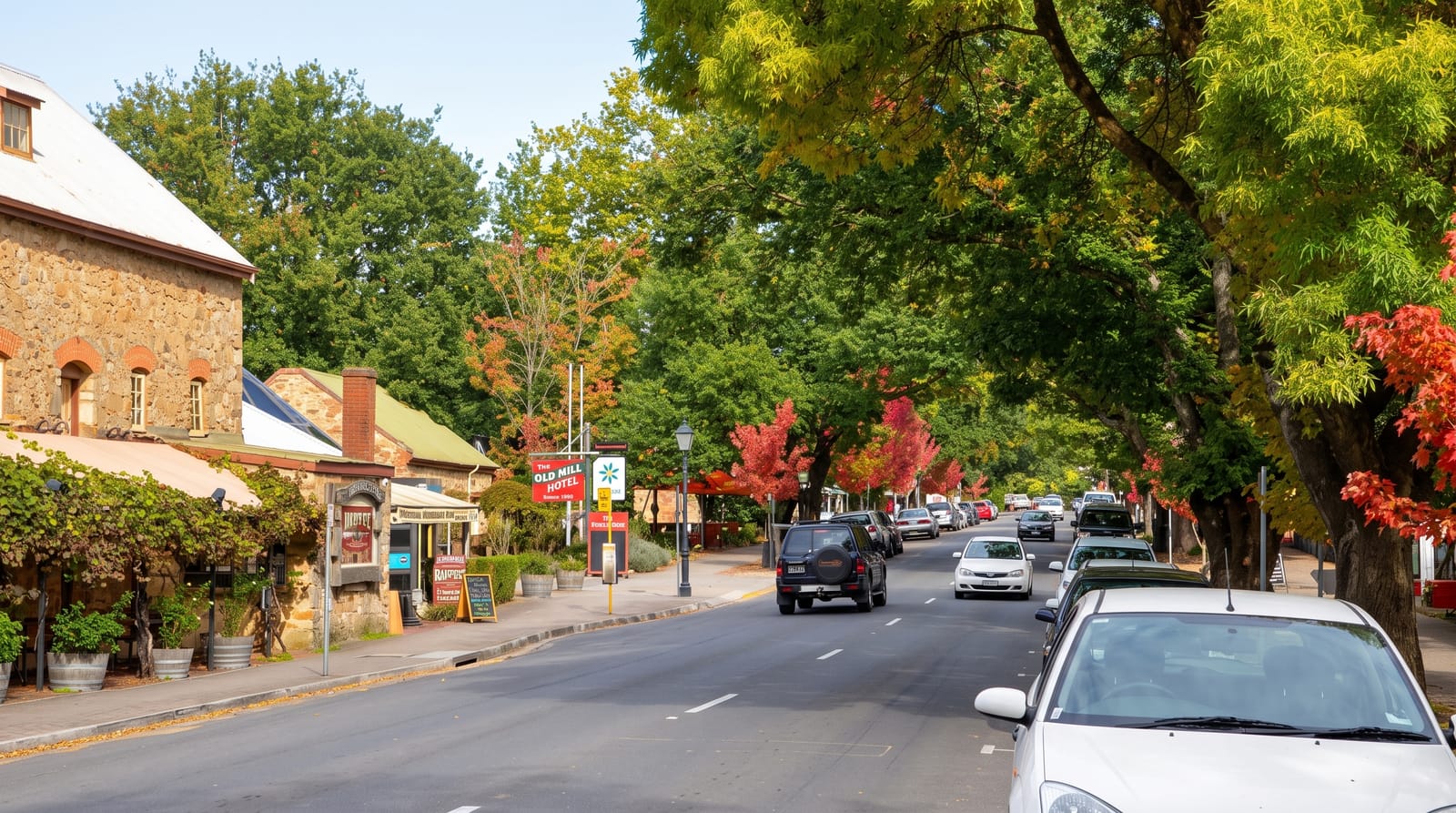
Hahndorf was settled in 1839 by Lutherans from Prussia who had fled religious persecution, arriving on the ship Zebra whose captain, Hahn, gave the village its name. It is the oldest surviving German settlement in Australia, and the main street keeps its Fachwerk cottages, the old smithy and elm and plane trees planted by the settlers. During the First World War it was renamed Ambleside in a wave of anti-German feeling and only recovered its name in 1935. The street now runs to German-style pubs, bakeries selling pretzels and streuselkuchen, leather and craft shops, and the Hahndorf Academy showing work by Hans Heysen, who painted the surrounding hills.
History
Lutheran migrants, most of them from the village of Kay in Prussia, now Kije in Poland, settled here on the land of the Peramangk, at a place called Bukartilla for its water holes, many of them having arrived on the Zebra on 28 December 1838, and they named the town after the ship's captain, Dirk Meinerts Hahn; it is the oldest surviving German settlement in Australia. In 1917, during the First World War, the state government renamed it Ambleside, after the nearby railway station, and the name Hahndorf was restored by the Nomenclature Act of 12 December 1935 (Wikipedia, Hahndorf, South Australia).
Highlights
- The Fachwerk cottages - surviving half-timbered settler buildings on the main street.
- The German food - bakeries, smallgoods and beer halls along the street.
- The Hahndorf Academy - Heysen's landscapes and settler history.
- The Hills setting - orchards and pasture around the village.
When to go
March to May and September to November for mild weather and colour; the Christmas and Easter periods fill the street. Winter is cold and wet but atmospheric. Weekends are extremely busy with Adelaide day trippers.
Practical notes
The village is small, essentially one street, and thoroughly commercialised, which divides opinion. Weekend parking is very difficult. Much of the German character is presented for visitors rather than lived.
Nearby
Mount Lofty and the Adelaide Hills wineries lie close; Adelaide is half an hour west.
Key facts
Source: Wikidata, item Q547709, read on 18 October 2026.
What to pack for Hahndorf
Chosen from what this place is for. Tap a kit for the full checklist.
- Comfortable walking shoes - Sightseeing means kilometres of pavement and cobbles daily. Find on Amazon
- A slim anti-theft daypack - Zips that close properly; keep it in front in crowds and on transit. Find on Amazon
- A refillable water bottle - Many cities have public fountains; save money and plastic. Find on Amazon
- A light layer + compact umbrella - For museum air-con and a sudden shower. Find on Amazon
Some links on this page are Amazon affiliate links - if you buy through them we may earn a small commission at no extra cost to you.
All packing kitsPlan your trip
Where to start if Hahndorf is going on the list.
Booking links on this page are affiliate links - if you book through them we may earn a small commission at no extra cost to you. It never changes what we write about a place.
Opening times, ticket prices and seasonal closures change - check the official source before you go: official site.