Adelaide Botanic Garden
A city garden of 1857 holding a Victorian palm house brought from Bremen and the largest single-span glasshouse in the country.
Updated 18 October 2026
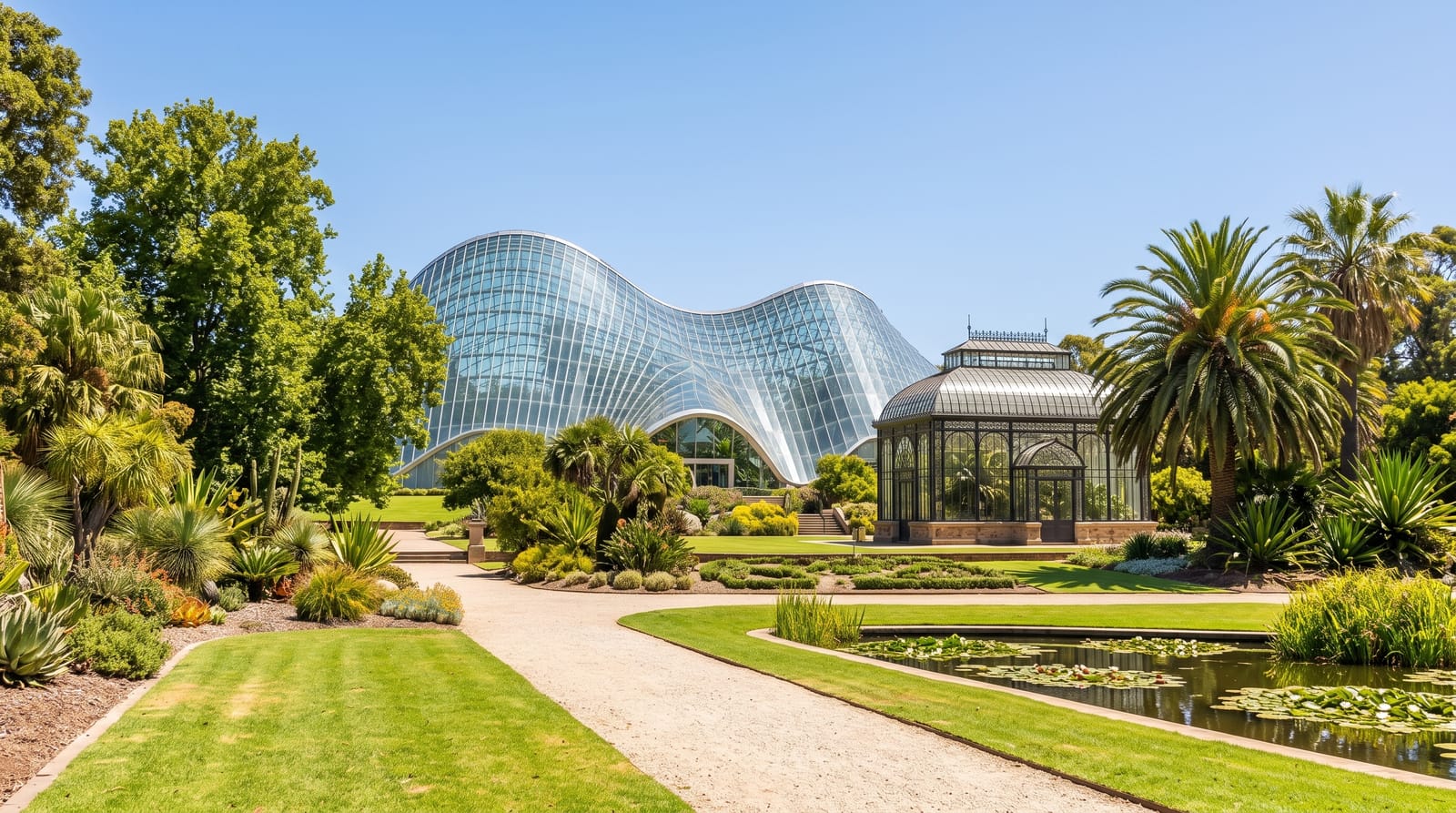
AI illustration
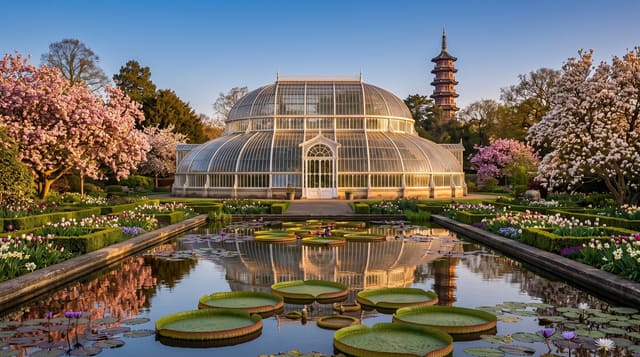
The Adelaide Botanic Garden opened to the public in 1857 on the edge of the parklands that ring the city centre, and it holds two glasshouses of note. The Palm House, built in Bremen in 1875 and shipped out in pieces, is a rare surviving Victorian glasshouse of its type and now holds plants from Madagascar. The Bicentennial Conservatory, completed in 1989, is a vast curved structure of glass and steel, the largest single-span conservatory in the southern hemisphere, growing lowland rainforest species from northern Australia and New Guinea. Elsewhere the garden has a Museum of Economic Botany, a water-lily pavilion holding the giant Amazon lily, and formal avenues of plane trees.
History
Colonel William Light's first survey of Adelaide set aside a botanic garden on an island in the River Torrens, but floods defeated that and a second attempt, and John Bailey, the Colonial Botanist, tried again in 1839 on the north bank without funding. After pressure from the Agricultural and Horticultural Society and George William Francis, the Legislative Council approved the present site in January 1855, land the Kaurna held sacred as the red kangaroo dreaming, Tarndanyangga, then used as paddocks for police horses; Francis became superintendent, work began that year, and the garden opened to the public on 4 October 1857 (Wikipedia, Adelaide Botanic Garden).
What you'll find
- The Palm House - the 1875 Bremen glasshouse with Madagascan plants.
- The Bicentennial Conservatory - the huge curved rainforest glasshouse.
- The Museum of Economic Botany - a rare surviving Victorian plant products museum.
- The water-lily pavilion - the giant Amazon lily in a heated pool.
When to go
September to November and March to May for the best displays and mild weather; Adelaide summers regularly exceed thirty-five degrees, and the conservatory is hotter still. Entry is free and the garden opens daily.
Good to know
The Bicentennial Conservatory is humid and warm inside, uncomfortable on a hot day, and has had periods of closure for maintenance. The garden is large and shade is uneven. Parking on North Terrace is limited and paid.
Nearby
The Art Gallery and Museum are along North Terrace; the city centre is adjacent.
Key facts
Source: Wikidata, item Q4681683, read on 18 October 2026.
What to pack for Adelaide Botanic Garden
Chosen from what this place is for. Tap a kit for the full checklist.
- Strong insect repellent - DEET or picaridin; the jungle is where bites and disease risk are highest. Find on Amazon
- Comfortable walking shoes - Sightseeing means kilometres of pavement and cobbles daily. Find on Amazon
- Modest clothing - Shoulders and knees covered - the single most common requirement. Find on Amazon
- Long, light, quick-dry clothing - Covers skin from insects and sun without cooking you in the humidity. Find on Amazon
Some links on this page are Amazon affiliate links - if you buy through them we may earn a small commission at no extra cost to you.
All packing kitsPlan your trip
Where to start if Adelaide Botanic Garden is going on the list.
Booking links on this page are affiliate links - if you book through them we may earn a small commission at no extra cost to you. It never changes what we write about a place.
Opening times, ticket prices and seasonal closures change - check the official source before you go: official site.