Royal Botanical Gardens
Canada's largest botanical garden, most of it wild nature sanctuary rather than beds, with a huge lilac collection.
Updated 19 October 2026
AI illustration
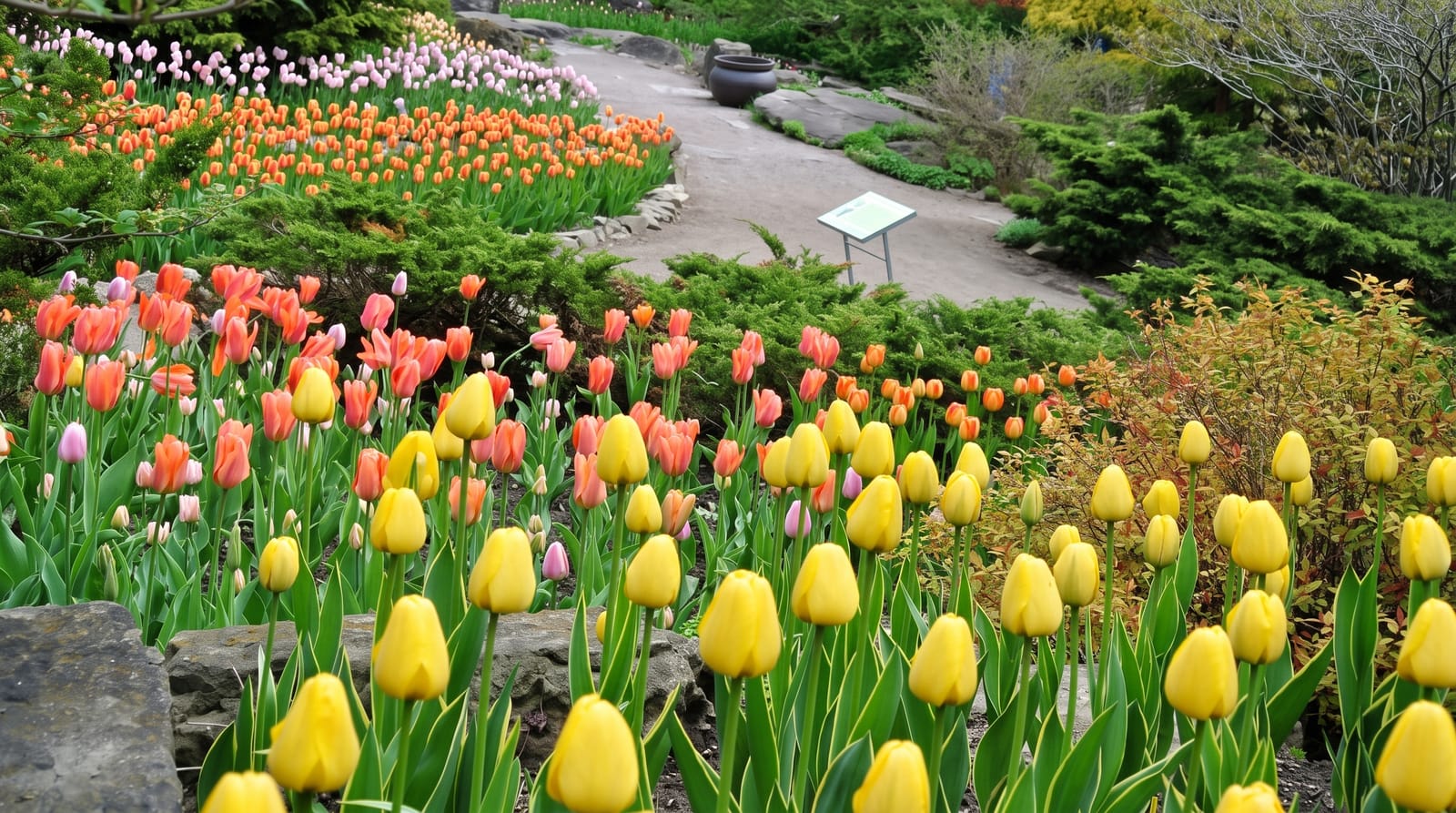
The RBG covers around one thousand one hundred hectares, which makes it the largest botanical garden in Canada, but only a small fraction is cultivated: most is nature sanctuary protecting Cootes Paradise, a large marsh at the western end of Lake Ontario, with about twenty-seven kilometres of trails through it. The cultivated areas include the Rock Garden, built in the 1930s in a disused gravel pit, and the Katie Osborne Lilac Collection, one of the largest lilac collections in the world with over seven hundred and fifty varieties. A fishway at the marsh mouth screens out invasive carp to let native fish through.
History
The gardens grew from a 1920s idea of Hamilton's Board of Park Management, led by Thomas McQuesten, for a botanical garden on the south shore of Cootes Paradise that would also protect the marsh, and in 1930 King George V allowed the name Royal Botanical Gardens. At the same time the city's gardens on Burlington Heights were laid out, among them the Rock Garden, made by lining a 5.5 acre abandoned gravel pit with Niagara Escarpment limestone; the two were joined as the Royal Botanical Gardens in 1932, a Provincial Act of 1941 set its mandate, and Leslie Laking, director from 1954 to 1981, built it into the institution it is today (Wikipedia, Royal Botanical Gardens - Ontario).
The main sights
- The lilac collection - over 750 varieties, blooming in May.
- The Rock Garden - a 1930s garden built inside an old gravel pit.
- Cootes Paradise - a large marsh sanctuary with trails and boardwalks.
- The carp fishway - a barrier separating invasive fish from native species.
When to go
May for lilacs, which is the signature bloom; April to October for the gardens generally, with the Rock Garden good through the season. Marsh trails are open year-round.
Good to know
The cultivated gardens are in several separate locations kilometres apart, needing a car between them. Lilac bloom is about two weeks. Much of the acreage is trails, not display gardens.
Nearby
Dundurn Castle lies southeast in Hamilton; Webster Falls is west.
Key facts
Source: Wikidata, item Q3162650, read on 18 October 2026.
What to pack for Royal Botanical Gardens
Chosen from what this place is for. Tap a kit for the full checklist.
- Comfortable walking shoes - Sightseeing means kilometres of pavement and cobbles daily. Find on Amazon
- A slim anti-theft daypack - Zips that close properly; keep it in front in crowds and on transit. Find on Amazon
- A refillable water bottle - Many cities have public fountains; save money and plastic. Find on Amazon
- A light layer + compact umbrella - For museum air-con and a sudden shower. Find on Amazon
Some links on this page are Amazon affiliate links - if you buy through them we may earn a small commission at no extra cost to you.
All packing kitsPlan your trip
Where to start if Royal Botanical Gardens is going on the list.
Booking links on this page are affiliate links - if you book through them we may earn a small commission at no extra cost to you. It never changes what we write about a place.
Opening times, ticket prices and seasonal closures change - check the official source before you go: official site.