Singapore Botanic Gardens
A tropical garden from 1859 that is free to enter, still runs a working orchid breeding programme, and holds a UNESCO listing on its own.
Updated 18 October 2026
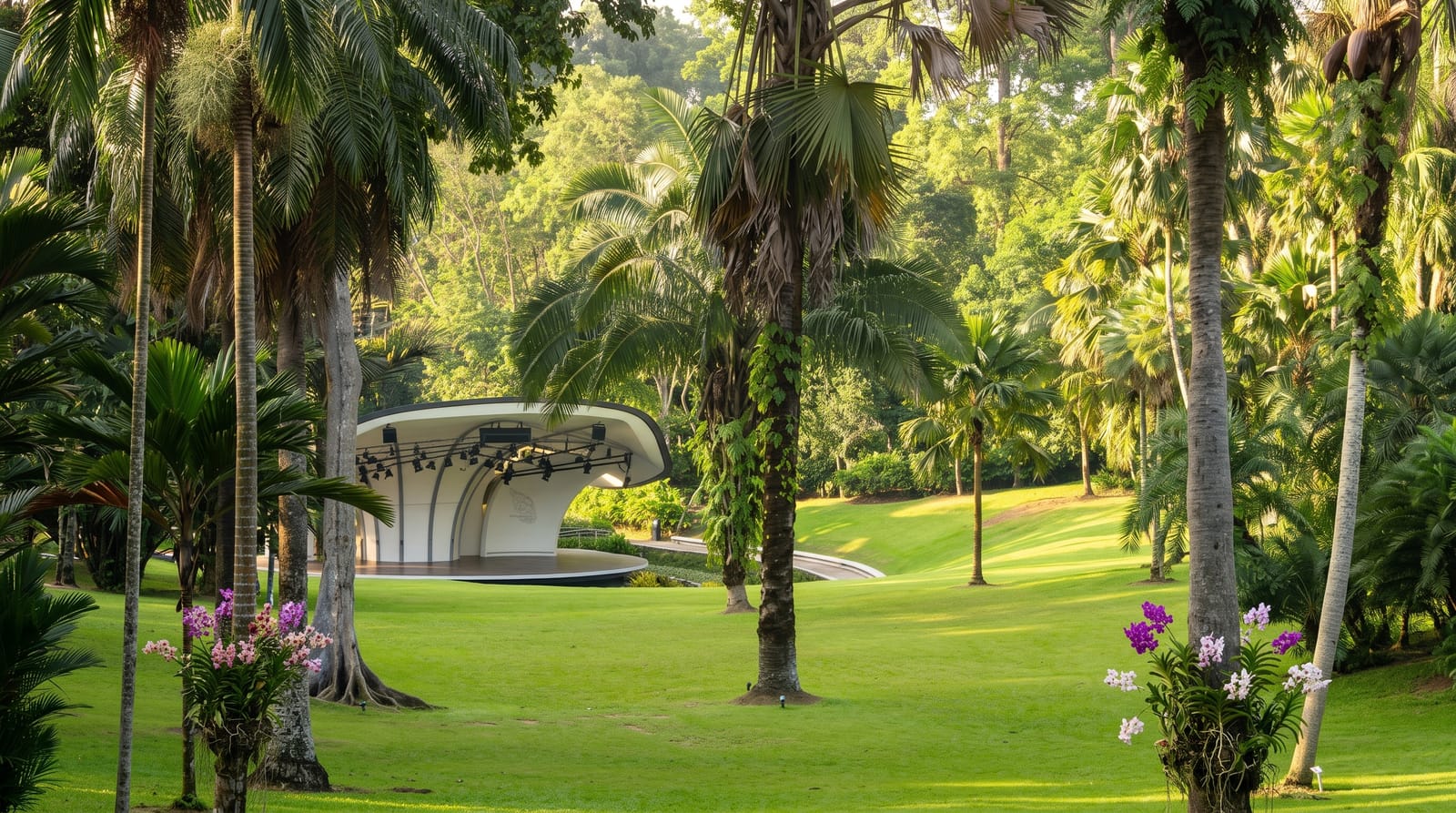
AI illustration
UNESCO World Heritage
The Botanic Gardens opened in 1859 and never stopped working. This is the garden where Henry Ridley developed the rubber tapping method that moved the rubber industry from Brazil to Southeast Asia and changed the region's economy, and where the National Orchid Garden still breeds hybrids and names them after visiting dignitaries, a diplomatic tradition that has produced several hundred named orchids. It became the first tropical botanic garden inscribed by UNESCO, and remarkably for central Singapore it is free to walk, open from early morning to late at night. Inside there is a patch of primary rainforest older than the garden around it, a swan lake, a bandstand and a ginger garden, and locals use it as a park rather than an attraction, which is much of its charm.
History
Stamford Raffles set up Singapore's first botanical and experimental garden on Government Hill in 1822 to test crops of economic value, but it came to an end in 1829. The present gardens began in 1859, when the colonial government granted the Agri-horticultural Society 32 hectares in Tanglin, obtained from the merchant Hoo Ah Kay, known as Whampoa; Lawrence Niven laid them out as a pleasure park in the English landscape style that still shapes them, Swan Lake was dug in 1866, and when the society ran out of money the government took them over in 1874. The first rubber seedlings arrived from Kew in 1877, and Henry Nicholas Ridley, director from 1888, perfected the method of tapping and persuaded planters across Malaya to adopt it, making Malaya the world's leading producer of natural rubber; today the gardens are the only tropical garden on the World Heritage List (Wikipedia, Singapore Botanic Gardens).
The main sights
- The National Orchid Garden - the ticketed section, with the breeding collection and the VIP hybrids.
- The rainforest patch - a fragment of primary tropical forest surrounded by the city.
- Swan Lake and the bandstand - the nineteenth-century heart of the garden.
- The Ginger Garden and Healing Garden - themed plantings of tropical species used in cooking and medicine.
When to go
Early morning, before the heat and the afternoon thunderstorms. The gardens open from before dawn and stay open late, so a sunrise or evening walk avoids the worst of both.
Good to know
It is free, which is genuinely unusual for anything in Singapore, but the orchid garden that most people come for is not. Afternoon rain is close to a daily fixture, and the paths are long and mostly unshaded between the wooded sections. It reads as a good public park rather than a spectacle; the UNESCO listing is for the history and the science, not the drama.
Nearby
Orchard Road shopping is one MRT stop away; the Dempsey Hill dining quarter sits on the garden's southern edge.
Key facts
Source: Wikidata, item Q3046409, read on 18 October 2026.
What to pack for Singapore Botanic Gardens
Chosen from what this place is for. Tap a kit for the full checklist.
- Strong insect repellent - DEET or picaridin; the jungle is where bites and disease risk are highest. Find on Amazon
- Comfortable walking shoes - Sightseeing means kilometres of pavement and cobbles daily. Find on Amazon
- Long, light, quick-dry clothing - Covers skin from insects and sun without cooking you in the humidity. Find on Amazon
- A slim anti-theft daypack - Zips that close properly; keep it in front in crowds and on transit. Find on Amazon
Some links on this page are Amazon affiliate links - if you buy through them we may earn a small commission at no extra cost to you.
All packing kitsPlan your trip
Where to start if Singapore Botanic Gardens is going on the list.
Booking links on this page are affiliate links - if you book through them we may earn a small commission at no extra cost to you. It never changes what we write about a place.
Opening times, ticket prices and seasonal closures change - check the official source before you go: official site.