Guadalest
A village on a rock above a turquoise reservoir in the Alicante hills, entered through a tunnel cut in the stone.
Updated 12 October 2026
AI illustration
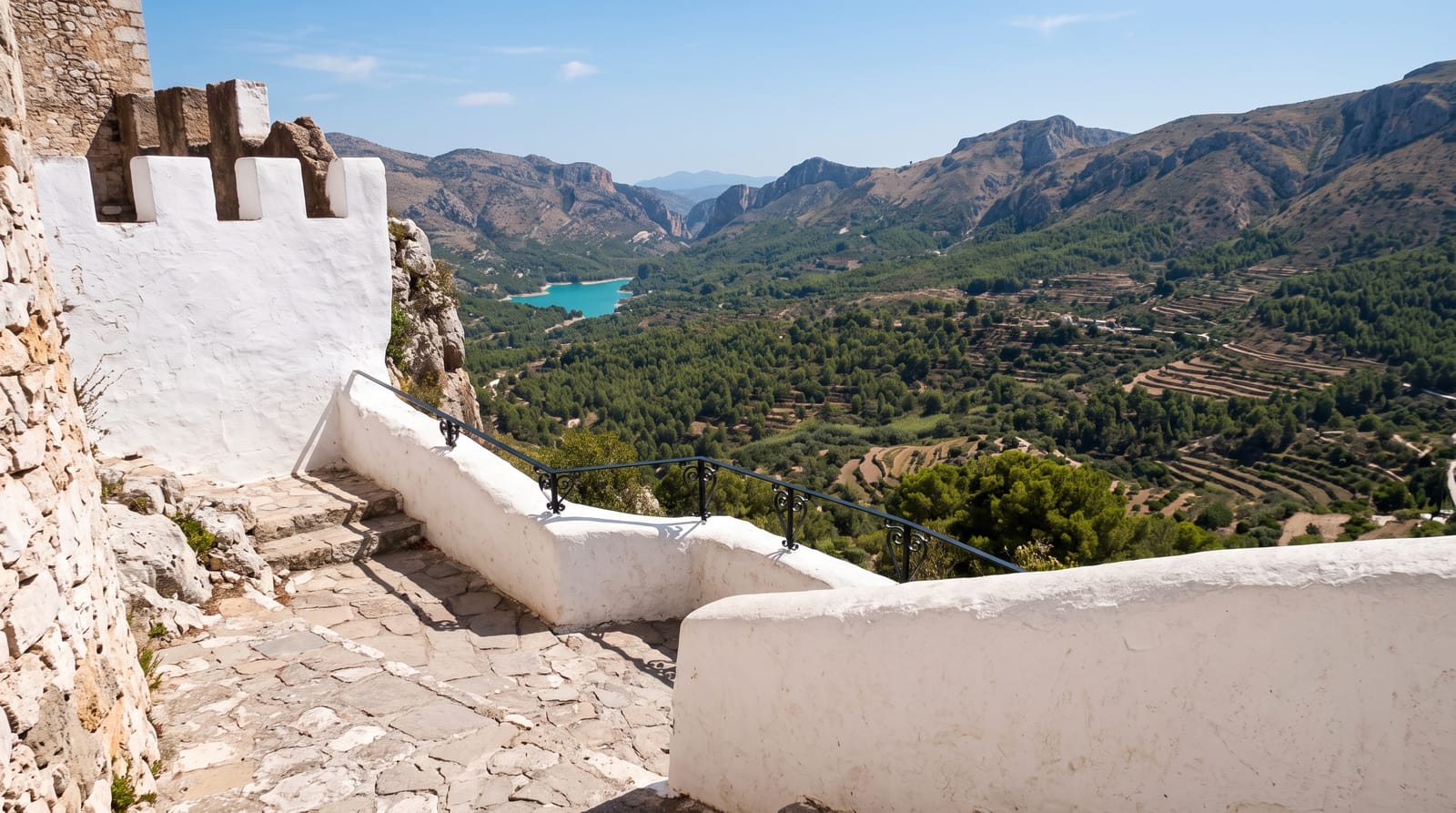
Guadalest sits on a limestone crag in the Sierra de Aitana, and the only way into the upper village is through a tunnel cut through the rock, which is why it held out repeatedly against attack; the castle of San Jose above dates from the eleventh century and was damaged by earthquakes in 1644 and the War of the Spanish Succession, leaving fragments and a bell tower on the summit. The reservoir below is an intense turquoise from dissolved limestone. The village of around two hundred residents receives an enormous number of day visitors from the Costa Blanca resorts, and it has responded with a dense concentration of small museums, on miniatures, torture instruments, vehicles, salt and dolls, alongside souvenir shops.
Highlights
- The rock tunnel - the cut passage that is the only entrance to the upper village.
- The castle remains - fragments and a bell tower on the crag.
- The turquoise reservoir - limestone-coloured water in the valley below.
- The small museums - a dense cluster of private collections in the village.
When to go
Spring and autumn; the village is packed with coach groups from mid-morning to late afternoon most of the year, so early or late gives some space. Summer is hot on the exposed rock.
Good to know
Guadalest receives coach traffic on a scale out of proportion to its size and is genuinely crowded most days. The museums are private, individually ticketed and of mixed quality. Parking is below the village and charged.
Nearby
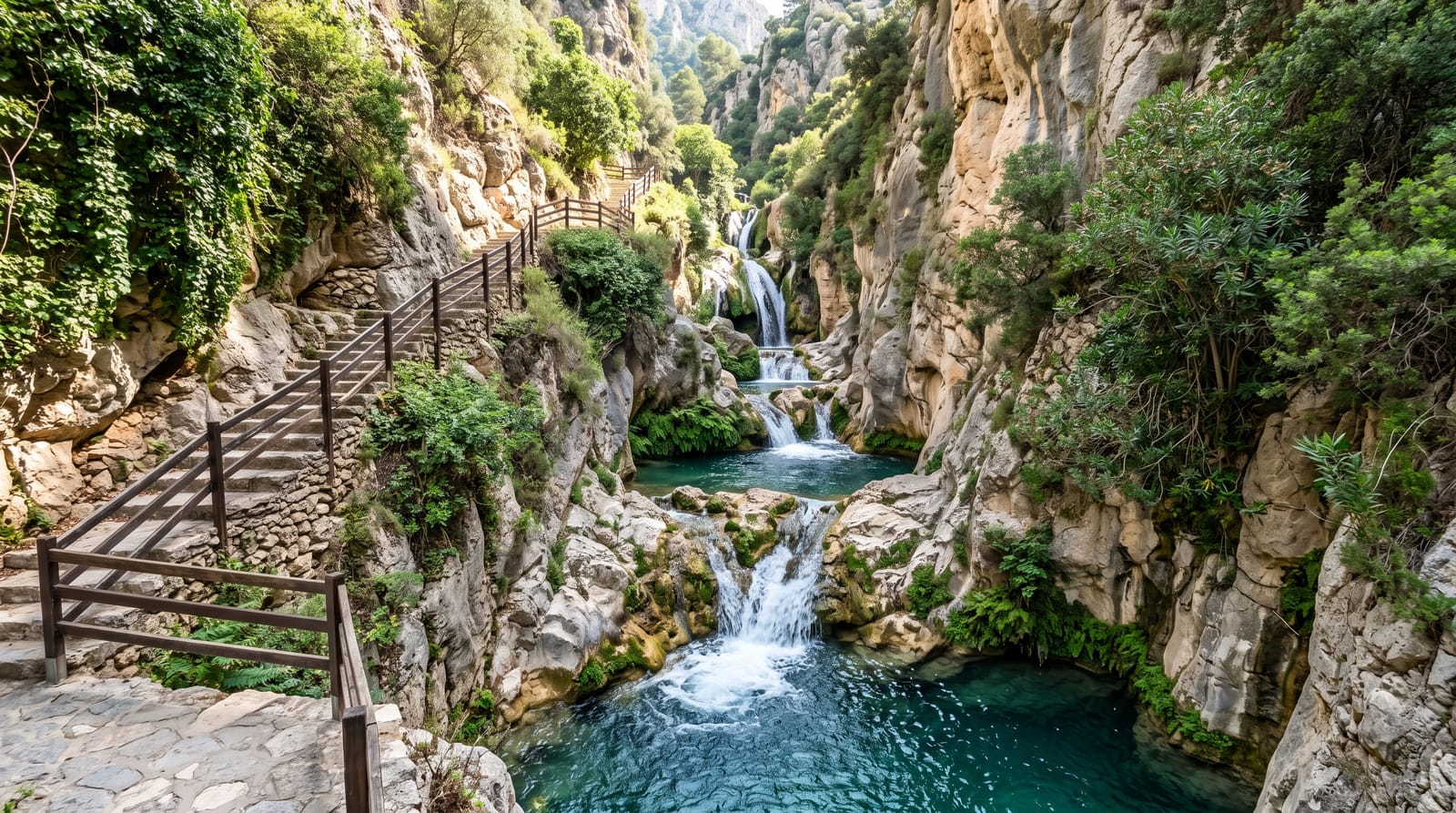
The Fuentes del Algar waterfalls are close; Benidorm and the coast lie south-east.
Key facts
Source: Wikidata, item Q984526, read on 18 October 2026.
What to pack for Guadalest
Chosen from what this place is for. Tap a kit for the full checklist.
- Comfortable walking shoes - Sightseeing means kilometres of pavement and cobbles daily. Find on Amazon
- A slim anti-theft daypack - Zips that close properly; keep it in front in crowds and on transit. Find on Amazon
- A refillable water bottle - Many cities have public fountains; save money and plastic. Find on Amazon
- A light layer + compact umbrella - For museum air-con and a sudden shower. Find on Amazon
Some links on this page are Amazon affiliate links - if you buy through them we may earn a small commission at no extra cost to you.
All packing kitsPlan your trip
Where to start if Guadalest is going on the list.
Booking links on this page are affiliate links - if you book through them we may earn a small commission at no extra cost to you. It never changes what we write about a place.
Opening times, ticket prices and seasonal closures change - check the official source before you go: official site.