Lahij
A coppersmiths' village on cobbled mountain lanes - workshops hammering by hand, and a medieval water and sewer system still in use.
Updated 18 October 2026
AI illustration
UNESCO Intangible Cultural Heritage
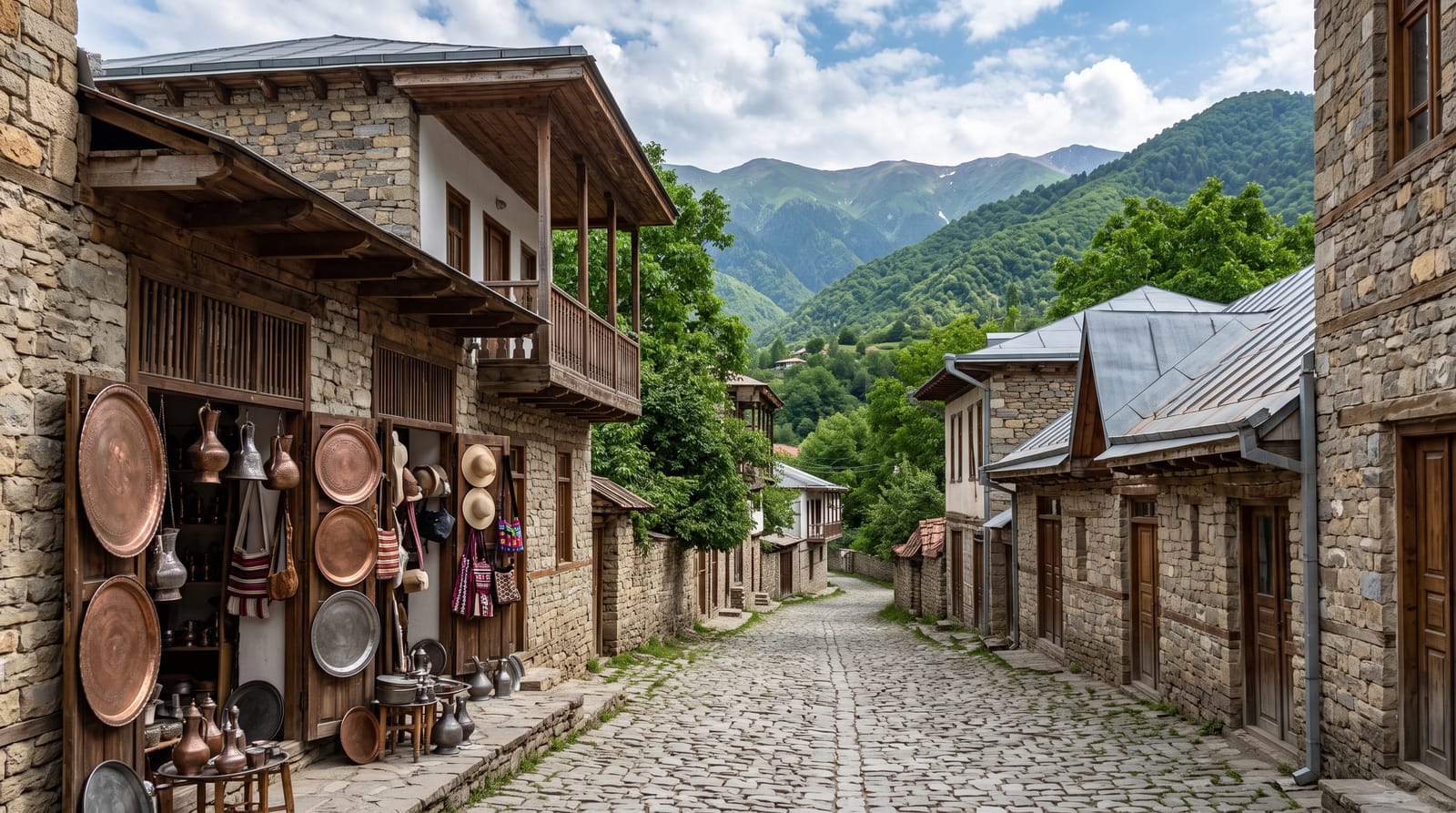
Lahij sits in a valley of the Greater Caucasus and has made copper for centuries - the ring of hammers on metal still carries down its cobbled main lane, where workshops sell trays, jugs and pots engraved with patterns passed between generations. UNESCO lists the copper craftsmanship of Lahij as intangible heritage. Beneath the stone-paved streets runs a medieval drainage and water system that still functions, and the houses are built with timber laced into the stonework as earthquake protection, a technique the village worked out long ago and never abandoned.
History
Lahij is one of the oldest settlements in Azerbaijan, and in the Middle Ages it became a leading centre of craftsmen, whose masters made some forty kinds of folk art: jewellers, smiths, carpenters, carpet makers, engravers, painters, tanners, shoemakers and weavers among them, their work now held in well-known museums. Its old drainage system is thought by some experts to be 1,000 to 1,500 years old (Wikipedia, Lahıc, Ismailli).
What's there
- Copper workshops - hammering, engraving and tinning done by hand.
- The cobbled main lane - stone paving over the medieval drainage system.
- Earthquake-laced houses - timber-and-stone construction in the old buildings.
- The local museums - small collections of craft and daily life.
When to go
Late spring to autumn is the season; the road is difficult in winter and workshops thin out. Weekends bring visitors from Baku, weekdays are quiet. Autumn colour in the surrounding valley is excellent.
Practical notes
The access road from Ismayilli is rough, narrow and unpaved in stretches, with drops - many visitors take a driver rather than self-driving. Some of the copper on sale is machine-made or imported; the genuine workshops are the ones with the noise and the mess. Prices are negotiable. The village is small and seen in a couple of hours, so it usually pairs with Sheki or Gabala.
Nearby
Ismayilli, Gabala and Sheki along the Caucasus foothill route.
Key facts
Source: Wikidata, item Q1800656, read on 18 October 2026.
What to pack for Lahij
Chosen from what this place is for. Tap a kit for the full checklist.
- Comfortable walking shoes - Sightseeing means kilometres of pavement and cobbles daily. Find on Amazon
- A slim anti-theft daypack - Zips that close properly; keep it in front in crowds and on transit. Find on Amazon
- A refillable water bottle - Many cities have public fountains; save money and plastic. Find on Amazon
- A light layer + compact umbrella - For museum air-con and a sudden shower. Find on Amazon
Some links on this page are Amazon affiliate links - if you buy through them we may earn a small commission at no extra cost to you.
All packing kitsPlan your trip
Where to start if Lahij is going on the list.
Booking links on this page are affiliate links - if you book through them we may earn a small commission at no extra cost to you. It never changes what we write about a place.
Opening times, ticket prices and seasonal closures change - check the official source before you go: official site.