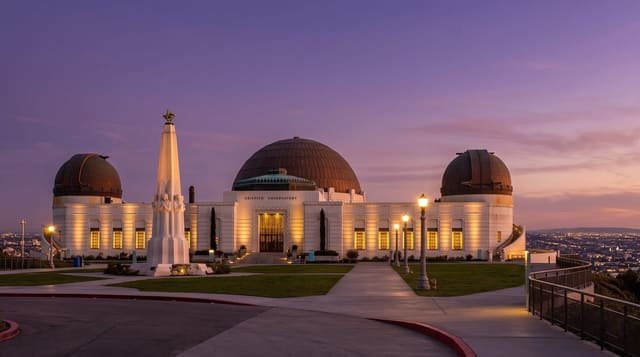
Siding Spring Observatory
Australia's main optical astronomy site, a cluster of white domes on a ridge in the Warrumbungle range under a protected dark sky.
Updated 18 October 2026
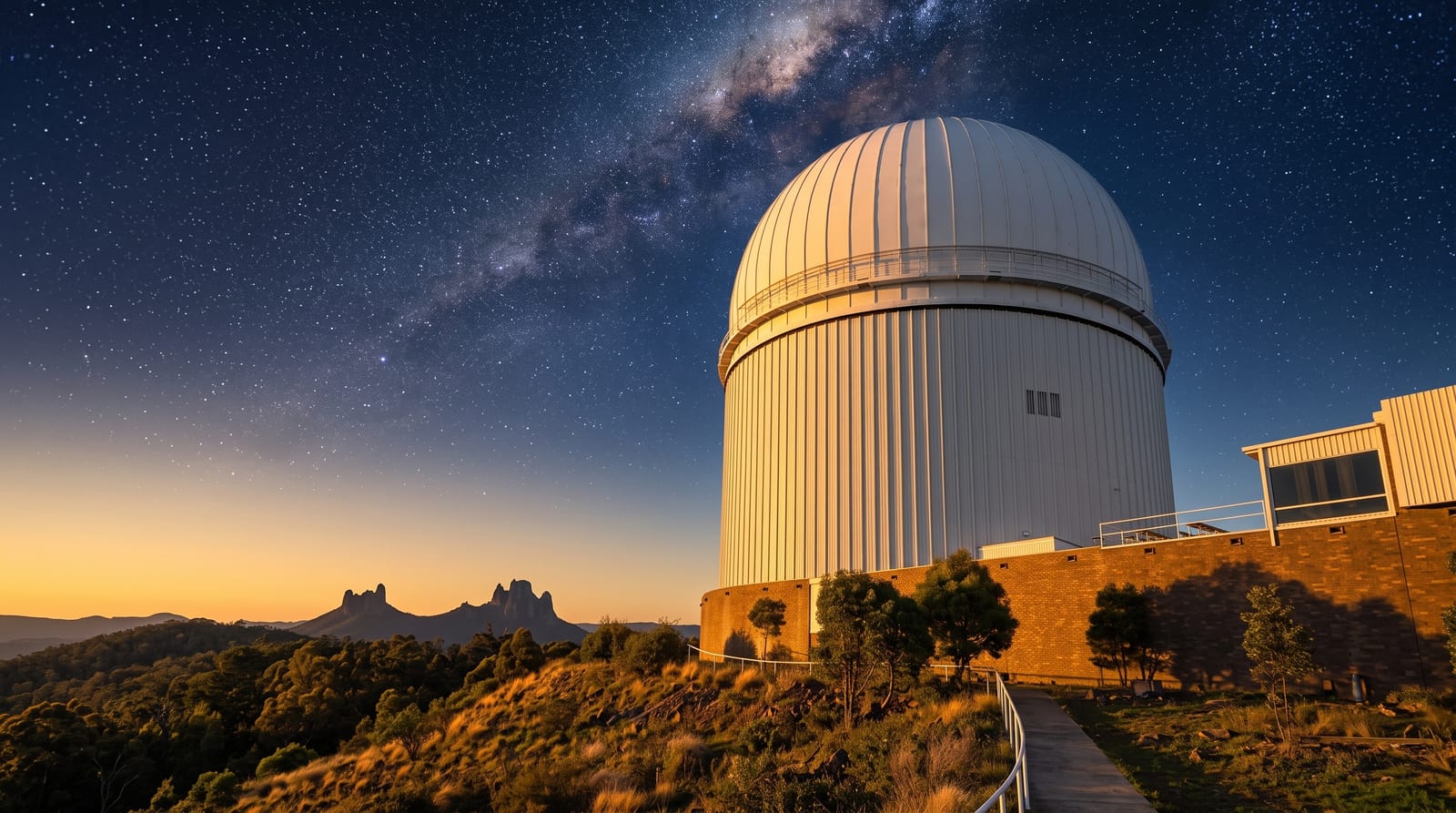
AI illustration
Siding Spring sits on a ridge in the Warrumbungle range in central New South Wales, chosen for its altitude, its dry air and its distance from city lights. More than sixty telescopes stand on the site, though not all of them are in use, the largest being the Anglo-Australian Telescope with a mirror just under four metres across, still the biggest optical telescope in the country. The surrounding Warrumbungle National Park was declared a dark sky park, with lighting controls in the nearby towns to protect the observing conditions. A visitor centre near the main dome explains what the instruments do and gives a view into the telescope hall in daylight hours. The observing itself happens at night, remotely and without an audience.
History
The original observatory at Mount Stromlo near Canberra was set up by the Commonwealth government in 1924, but by the 1950s the city's lights had brightened its sky so much that many faint objects were lost. Bart Bok began the search for a new site, a survey narrowed the choice to Siding Spring and Mount Bingar near Griffith, and in 1962 the Australian National University chose Siding Spring for its dark, cloud-free skies. When the Australian and British governments finally agreed in 1969 to build a large telescope together, the site was ready, and the 3.9-metre Anglo-Australian Telescope went up here in the early 1970s, with the UK Schmidt Telescope a kilometre to the northeast; the Schmidt was amalgamated with the AAT in 1987. In 1984 Prime Minister Bob Hawke opened the university's own 2.3-metre telescope in its simple box-shaped dome that turns with it (Wikipedia, Siding Spring Observatory).
What's there
- The Anglo-Australian Telescope dome - the largest instrument on the ridge, viewed from an internal gallery.
- The ridge of domes - a scattering of white enclosures of different sizes along the crest.
- The visitor centre displays - explanations of what the telescopes actually observe and how time on them is allocated.
- The night sky - the dark sky park around the observatory, with the Magellanic Clouds visible on clear nights.
When to go
April to October gives the clearest, driest skies and the coldest nights, which is what you want for stargazing. The visitor centre keeps daytime hours that change seasonally, so check before driving out. Public observing nights are run occasionally rather than routinely and by separate booking. New moon periods are best for the sky itself.
Before you go
This is a working research site, not a public observatory: you do not look through the big telescope, and the daytime visit is a display and a view of a closed dome. Opening hours are limited and change, so a wasted drive is a real risk. Coonabarabran is around six hours from Sydney. Winter nights on the ridge are bitterly cold and the road up is steep and unlit.
Nearby
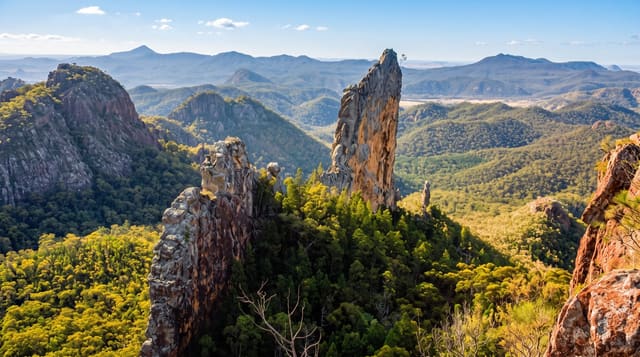
Warrumbungle National Park with its volcanic spires and walking tracks surrounds the site.
Key facts
Source: Wikidata, item Q930096, read on 18 October 2026.
What to pack for Siding Spring Observatory
Chosen from what this place is for. Tap a kit for the full checklist.
- Spare batteries + cards - Cold and long shoots drain power; never run out at the good light. Find on Amazon
- Comfortable walking shoes - Sightseeing means kilometres of pavement and cobbles daily. Find on Amazon
- A compact tripod - Essential for night skies, aurora, waterfalls and low light. Find on Amazon
- A slim anti-theft daypack - Zips that close properly; keep it in front in crowds and on transit. Find on Amazon
Some links on this page are Amazon affiliate links - if you buy through them we may earn a small commission at no extra cost to you.
All packing kitsPlan your trip
Where to start if Siding Spring Observatory is going on the list.
Booking links on this page are affiliate links - if you book through them we may earn a small commission at no extra cost to you. It never changes what we write about a place.
Opening times, ticket prices and seasonal closures change - check the official source before you go: official site.