Warrumbungle National Park
The eroded core of an ancient volcano, with spires and dykes above the plain, and Australia's first Dark Sky Park.
Updated 18 October 2026
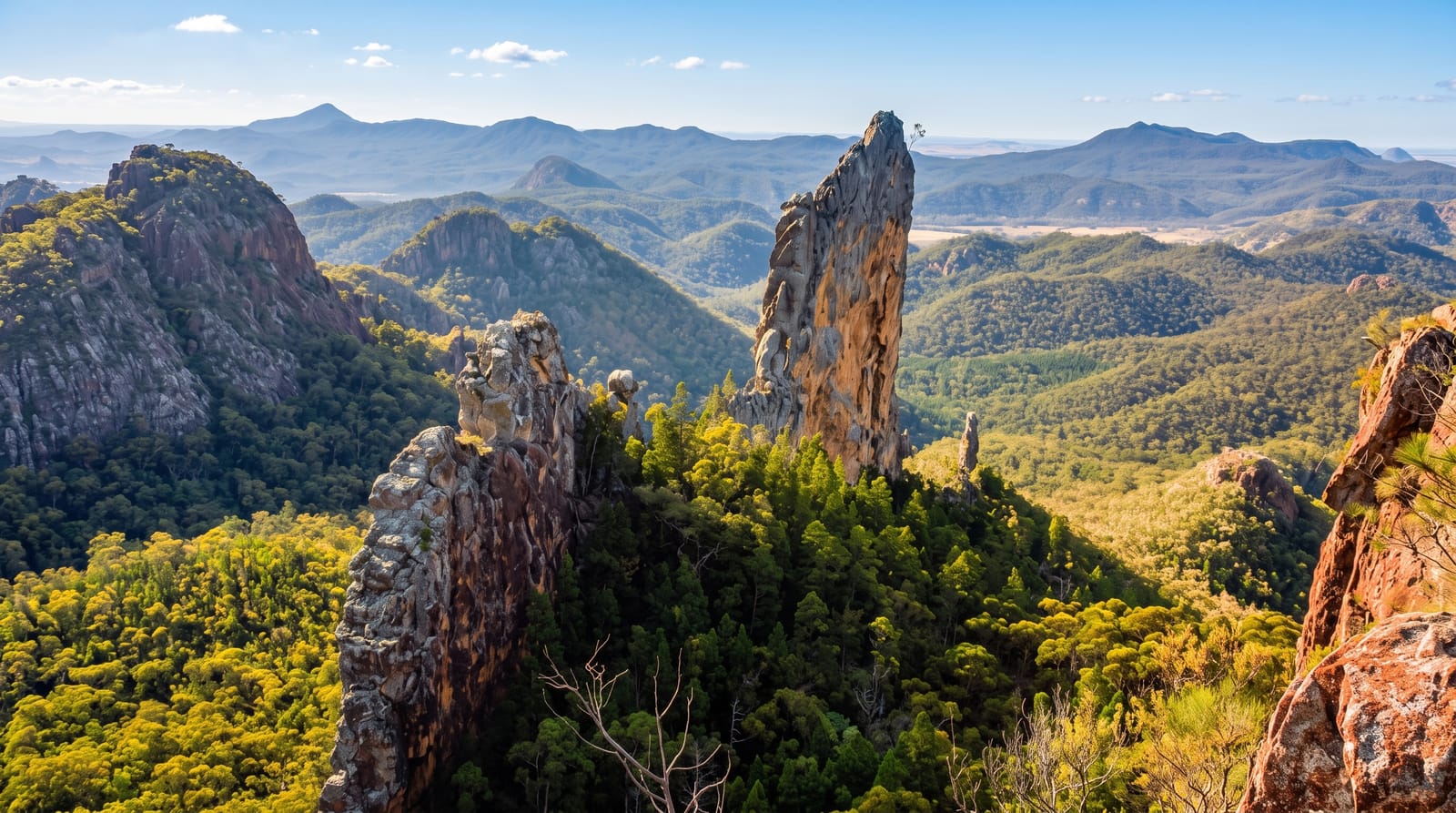
AI illustration
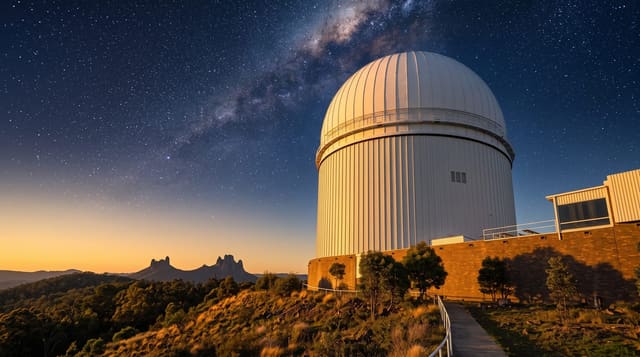
The Warrumbungles are what remains of a shield volcano active around fifteen million years ago, worn down until only the hardest plugs and dykes stand: spires, domes and the Breadknife, a blade of rock ninety metres high and only a few metres thick. The Grand High Tops walk, about fourteen kilometres, climbs past it to a ridge with views over the whole formation and is one of the best-known day walks in inland Australia. In 2016 the park was declared Australia's first Dark Sky Park, and the Siding Spring Observatory on its edge, home to the country's largest optical telescope, has a visitor centre. Wildlife includes kangaroos, emus and koalas.
History
The National Parks and Primitive Areas Council first proposed reserving the most scenic parts of the range as the Warrumbungle National Monument in 1936, and the area was proclaimed a reserve in 1953. Management passed to the NSW National Parks and Wildlife Service in 1967, the park's first ranger, Carl Dow, led the building of its walking tracks by hand, in December 2006 it joined the National Heritage List, and on 4 July 2016 it became the first park in Australia certified as a Dark Sky Park (Wikipedia, Warrumbungle National Park).
Highlights
- The Breadknife - the thin blade of rock on the Grand High Tops walk.
- The volcanic spires - Belougery Spire, Crater Bluff and the eroded plugs.
- The dark sky - some of the clearest night skies accessible in Australia.
- Siding Spring Observatory - the research telescopes and visitor centre nearby.
When to go
March to November for walking; summer is very hot on exposed rock and fire closures occur. Winter nights are cold but give the clearest skies. The park burned severely in 2013 and the vegetation is still recovering in places.
Before you go
The Grand High Tops is a full day of steep walking with sun exposure and no water on route. Camping and vehicle entry are charged and campsites book out in holidays. Observatory access is limited to the visitor centre, not the telescopes themselves.
Nearby
Coonabarabran is the base town; Mount Kaputar lies north near Narrabri.
Key facts
Source: Wikidata, item Q847071, read on 18 October 2026.
What to pack for Warrumbungle National Park
Chosen from what this place is for. Tap a kit for the full checklist.
- Broken-in walking shoes or boots - Grip and ankle support matter more than looks; never hike in brand-new boots. Find on Amazon
- Binoculars - The single best wildlife tool - even a compact pair transforms a sighting. Find on Amazon
- Spare batteries + cards - Cold and long shoots drain power; never run out at the good light. Find on Amazon
- Shelter suited to the place - Tent, tarp or hut booking - match it to the terrain and rules. Find on Amazon
Some links on this page are Amazon affiliate links - if you buy through them we may earn a small commission at no extra cost to you.
All packing kitsPlan your trip
Where to start if Warrumbungle National Park is going on the list.
Booking links on this page are affiliate links - if you book through them we may earn a small commission at no extra cost to you. It never changes what we write about a place.
Opening times, ticket prices and seasonal closures change - check the official source before you go: official site.