Pigeon House Mountain (Didthul)
A distinctive flat-topped peak in Morton National Park, climbed by a steep track ending in a series of steel ladders.
Updated 4 September 2026
AI illustration
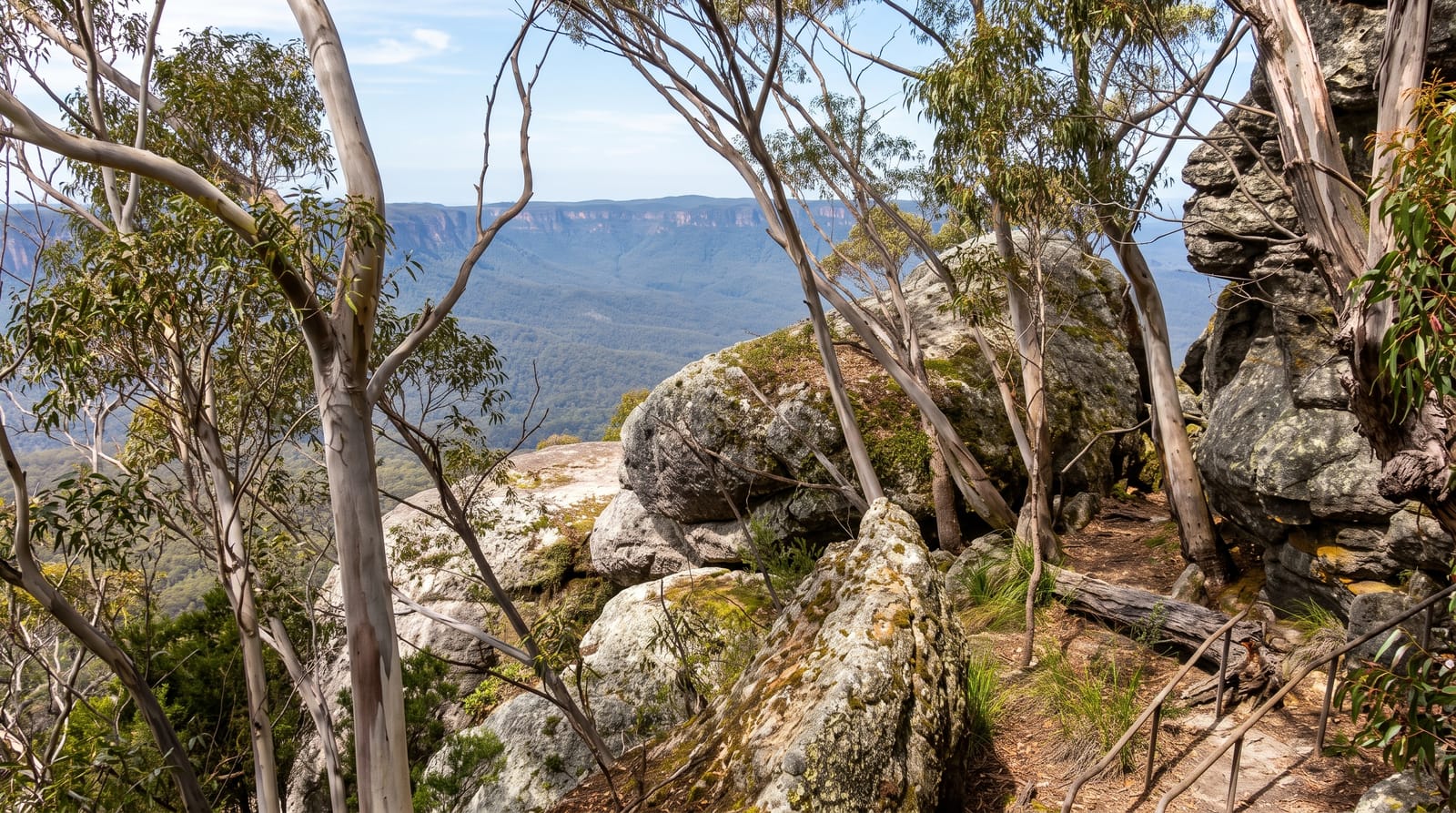
Didthul, named Pigeon House by James Cook in 1770 from its shape seen from the sea, rises to about seven hundred and twenty metres with a squared rock cap that makes it recognisable from a great distance along the South Coast. The track climbs steeply through forest for the first section, levels across a heath saddle, then finishes with a series of steel ladders bolted to the summit cliffs. From the top, the view takes in the Budawang Range, the wilderness of Morton National Park and the coast from Jervis Bay south. The mountain is culturally significant to the Yuin people. The round trip is about five kilometres and takes three to four hours.
What you'll find
- The summit ladders - steel stairs bolted up the final rock cap.
- The summit view - the Budawangs, wilderness and the coast beyond.
- The heath saddle - open flowering heath partway up the climb.
- The forest ascent - steep woodland on the lower section.
When to go
April to November for cooler climbing; summer is hot on an exposed track. The mountain and its access roads have been closed for extended periods after bushfire damage, so checking the park status before travelling is essential.
Before you go
The climb is short but steep and the ladders are exposed, which is difficult for anyone uneasy with heights. Access roads are unsealed and rough in places. There is no water on the track and no phone coverage. Closures after fire or storm are frequent.
Nearby
Ulladulla and Milton lie on the coast; the Budawang wilderness stretches west.
What to pack for Pigeon House Mountain (Didthul)
Chosen from what this place is for. Tap a kit for the full checklist.
- Broken-in walking shoes or boots - Grip and ankle support matter more than looks; never hike in brand-new boots. Find on Amazon
- Layers for big temperature swings - Warm sun by day, near-freezing at night, even near the equator. Find on Amazon
- Layers + a waterproof shell - Mountain weather turns fast; a packable rain jacket saves the day. Find on Amazon
- Extra-strong sun protection - Thin air means fierce UV; hat, sunglasses and high-SPF sunscreen. Find on Amazon
Some links on this page are Amazon affiliate links - if you buy through them we may earn a small commission at no extra cost to you.
All packing kitsPlan your trip
Where to start if Pigeon House Mountain (Didthul) is going on the list.
Booking links on this page are affiliate links - if you book through them we may earn a small commission at no extra cost to you. It never changes what we write about a place.
Opening times, ticket prices and seasonal closures change - check the official source before you go: official site.