Naracoorte Caves
A limestone cave system in southeast South Australia holding one of the richest fossil records of Australia's extinct megafauna.
Updated 18 October 2026
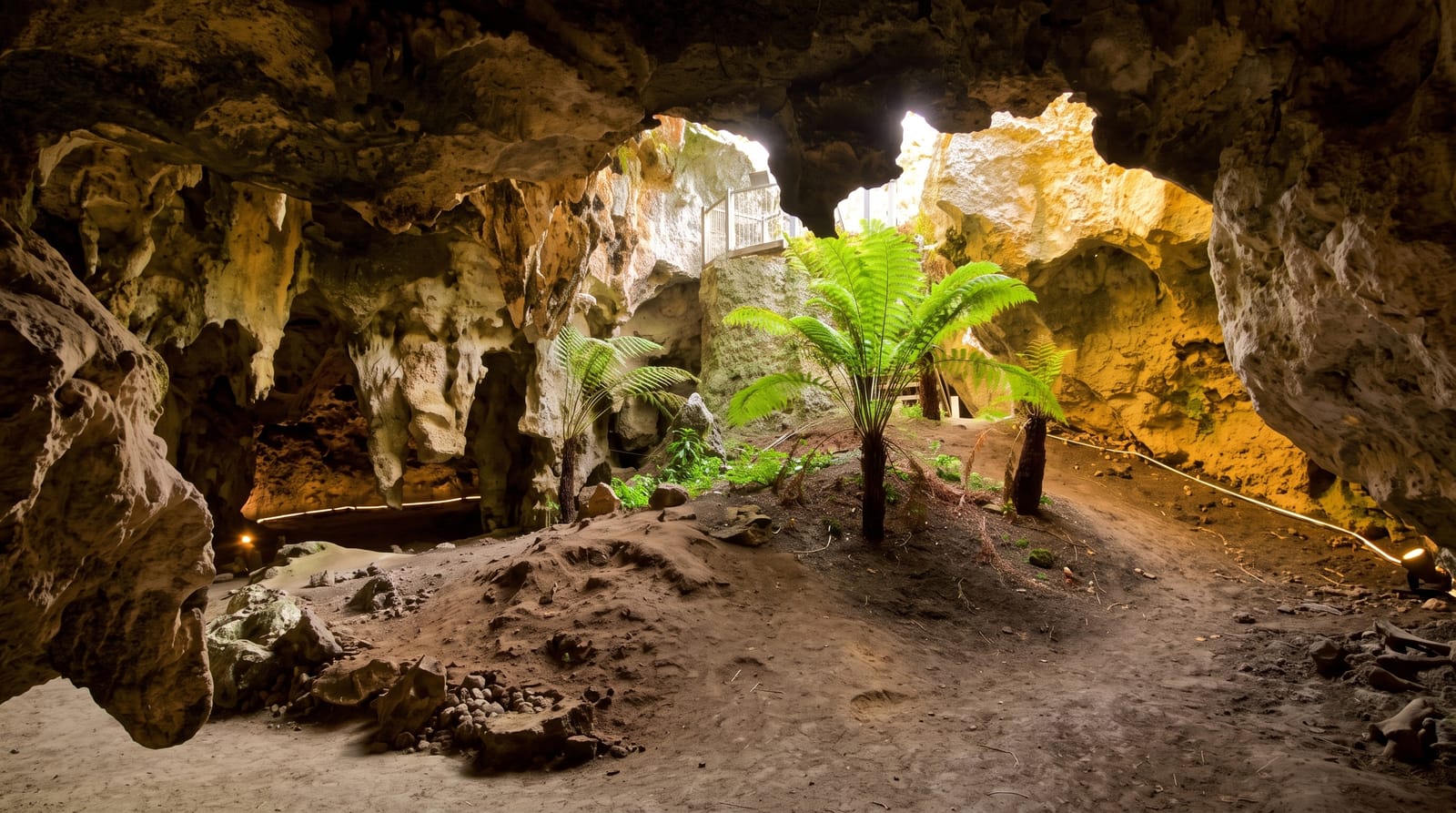
AI illustration
UNESCO World Heritage
Naracoorte Caves is listed as World Heritage not for its formations, which are pleasant enough, but for what fell into it. Over an extremely long span, animals dropped through openings in the limestone and could not get out, and their bones accumulated in layers on the cave floors, producing one of the most complete fossil records of Australia's extinct megafauna anywhere. Victoria Fossil Cave is where that story is told, with excavated deposits left in place. Other caves on the site are shown for their decoration, and one holds a maternity colony of southern bentwing bats that visitors watch on infrared cameras rather than in person. There are also caves set aside for guided adventure caving, crawling rather than walking.
History
Europeans first came across the caves in 1845, with the discovery of Blanche Cave, and by 1885 they were popular and vulnerable enough to vandalism that the Department of Woods and Forests appointed a caretaker. The first recorded fossil collection was made in 1908, when William Reddan took bones from Specimen Cave, and in 1969 Victoria Cave yielded the largest known deposit of Australian Pleistocene vertebrate fossils. The reserve was renamed the Naracoorte Caves Conservation Park on 27 April 1972, part of it was inscribed on the World Heritage List on 17 December 1994 together with the Riversleigh fossil site in Queensland, and it became a national park on 18 January 2001 (Wikipedia, Naracoorte Caves National Park).
Highlights
- Victoria Fossil Cave - excavated bone deposits of extinct megafauna left in place underground.
- Alexandra Cave - a smaller decorated cave of columns and pools on a guided walk.
- The Bat Observation Centre - infrared cameras trained on a bentwing bat colony visitors cannot enter.
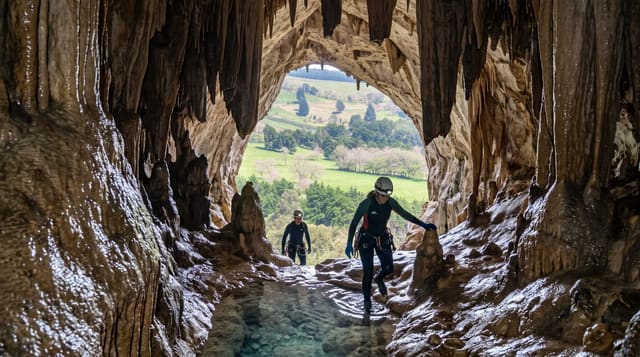
- Adventure caving - guided crawling routes through undeveloped sections of the system.
When to go
The caves hold a steady cool temperature all year, so weather matters mainly for the drive. Tours run to a timetable and the fossil tour in particular sells out in school holidays, so book. The bat colony is most active in the warmer months, when the cameras show the maternity chamber at its fullest.
What to expect
If you have seen large decorated cave systems elsewhere, the formations here will not compete; the interest is scientific and depends heavily on the guide you get. Everything runs on fixed tour times, so a spontaneous visit can mean waiting an hour or two. Stairs and uneven floors make some caves unsuitable for limited mobility.
Nearby
Coonawarra's vineyards are just north, and Mount Gambier with its crater lakes lies to the south.
Key facts
Source: Wikidata, item Q1135796, read on 18 October 2026.
What to pack for Naracoorte Caves
Chosen from what this place is for. Tap a kit for the full checklist.
- Head torch + spare batteries - Hands-free light is essential; caves are truly dark. Find on Amazon
- Grippy closed shoes - Cave floors are wet, muddy and slick with formations. Find on Amazon
- A warm layer - Many caves sit near 10°C year-round, even in a hot country. Find on Amazon
- Gloves - Protect your hands on rough rock and cold metal handrails. Find on Amazon
Some links on this page are Amazon affiliate links - if you buy through them we may earn a small commission at no extra cost to you.
All packing kitsPlan your trip
Where to start if Naracoorte Caves is going on the list.
Booking links on this page are affiliate links - if you book through them we may earn a small commission at no extra cost to you. It never changes what we write about a place.
Opening times, ticket prices and seasonal closures change - check the official source before you go: official site.