Great Otway National Park
Cool rainforest, waterfalls and a Californian redwood grove behind the Great Ocean Road, with glow worms after dark.
Updated 18 October 2026
AI illustration
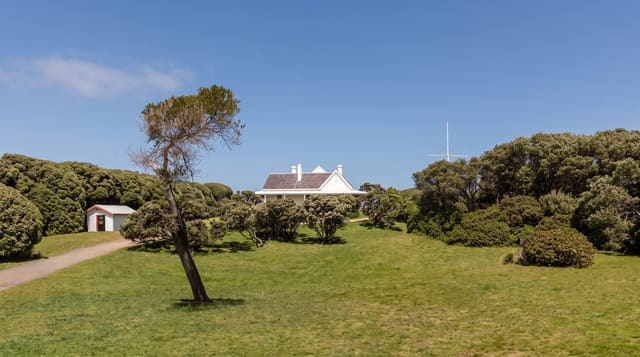
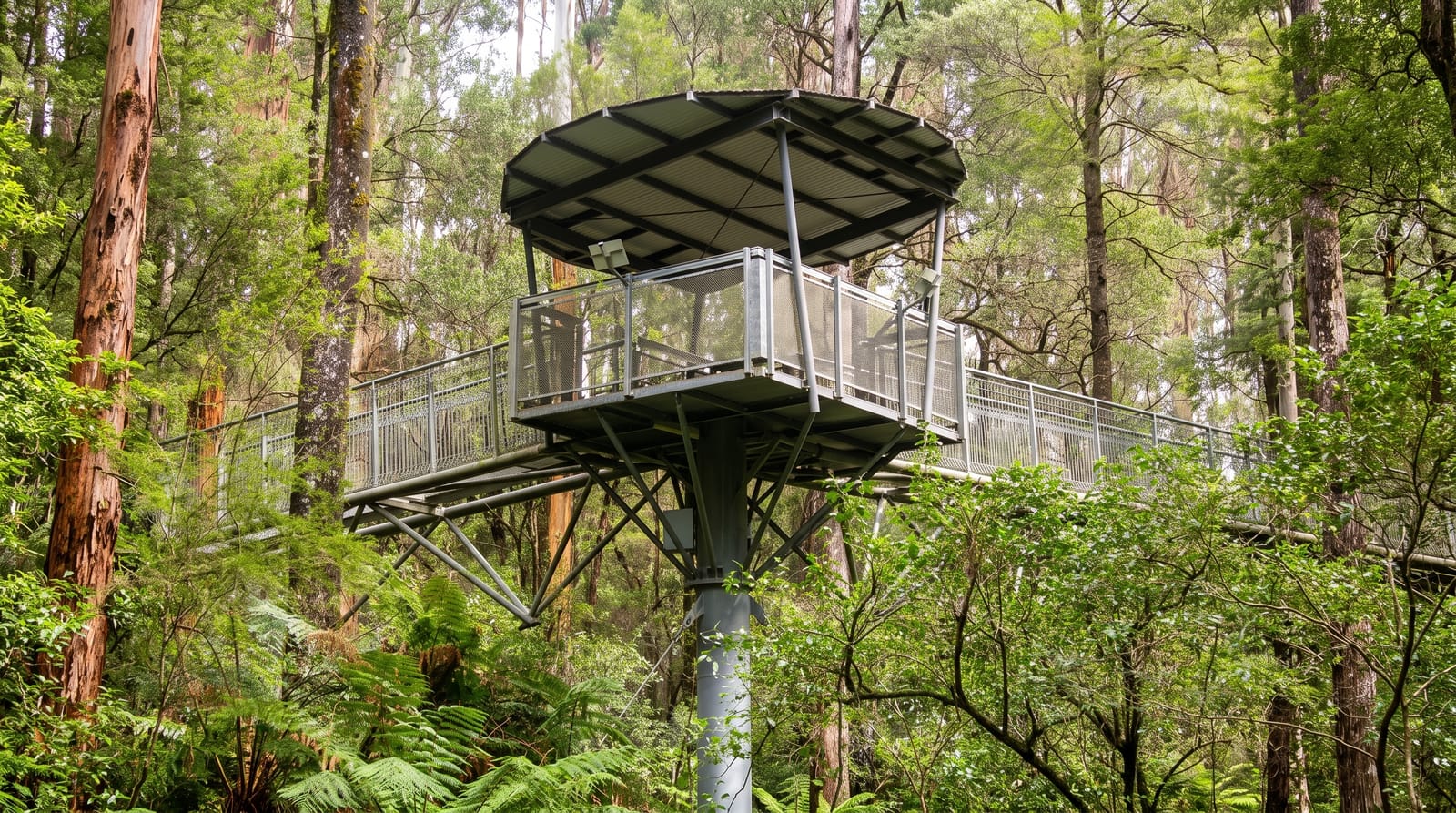
The Otway Ranges catch the moisture coming off the Southern Ocean and hold cool temperate rainforest of myrtle beech and tree ferns, unusually wet for Victoria. The park runs from the coast up into the hills, taking in Erskine Falls near Lorne, Hopetoun Falls and Beauchamp Falls, the Maits Rest boardwalk through old-growth forest, and the Otway Fly treetop walkway. A grove of Californian redwoods planted in the 1930s beside the Aire River has grown into a dense stand that draws photographers. The Cape Otway Lightstation of 1848, the oldest surviving lighthouse on mainland Australia, stands at the southern point, and glow worms light the banks at Melba Gully after dark.
History
Commercial logging began in the Otway Ranges in the 1880s and grew with better roads and railways to a peak in 1961, stripping almost all the old-growth forest before it was greatly reduced, and bushfires have repeatedly burned the area, most recently in the Ash Wednesday fires of 1983. After a campaign by local people and the Otway Ranges Environment Network, the park was declared in 2004 by joining Otway National Park, Angahook-Lorne, Carlisle and Melba Gully state parks, parts of the Otway State Forest and other reserves, and it was gazetted on 11 December 2005 (Wikipedia, Great Otway National Park).
What you'll find
- The waterfalls - Erskine, Hopetoun, Beauchamp and Triplet falls in the hills.
- The redwood grove - Californian redwoods planted in the 1930s by the Aire River.
- Cape Otway Lightstation - the 1848 lighthouse at the cape.
- The glow worms - Melba Gully after dark, seen without torches.
When to go
September to May for the driest tracks; the Otways are wet year-round and rain should be expected in any season. Waterfalls are strongest in winter and spring. Glow worms need a dark, still, warm night and no torchlight.
What to expect
Roads through the ranges are narrow and winding, and unsealed in places. Leeches are common on wet tracks. The koalas once easy to see along Lighthouse Road have declined sharply after overbrowsing and management culls. Waterfall car parks fill on weekends.
Nearby
Apollo Bay and the Great Ocean Road lie south; Lorne is northeast.
Key facts
Source: Wikidata, item Q68472, read on 18 October 2026.
What to pack for Great Otway National Park
Chosen from what this place is for. Tap a kit for the full checklist.
- Broken-in walking shoes or boots - Grip and ankle support matter more than looks; never hike in brand-new boots. Find on Amazon
- Binoculars - The single best wildlife tool - even a compact pair transforms a sighting. Find on Amazon
- Strong insect repellent - DEET or picaridin; the jungle is where bites and disease risk are highest. Find on Amazon
- Layers + a waterproof shell - Mountain weather turns fast; a packable rain jacket saves the day. Find on Amazon
Some links on this page are Amazon affiliate links - if you buy through them we may earn a small commission at no extra cost to you.
All packing kitsPlan your trip
Where to start if Great Otway National Park is going on the list.
Booking links on this page are affiliate links - if you book through them we may earn a small commission at no extra cost to you. It never changes what we write about a place.
Opening times, ticket prices and seasonal closures change - check the official source before you go: official site.