Jaramillo Petrified Forest
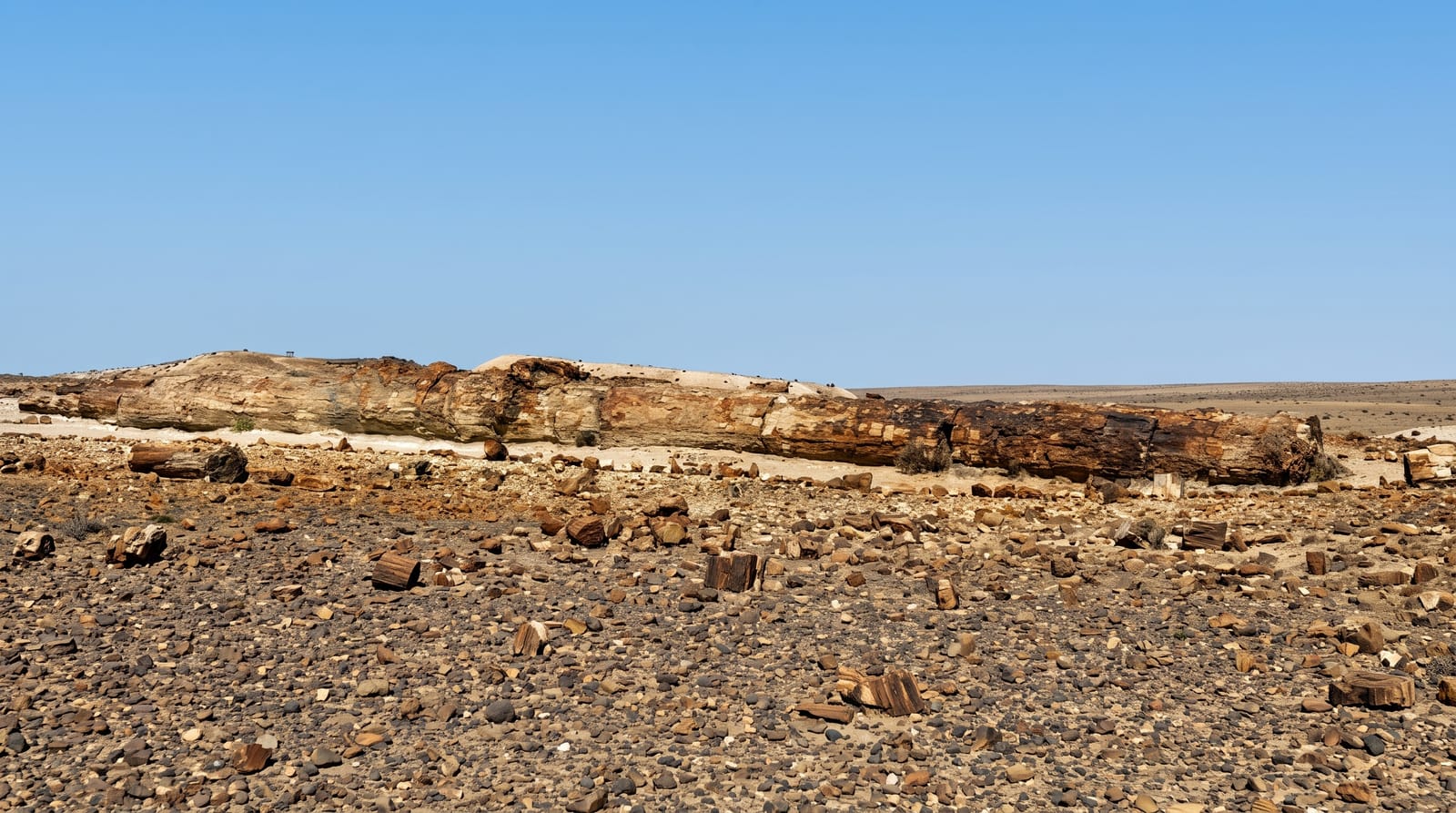
Jurassic araucaria trunks lying petrified across bare steppe, some of the largest fossil trees known anywhere.
Updated 4 September 2026
AI illustration
The Bosques Petrificados de Jaramillo protect a landscape from before the Andes existed. Around 150 million years ago this was a forest of giant araucaria; volcanic eruptions buried it in ash, silica replaced the wood, and the mountains rose to the west afterwards, drying the region into the steppe visible today. Erosion has since uncovered the trunks, some over thirty metres long and more than three metres thick, lying scattered across pale ground with cones and fragments around them. A short interpretive trail runs from the ranger station through the main concentration. It became a national park in 2012, and the isolation is total: bare rock, wind, guanacos and the fossil trees.
What you'll find
- The giant trunks - petrified araucaria logs of extraordinary size.
- The fossil cones - preserved cones and fragments across the ground.
- The interpretive trail - the marked walk from the ranger station.
- The empty steppe - wind-scoured plain with guanacos and no settlement.
When to go
October to April for reasonable temperatures and road conditions; the site is exposed and bitterly cold and windy in winter. Early or late light shows the trunks best. Rain can make the gravel access difficult.
Before you go
The access road is fifty kilometres of gravel with no services, fuel or water, and the nearest facilities are far away on the RN3. The trail is short and the site is a single kind of thing seen repeatedly. Removing fossil material is prohibited and enforced.
Nearby
Jaramillo and Fitz Roy villages sit on the RN3; Puerto Deseado lies southeast on the coast.
What to pack for Jaramillo Petrified Forest
Chosen from what this place is for. Tap a kit for the full checklist.
- Broken-in walking shoes or boots - Grip and ankle support matter more than looks; never hike in brand-new boots. Find on Amazon
- Binoculars - The single best wildlife tool - even a compact pair transforms a sighting. Find on Amazon
- Layers + a waterproof shell - Mountain weather turns fast; a packable rain jacket saves the day. Find on Amazon
- A zoom camera or long lens - Animals rarely come close; reach beats megapixels. Find on Amazon
Some links on this page are Amazon affiliate links - if you buy through them we may earn a small commission at no extra cost to you.
All packing kitsPlan your trip
Where to start if Jaramillo Petrified Forest is going on the list.
Booking links on this page are affiliate links - if you book through them we may earn a small commission at no extra cost to you. It never changes what we write about a place.
Opening times, ticket prices and seasonal closures change - check the official source before you go: official site.