Yosemite National Park
A glacier-carved valley of sheer granite cliffs, giant sequoias and thundering waterfalls in the Sierra Nevada - a UNESCO site and the cradle of the park idea.
Updated 18 October 2026
AI illustration
UNESCO World Heritage
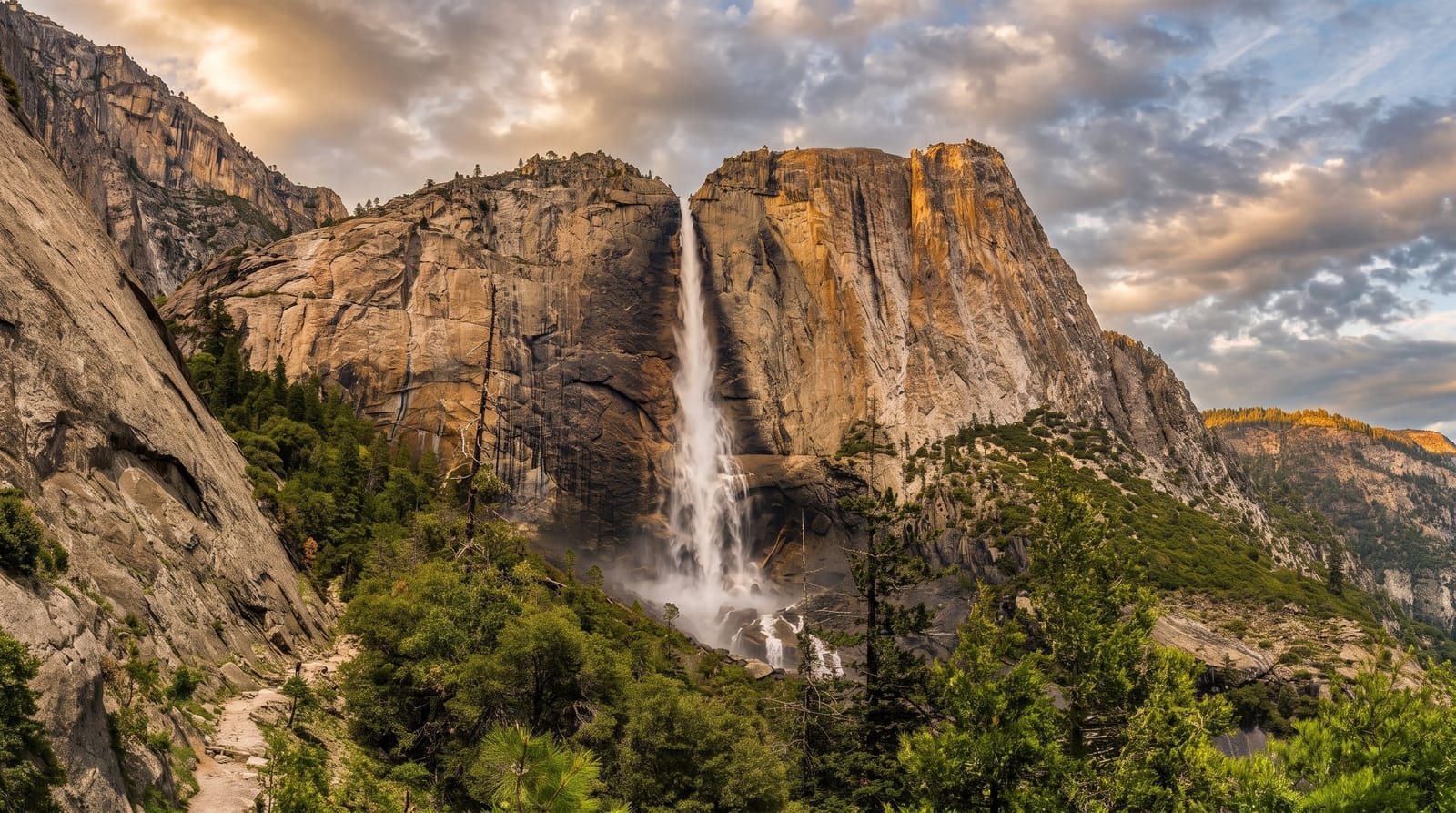
Yosemite Valley is a glacier-carved trench of sheer granite walls, El Capitan and Half Dome towering over meadows and the Merced River, laced with some of the highest waterfalls in North America. Add groves of giant sequoias and the high country of Tuolumne, and it is a landscape that helped launch the whole idea of national parks, honoured by UNESCO.
History
The first people of Yosemite called themselves the Ahwahneechee, the only tribe living within today's park, part of the Southern Sierra Miwok, with Central Sierra Miwok and Yokuts coming to trade and marry; they lived on acorns, seeds, salmon and deer. The California Gold Rush of 1848-1855 brought more than 90,000 newcomers in 1849 alone, and the Indigenous population of California, estimated at 300,000 some 70 years before the rush, fell to 150,000 and ten years later to about 50,000. The park covers 3,070 square kilometres of the Sierra Nevada, almost all of it wilderness, and became a World Heritage Site in 1984 (Wikipedia, Yosemite National Park).
What's there
- El Capitan and Half Dome - the great granite monoliths above the valley.
- Yosemite Falls and Bridalveil - the thundering waterfalls, highest in spring.
- The giant sequoias - the ancient big trees of the Mariposa Grove.
- Glacier Point and Tuolumne - the high viewpoints and alpine country above the valley.
When to go
Late spring for the waterfalls at full snowmelt; autumn for calm and colour. Summer is crowded and the falls dwindle; winter brings snow and quiet, with some roads closed. The high country opens only in summer.
Practical notes
The valley is small and hugely popular, so summer means heavy crowds, traffic and, increasingly, entry reservations, so check ahead. Waterfalls can be nearly dry by late summer. The high country and the sequoia groves spread the visitors and are worth the extra driving.
Nearby
The Sierra Nevada and Mono Lake lie to the east; Sequoia and Kings Canyon parks are to the south.
Key facts
Source: Wikidata, item Q180402, read on 18 October 2026.
What to pack for Yosemite National Park
Chosen from what this place is for. Tap a kit for the full checklist.
- Broken-in walking shoes or boots - Grip and ankle support matter more than looks; never hike in brand-new boots. Find on Amazon
- Binoculars - The single best wildlife tool - even a compact pair transforms a sighting. Find on Amazon
- Warm base layers - Merino or synthetic against the skin - never cotton, which chills when damp. Find on Amazon
- Layers + a waterproof shell - Mountain weather turns fast; a packable rain jacket saves the day. Find on Amazon
Some links on this page are Amazon affiliate links - if you buy through them we may earn a small commission at no extra cost to you.
All packing kitsPlan your trip
Where to start if Yosemite National Park is going on the list.
Booking links on this page are affiliate links - if you book through them we may earn a small commission at no extra cost to you. It never changes what we write about a place.
Opening times, ticket prices and seasonal closures change - check the official source before you go: official site.