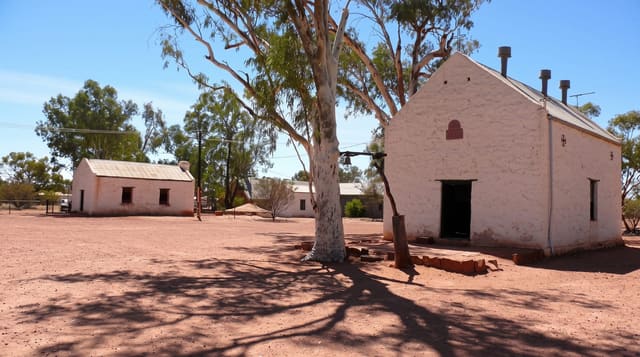
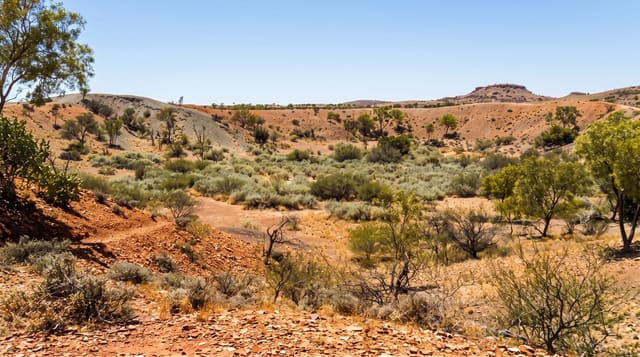
Finke Gorge National Park
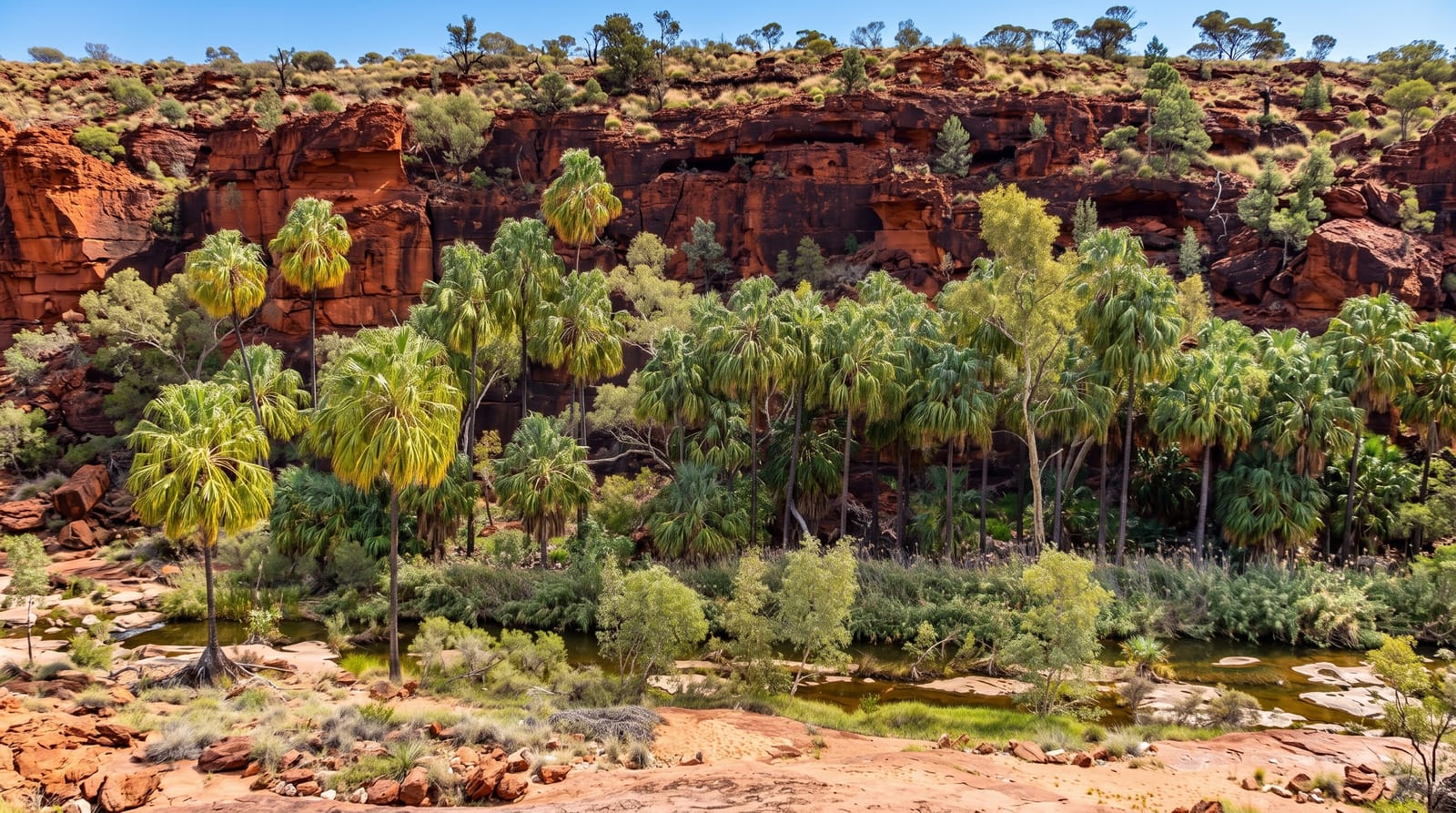
Palm Valley, where a stand of palms found nowhere else survives beside what may be the world's oldest river course.
Updated 12 October 2026
AI illustration
The Finke River is often described as the oldest watercourse on earth, following a route it has held for something like three hundred million years while the land around it changed completely. Within its gorge system lies Palm Valley, where several thousand red cabbage palms grow, a species found nowhere else in the world, surviving in a moist pocket left behind when central Australia dried out. Walking tracks run through the palm stand and up onto the surrounding sandstone plateau, where the Mpaara and Arankaia trails cross rock formations and lookouts. Access is along the sandy Finke riverbed itself, which requires high-clearance four-wheel drive and gets vehicles stuck regularly.
The landscape
- The red cabbage palms - several thousand of a species found only here.
- The Finke riverbed - the ancient watercourse, also the access route.
- The plateau walks - sandstone formations and lookouts above the valley.
- The gorge walls - red rock enclosing the palm stand.
When to go
April to September; summer heat is extreme and the sandy track worse. The riverbed access can be cut after rain. Early starts avoid both heat and the middle-of-day tour traffic.
Good to know
Access is by four-wheel drive only along a rough sandy riverbed, and hire agreements often exclude it; two-wheel drives get bogged regularly. There is no fuel or water in the park. Facilities amount to a campground with basic amenities.
Nearby
Hermannsburg lies northeast; the West MacDonnell Ranges are north.
Key facts
Source: Wikidata, item Q921508, read on 18 October 2026.
What to pack for Finke Gorge National Park
Chosen from what this place is for. Tap a kit for the full checklist.
- Broken-in walking shoes or boots - Grip and ankle support matter more than looks; never hike in brand-new boots. Find on Amazon
- Binoculars - The single best wildlife tool - even a compact pair transforms a sighting. Find on Amazon
- Layers + a waterproof shell - Mountain weather turns fast; a packable rain jacket saves the day. Find on Amazon
- A zoom camera or long lens - Animals rarely come close; reach beats megapixels. Find on Amazon
Some links on this page are Amazon affiliate links - if you buy through them we may earn a small commission at no extra cost to you.
All packing kitsPlan your trip
Where to start if Finke Gorge National Park is going on the list.
Booking links on this page are affiliate links - if you book through them we may earn a small commission at no extra cost to you. It never changes what we write about a place.
Opening times, ticket prices and seasonal closures change - check the official source before you go: official site.