Great Smoky Mountains
The most visited national park in America - blue-hazed forested ridges of extraordinary biodiversity, waterfalls and old mountain cabins, a UNESCO site.
Updated 18 October 2026
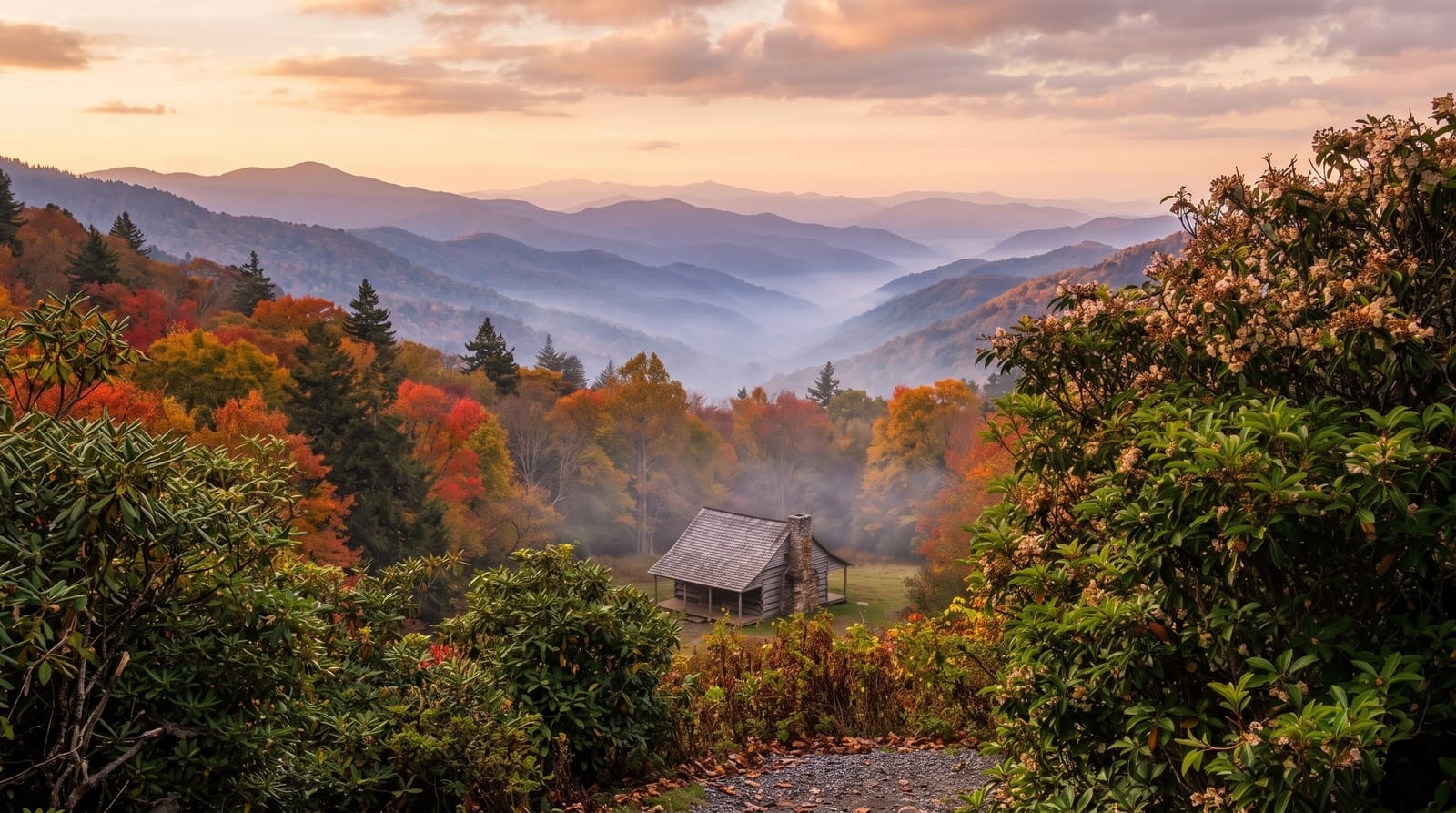
AI illustration
UNESCO World Heritage
The Great Smoky Mountains, named for the blue haze that drifts over their forested ridges, are the most visited national park in the United States and among the most biodiverse temperate places on earth. Ancient Appalachian forests, waterfalls, wildflowers, black bears and the log cabins of the old mountain settlers fill this UNESCO landscape.
History
Native Americans probably hunted in the Smokies for 14,000 years; Archaic projectile points and Woodland pottery about 2,000 years old have been found in the park, and in the Mississippian period farming drew people to river valleys on its edges, part of a chiefdom centred on Chiaha, which the expeditions of Hernando de Soto in 1540 and Juan Pardo in 1567 passed nearby. In the late 17th century the Cherokee moved into the region, and the range, which they called Shaconage, place of blue smoke, lay at the heart of their land, with names such as Kuwohi, mulberry place, and legends of a hidden magic lake. Today it is the most visited national park in the United States (Wikipedia, Great Smoky Mountains National Park).
The landscape
- Clingmans Dome - the highest point, with a ramp to a panorama over the ridges.
- Cades Cove - the loop through a historic valley of cabins and abundant wildlife.
- Waterfalls - Laurel Falls, Grotto and others among the forest trails.
- Autumn colour and spring wildflowers - the seasonal spectacles of the forest.
When to go
Spring for wildflowers, October for the famous autumn colour, and early summer for green trails; the autumn foliage weeks are gloriously busy. Winter is quiet with some roads closed.
Things to know
It is the busiest park in the country, so the main roads, Cades Cove and the autumn weeks bring heavy traffic and crowds, so go early and midweek. The gateway towns of Gatlinburg and Pigeon Forge are intensely commercial. Free entry keeps it accessible, but parking now needs a tag.
Nearby
Gatlinburg and Pigeon Forge are the Tennessee gateway; Asheville and the Blue Ridge Parkway lie to the east.
Key facts
Source: Wikidata, item Q1360486, read on 18 October 2026.
What to pack for Great Smoky Mountains
Chosen from what this place is for. Tap a kit for the full checklist.
- Broken-in walking shoes or boots - Grip and ankle support matter more than looks; never hike in brand-new boots. Find on Amazon
- Head torch + spare batteries - Hands-free light is essential; caves are truly dark. Find on Amazon
- Binoculars - The single best wildlife tool - even a compact pair transforms a sighting. Find on Amazon
- Shelter suited to the place - Tent, tarp or hut booking - match it to the terrain and rules. Find on Amazon
Some links on this page are Amazon affiliate links - if you buy through them we may earn a small commission at no extra cost to you.
All packing kitsPlan your trip
Where to start if Great Smoky Mountains is going on the list.
Booking links on this page are affiliate links - if you book through them we may earn a small commission at no extra cost to you. It never changes what we write about a place.
Opening times, ticket prices and seasonal closures change - check the official source before you go: official site.