Villa Epecuén
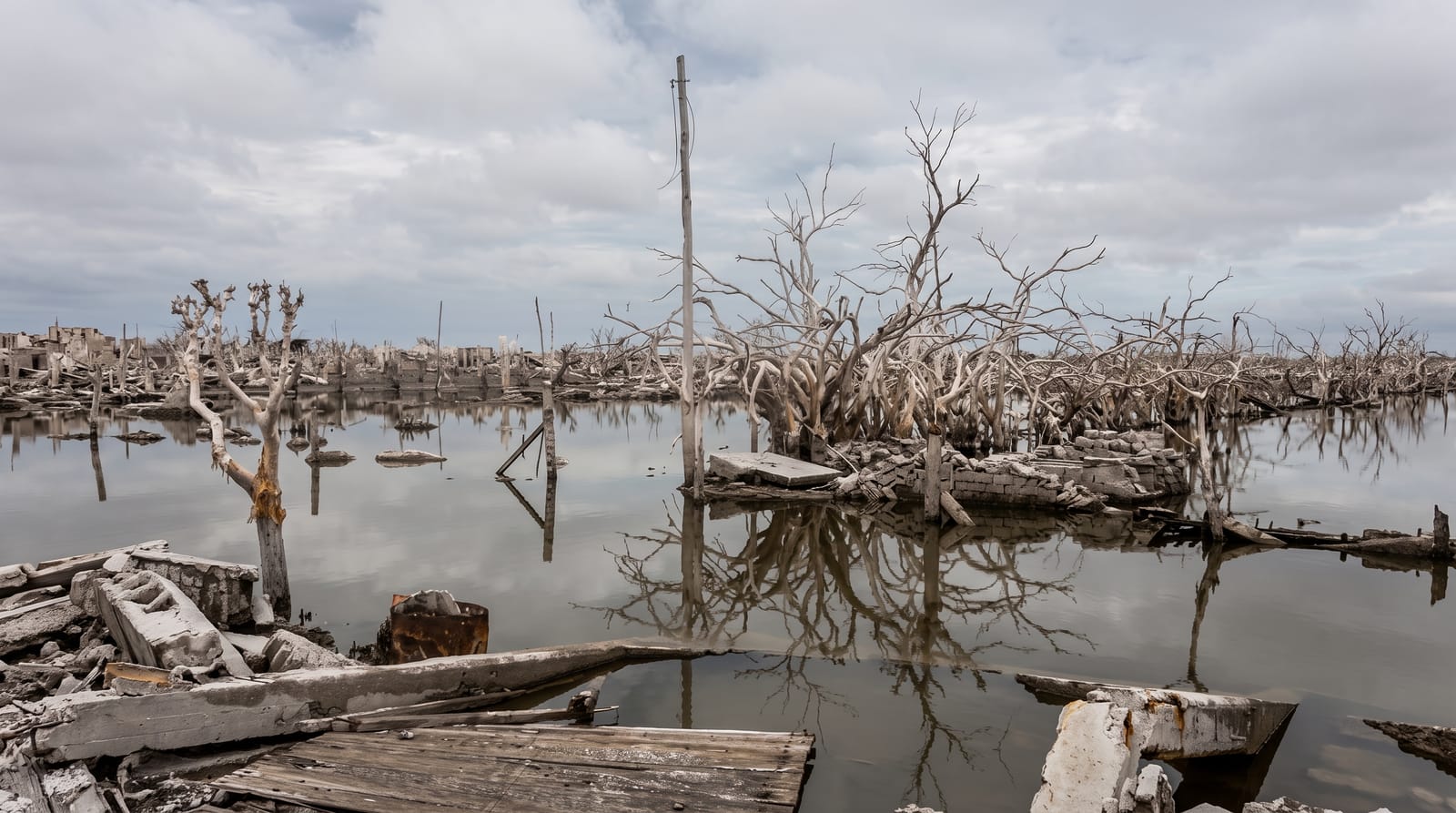
The bleached ruins of a spa town that spent twenty-five years underwater, revealed again when a salt lake receded.
Updated 21 October 2026
AI illustration
Villa Epecuén was a lakeside spa town of some fifteen hundred residents and room for five thousand visitors, built beside a lake so salty that bathers floated as in the Dead Sea, with hotels, guesthouses and a rail link that brought holidaymakers from Buenos Aires through the mid-twentieth century. In November 1985, after years of unusually heavy rain, a dyke failed and water poured into the town; within days it was flooded, and it stayed submerged for a quarter of a century under as much as ten metres of brine. From 2009 the water receded and the town emerged, bleached white by the salt: skeletal trees, roofless houses, the slaughterhouse, staircases to nowhere and a rusted road sign. It is now visited as a ruin, austere and strangely beautiful.
What to look for
- The salt-bleached ruins - roofless houses and streets crusted white.
- The dead trees - skeletal trunks left standing across the site.
- The old slaughterhouse - the most complete structure still standing.
- The lake - the salt water that drowned and then revealed the town.
When to go
March to November for comfortable walking; summer is punishingly hot and glaring on the white ground. Overcast light suits photography of the ruins. The site can be muddy and partly flooded after heavy rain.
Things to know
The ruins are unstable and there are no barriers, so care is needed among the rubble. There is no shade and no water on site. The neighbouring town of Carhué has the services, and Epecuén itself is entirely uninhabited.
Nearby
Carhué and its own thermal baths are minutes away; Bahía Blanca lies far south.
Key facts
Source: Wikidata, item Q2525050, read on 18 October 2026.
What to pack for Villa Epecuén
Chosen from what this place is for. Tap a kit for the full checklist.
- Comfortable walking shoes - Sightseeing means kilometres of pavement and cobbles daily. Find on Amazon
- Swimwear - Needed at most public thermal pools; some traditional baths are nude and single-sex. Find on Amazon
- A slim anti-theft daypack - Zips that close properly; keep it in front in crowds and on transit. Find on Amazon
- Quick-dry towel + flip-flops - For wet changing areas and hot poolside stone. Find on Amazon
Some links on this page are Amazon affiliate links - if you buy through them we may earn a small commission at no extra cost to you.
All packing kitsPlan your trip
Where to start if Villa Epecuén is going on the list.
Booking links on this page are affiliate links - if you book through them we may earn a small commission at no extra cost to you. It never changes what we write about a place.
Opening times, ticket prices and seasonal closures change - check the official source before you go: official site.