Mupa National Park
A remote savanna park in Cunene province, little visited, with populations still being assessed.
Updated 16 October 2026
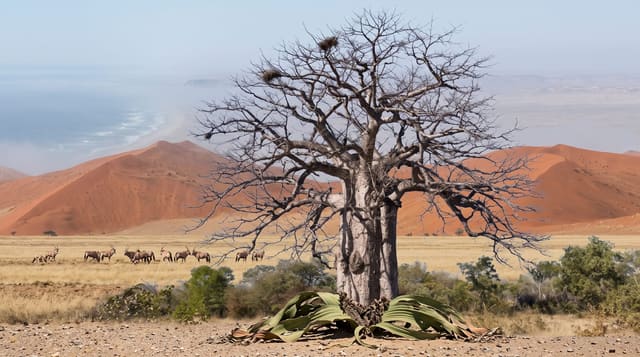
Mupa was gazetted in 1964 over around six thousand square kilometres of Cunene savanna and mopane woodland, and it is among the least visited national parks in Angola. Wildlife was severely reduced in the late twentieth century and surveys since have found low numbers of antelope and small mammals, with the giant sable's presence here long debated. People live and graze cattle within the boundaries, which is part of the management question the park faces.
Background
The park was proclaimed on 26 December 1964 and covers 6600 square kilometers of Cunene province. Its first purpose was to protect a giraffe subspecies, Giraffa camelopardalis angolensis, yet by 1974 none of these giraffes remained. Lion, leopard, wild dog and spotted hyena are among the mammals recorded. The variety of birds is expected to be wide, though it has mostly gone unstudied. About 18,000 people live inside the boundaries, farming and raising cattle, and together with nomadic herders and mineral prospecting this puts pressure on the birdlife.
Source: Wikipedia, "Mupa National Park"
What's there
- The mopane woodland - dry woodland across most of the park's area.
- The seasonal pans - waterholes that fill in the rains and draw animals.
- The birdlife - dry-country species, the most reliable wildlife here.
- The emptiness - a park of six thousand square kilometres with almost no visitors.
When to go
June to October is the dry season and the only practical window. The rains from November to April flood the tracks. Early morning is when animals are most active.
Things to know
Wildlife is genuinely scarce and this is not a park for game viewing. There is no infrastructure of any kind: no gate staff, no roads maintained, no accommodation. Visiting requires a self-sufficient expedition.
Nearby
Ondjiva is south, and Bicuar National Park is north in Huila.
Key facts
Source: Wikidata, item Q3123450, read on 18 October 2026.
What to pack for Mupa National Park
Chosen from what this place is for. Tap a kit for the full checklist.
- Broken-in walking shoes or boots - Grip and ankle support matter more than looks; never hike in brand-new boots. Find on Amazon
- Binoculars - The single best wildlife tool - even a compact pair transforms a sighting. Find on Amazon
- Shelter suited to the place - Tent, tarp or hut booking - match it to the terrain and rules. Find on Amazon
- Layers + a waterproof shell - Mountain weather turns fast; a packable rain jacket saves the day. Find on Amazon
Some links on this page are Amazon affiliate links - if you buy through them we may earn a small commission at no extra cost to you.
All packing kitsPlan your trip
Where to start if Mupa National Park is going on the list.
Booking links on this page are affiliate links - if you book through them we may earn a small commission at no extra cost to you. It never changes what we write about a place.
Opening times, ticket prices and seasonal closures change - check the official source before you go: official site.