Imperial Citadel of Thang Long
The excavated core of Hanoi's thousand-year royal citadel: a brick gate, carved dragon stairs from a vanished palace and open dig pits.
Updated 18 October 2026
AI illustration
UNESCO World Heritage
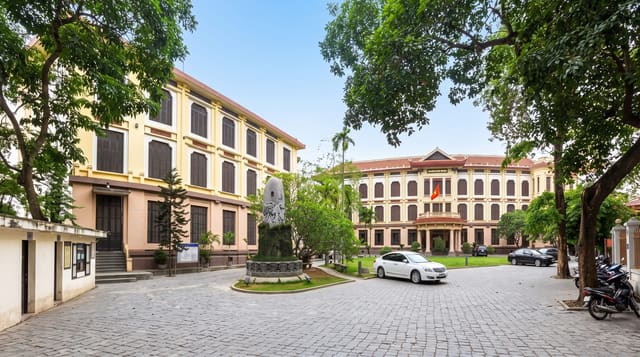
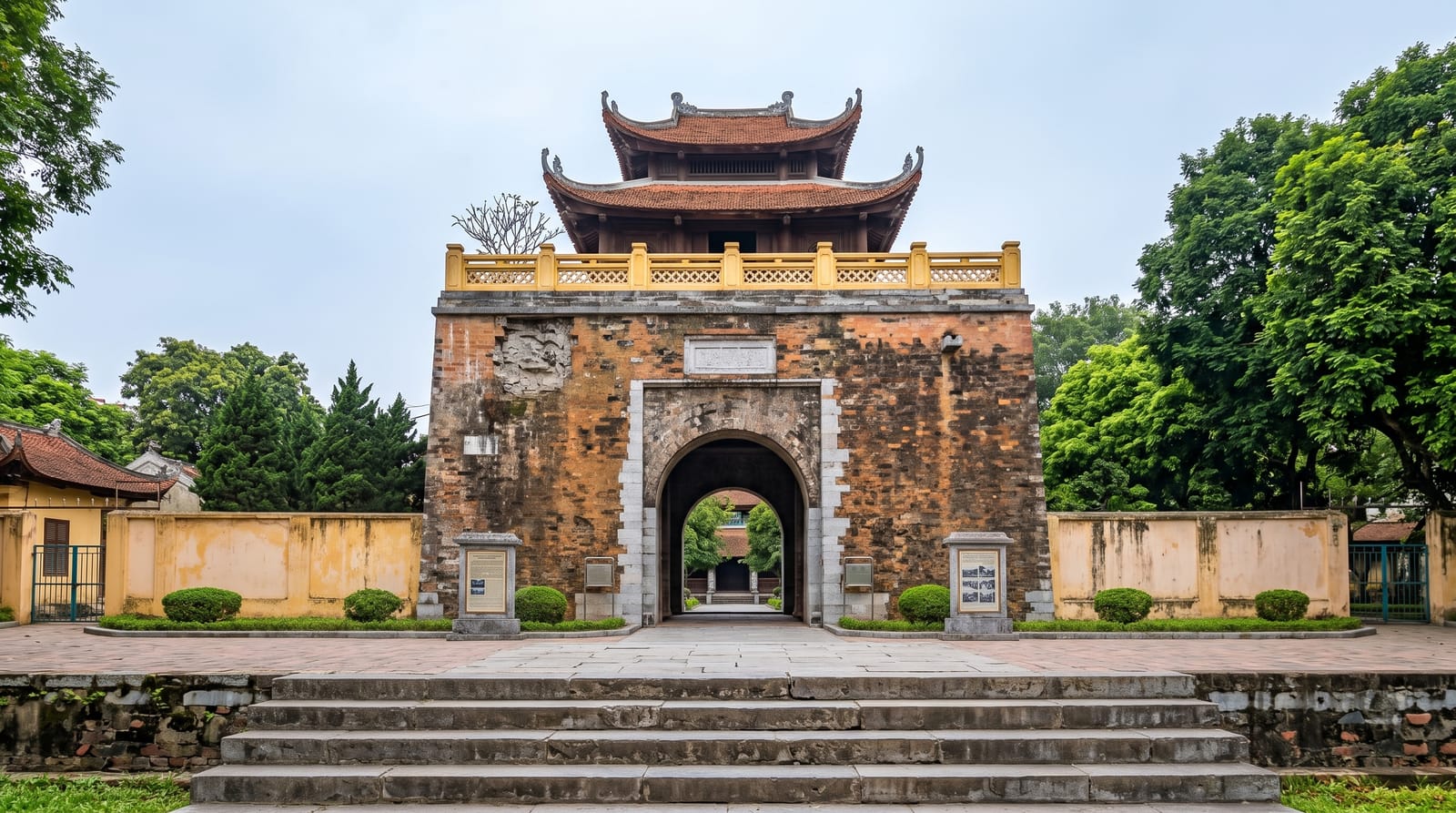
Successive dynasties ruled from this ground for close to a thousand years, from the Ly court that moved its capital here in 1010 to the Nguyen who reduced it to a provincial fort. What survives above ground is fragmentary: the three-arched Doan Mon gate, the flag tower raised in the early nineteenth century, and the carved stone dragons flanking the steps of Kinh Thien palace, which itself is gone. The rest is archaeology. Across the road at 18 Hoang Dieu, excavation has exposed layers of foundations, drains, wells and glazed roof tiles from several dynasties, kept open under shelters. Lawns and old trees fill the space between, which makes the citadel quieter than most Hanoi sights.
History
In 866 the Tang general Gao Pian, having retaken the Annan protectorate from Nanzhao, built the Đại La citadel on this site, and after the Đinh dynasty used it as a military stronghold, Emperor Lý Thái Tổ began the royal citadel in 1010, completing it early in 1011, in three rings: the outer defences, the Imperial City and the Forbidden City at the centre. Lý Thái Tông rebuilt the Forbidden City in 1029 after the Three Kings Rebellion, later dynasties added to it, and under the Lê, from 1428, the city was called Đông Kinh; it remained the seat of the court until 1789, when the Tây Sơn moved the capital to Huế. Gia Long rebuilt the citadel extensively in 1805, but the French later pulled down most of it, except the North Gate and the Flag Tower, for offices and barracks (Wikipedia, Imperial Citadel of Thăng Long).
What's there
- Doan Mon gate - the three-arched south gate, with a stair to the roof terrace and a view down the old axis.
- Kinh Thien dragon steps - two pairs of carved stone dragons from the fifteenth century, all that is left of the throne palace.
- The 18 Hoang Dieu dig - open excavation pits showing brick foundations, wells and drains stacked by dynasty.
- The flag tower - an early nineteenth-century brick tower on a tiered base, visible from the boulevard outside.
When to go
October to April is drier and cooler, while June to August is hot and wet and the open lawns give almost no shade. Mornings are quietest, before school groups arrive. Opening days differ between the citadel and the excavation area across the road, so check before making a special trip, and allow two to three hours for both.
Things to know
Most of the palace complex is gone, so you walk between lawns, foundations and a few restored halls, and it takes some imagination. Labelling in English is thin, and the excavation pits look like what they are, muddy trenches under roofs. It is far less photogenic than the Temple of Literature, and many visitors leave within an hour.
Nearby
The Temple of Literature is a short ride south and the Old Quarter lies east.
Key facts
Source: Wikidata, item Q206219, read on 18 October 2026.
What to pack for Imperial Citadel of Thang Long
Chosen from what this place is for. Tap a kit for the full checklist.
- Comfortable walking shoes - Sightseeing means kilometres of pavement and cobbles daily. Find on Amazon
- Modest clothing - Shoulders and knees covered - the single most common requirement. Find on Amazon
- A slim anti-theft daypack - Zips that close properly; keep it in front in crowds and on transit. Find on Amazon
- A scarf or shawl - To cover the head or shoulders on entry; women especially at mosques. Find on Amazon
Some links on this page are Amazon affiliate links - if you buy through them we may earn a small commission at no extra cost to you.
All packing kitsPlan your trip
Where to start if Imperial Citadel of Thang Long is going on the list.
Booking links on this page are affiliate links - if you book through them we may earn a small commission at no extra cost to you. It never changes what we write about a place.
Opening times, ticket prices and seasonal closures change - check the official source before you go: official site.