Pigeon Island National Landmark
The fort that watched Martinique - Fort Rodney's hilltop ruins on a causeway islet, jazz-festival lawns and twin-peak views over Rodney Bay.
Updated 7 August 2026
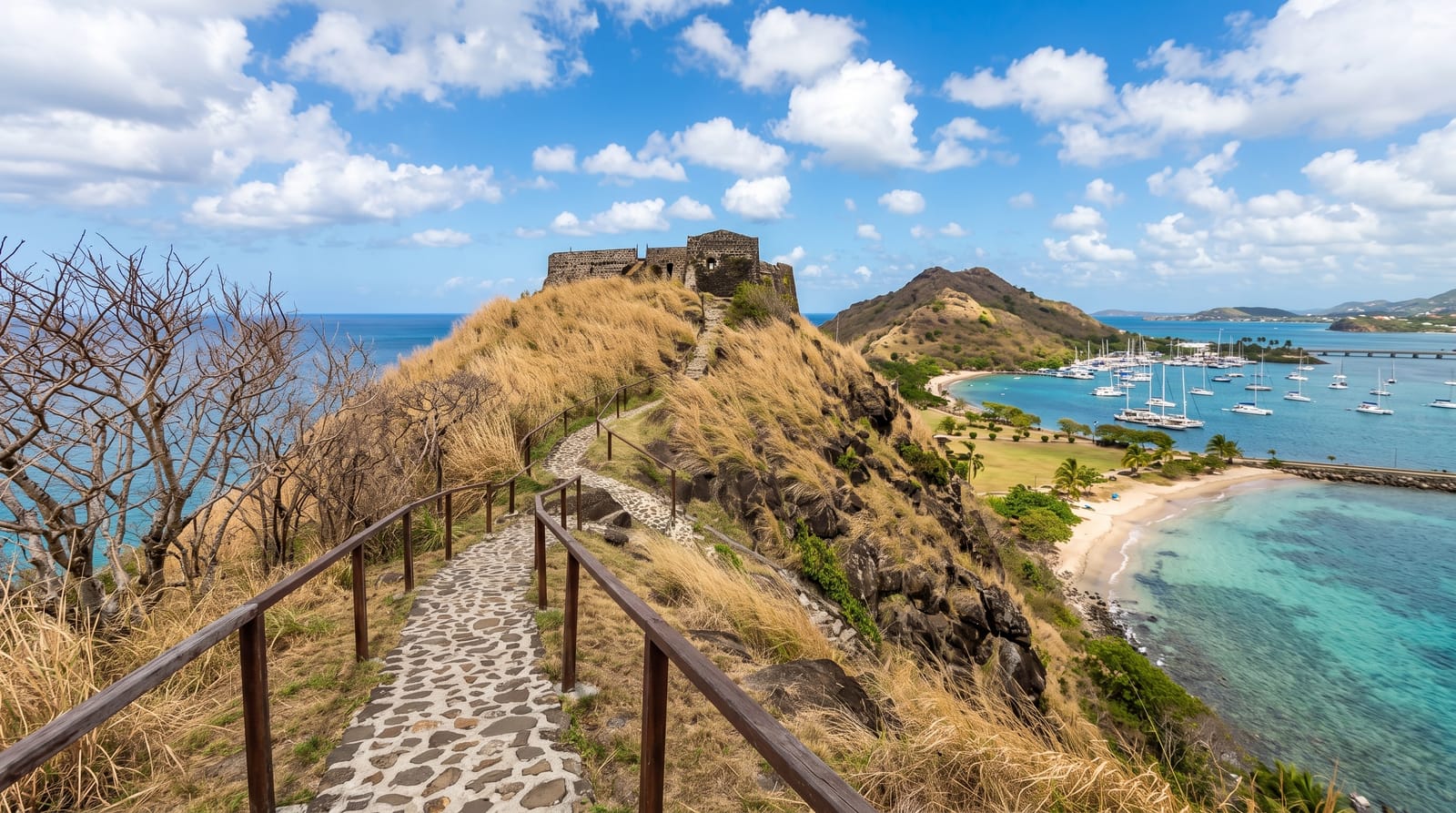
AI illustration
Pigeon Island guards Saint Lucia's northern tip - once a true island, joined to the mainland by causeway in the 1970s, and layered with history: Admiral Rodney fortified it in the 1780s to watch the French fleet at Martinique, visible on clear days across the channel, and the ruins of Fort Rodney, barracks and batteries now scatter its twin peaks. The climb to the fort takes twenty minutes for a panorama over Rodney Bay's yachts; the higher Signal Peak adds a rougher scramble. Lawns between the ruins host the Saint Lucia Jazz Festival's headline stages each May, and two small beaches bracket the entrance.
Highlights
- Fort Rodney - the battery ruins and the Rodney Bay panorama.
- Signal Peak - the higher scramble with the Martinique view.
- The ruins and museum - barracks, officers' mess and the interpretive centre.
- The festival lawns - jazz stages each May among the history.
When to go
December to May for dry paths; the May jazz festival transforms the island - book that week far ahead or avoid it, depending on taste. Late afternoon gives golden light on the bay and cooler climbing.
Practical notes
Paths to the peaks are uneven, rocky and shadeless in stretches - hats and water required, proper shoes advised for Signal Peak. The beaches are pleasant but modest by island standards. Cruise days bring numbers midmorning. The entrance fee is fair for a half day of fort, views and swimming combined.
Nearby
Rodney Bay's marina and restaurants, Gros Islet's Friday street party and Reduit beach.
Key facts
Source: Wikidata, item Q125907416, read on 18 October 2026.
What to pack for Pigeon Island National Landmark
Chosen from what this place is for. Tap a kit for the full checklist.
- Reef-safe sunscreen - High SPF that will not bleach the coral you are swimming over. Find on Amazon
- Comfortable walking shoes - Sightseeing means kilometres of pavement and cobbles daily. Find on Amazon
- Quick-dry towel - A microfibre towel packs small and dries in minutes. Find on Amazon
- A slim anti-theft daypack - Zips that close properly; keep it in front in crowds and on transit. Find on Amazon
Some links on this page are Amazon affiliate links - if you buy through them we may earn a small commission at no extra cost to you.
All packing kitsPlan your trip
Where to start if Pigeon Island National Landmark is going on the list.
Booking links on this page are affiliate links - if you book through them we may earn a small commission at no extra cost to you. It never changes what we write about a place.
Opening times, ticket prices and seasonal closures change - check the official source before you go: official site.