Patarei Sea Fortress
A tsarist sea fortress that spent most of the twentieth century as a prison, now holding a permanent exhibition on communist repression.
Updated 1 September 2026
Illustration
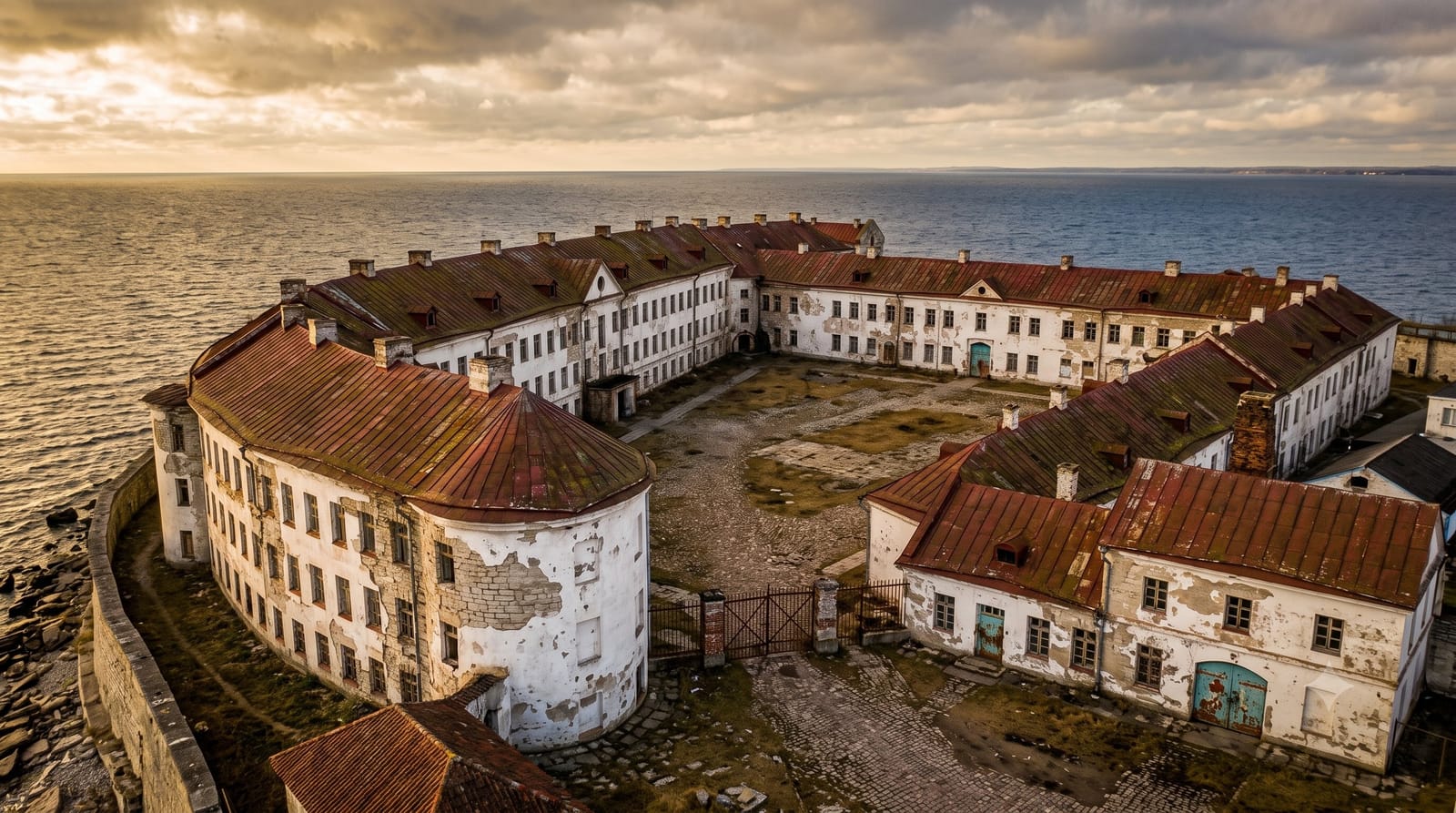
Patarei was built in the 1830s as a coastal artillery fortress on the orders of Nicholas I, and was obsolete almost immediately. From 1920 it served as a prison, and it kept that role through the Estonian republic, the Soviet occupation, the German occupation and the second Soviet period, closing only in 2002. It is one of the few places in Europe where the whole twentieth century is legible in one building.
What you actually see
- The sea range - a long low limestone building facing the water, with a courtyard behind.
- The permanent exhibition - Communism is Crime, staged in the cells and corridors themselves.
- The rooms it uses - execution chamber, medical wing and exercise yards, left as the setting rather than reconstructed.
- The unrestored rest - peeling paint, rusted doors and rooms left more or less as they were emptied, which is the impression most visitors describe as the strongest.
When to go
Any season, since the exhibition is indoors and open year-round. Weekday mornings suit it best: the site works when it is quiet, and it is not a place that benefits from a crowd.
Honest expectations
This is heavy material. The exhibition covers executions, deportations and prison conditions directly, and there is no soft framing. It is not suitable for young children, and people with a personal connection to the period should decide carefully.
Large parts of the complex remain closed and unsafe. What is open is a defined route, not free exploration, and redevelopment work around the site is ongoing.
Nearby
Kalamaja's wooden houses and the Seaplane Harbour maritime museum are both a short walk along the shore. Telliskivi is ten minutes inland.
What to pack for Patarei Sea Fortress
Chosen from what this place is for. Tap a kit for the full checklist.
Plan your trip
Where to start if Patarei Sea Fortress is going on the list.
Booking links on this page are affiliate links - if you book through them we may earn a small commission at no extra cost to you. It never changes what we write about a place.
Opening times, ticket prices and seasonal closures change - check the official source before you go: official site.