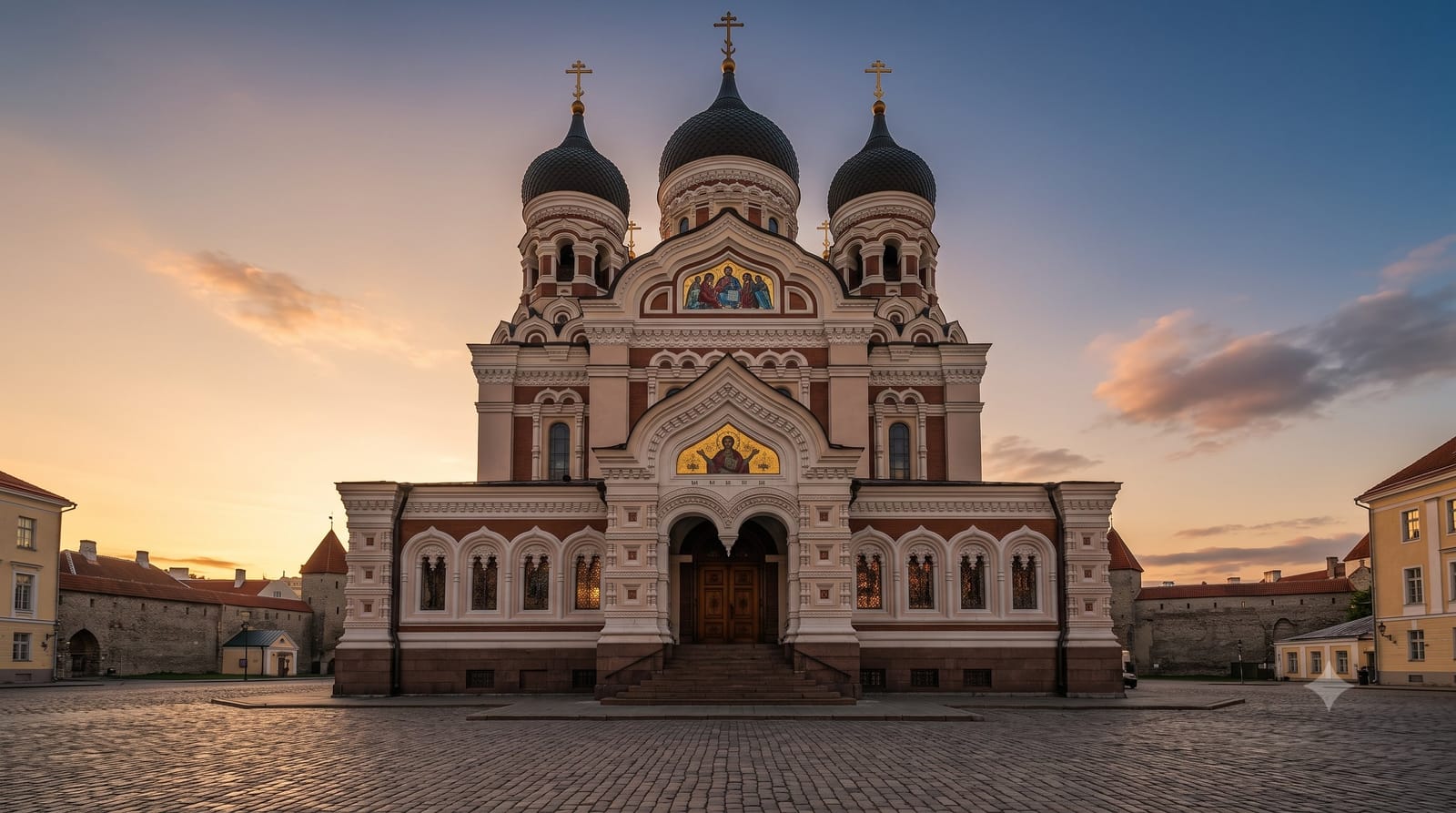
Niguliste Museum
A medieval Tallinn church holding Bernt Notke's Danse Macabre and the city's collection of church art.
Saved in this browser only - no account, nothing sent anywhere. See your map
UNESCO World Heritage
St Nicholas's church was begun in the thirteenth century for the German merchant community of Tallinn and survived the Reformation with its altars intact because the congregation is said to have poured lead into the locks to keep the iconoclasts out. It was destroyed by bombing in March 1944 and rebuilt over decades as a museum of medieval church art, part of the Art Museum of Estonia. Its principal work is the fragment of Bernt Notke's Danse Macabre, painted in Lübeck in the late fifteenth century, showing Death leading the pope, emperor, cardinal and others in a line; it is the only surviving painted version of the subject in the world of its kind. The Rode altarpiece and the silver chamber are also here.
What you actually see
- The Danse Macabre - Notke's surviving fragment of the death dance.
- The Rode altarpiece - the fifteenth-century high altar retable.
- The silver chamber - the guild and church silver collection.
- The church interior - the rebuilt medieval space itself.
When to go
Year round; the museum is indoors. It closes on Mondays and some other days. Organ concerts are held in the church on weekend afternoons. It is part of the Tallinn old town World Heritage area.
Honest expectations
The building is a museum, not a working church. Much of the fabric is post-1944 reconstruction. The Danse Macabre is a fragment, about a quarter of the original length. Photography rules vary by gallery.
Nearby
Tallinn old town surrounds it; Kiek in de Kok lies west.
What to pack for Niguliste Museum
Chosen from what this place is for. Tap a kit for the full checklist.
Opening times, ticket prices and seasonal closures change - check the official source before you go: official site.