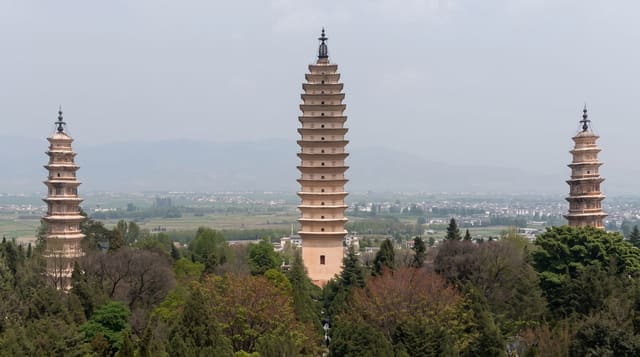
Keo Pagoda
A wooden bell tower of 1632 built without nails, in a delta pagoda that has kept its whole plan.
Updated 12 October 2026
Chua Keo in Thai Binh was rebuilt in 1632 after floods destroyed the earlier pagoda, and what survives is one of the most complete seventeenth century timber complexes in Vietnam - over a hundred structures on the original plan, with courtyards, ponds and halls in sequence. Its bell tower is the piece everyone photographs: three storeys of ironwood, about eleven metres, jointed and pegged with no metal fastenings, carrying bells and a set of carved brackets. The pagoda honours both the Buddha and the monk Khong Lo, an eleventh century figure credited with healing a king. The autumn festival includes boat races on the pond.
What's there
- A complex rebuilt in 1632 - over a hundred structures on the old plan.
- A three-storey ironwood bell tower - jointed and pegged, no metal.
- Halls and ponds in sequence - the full pagoda layout preserved.
- Autumn boat races - part of the ninth lunar month festival.
When to go
Year round; the autumn festival is in the ninth lunar month. Half a day.
Practical notes
Thai Binh is off the usual routes and takes a couple of hours from Hanoi. Interpretation is in Vietnamese. Interiors are dark. The festival days are crowded.
Nearby
Thai Binh city is north-east; Nam Dinh and the delta are north.
Key facts
Source: Wikidata, item Q10748440, read on 18 October 2026.
What to pack for Keo Pagoda
Chosen from what this place is for. Tap a kit for the full checklist.
- Comfortable walking shoes - Sightseeing means kilometres of pavement and cobbles daily. Find on Amazon
- A slim anti-theft daypack - Zips that close properly; keep it in front in crowds and on transit. Find on Amazon
- A refillable water bottle - Many cities have public fountains; save money and plastic. Find on Amazon
- A light layer + compact umbrella - For museum air-con and a sudden shower. Find on Amazon
Some links on this page are Amazon affiliate links - if you buy through them we may earn a small commission at no extra cost to you.
All packing kitsPlan your trip
Where to start if Keo Pagoda is going on the list.
Booking links on this page are affiliate links - if you book through them we may earn a small commission at no extra cost to you. It never changes what we write about a place.
Opening times, ticket prices and seasonal closures change - check the official source before you go: official site.