Iron Pagoda
A Song pagoda of 1049 faced in iron-coloured glazed brick, standing through floods that buried the city around it.
Updated 21 October 2026
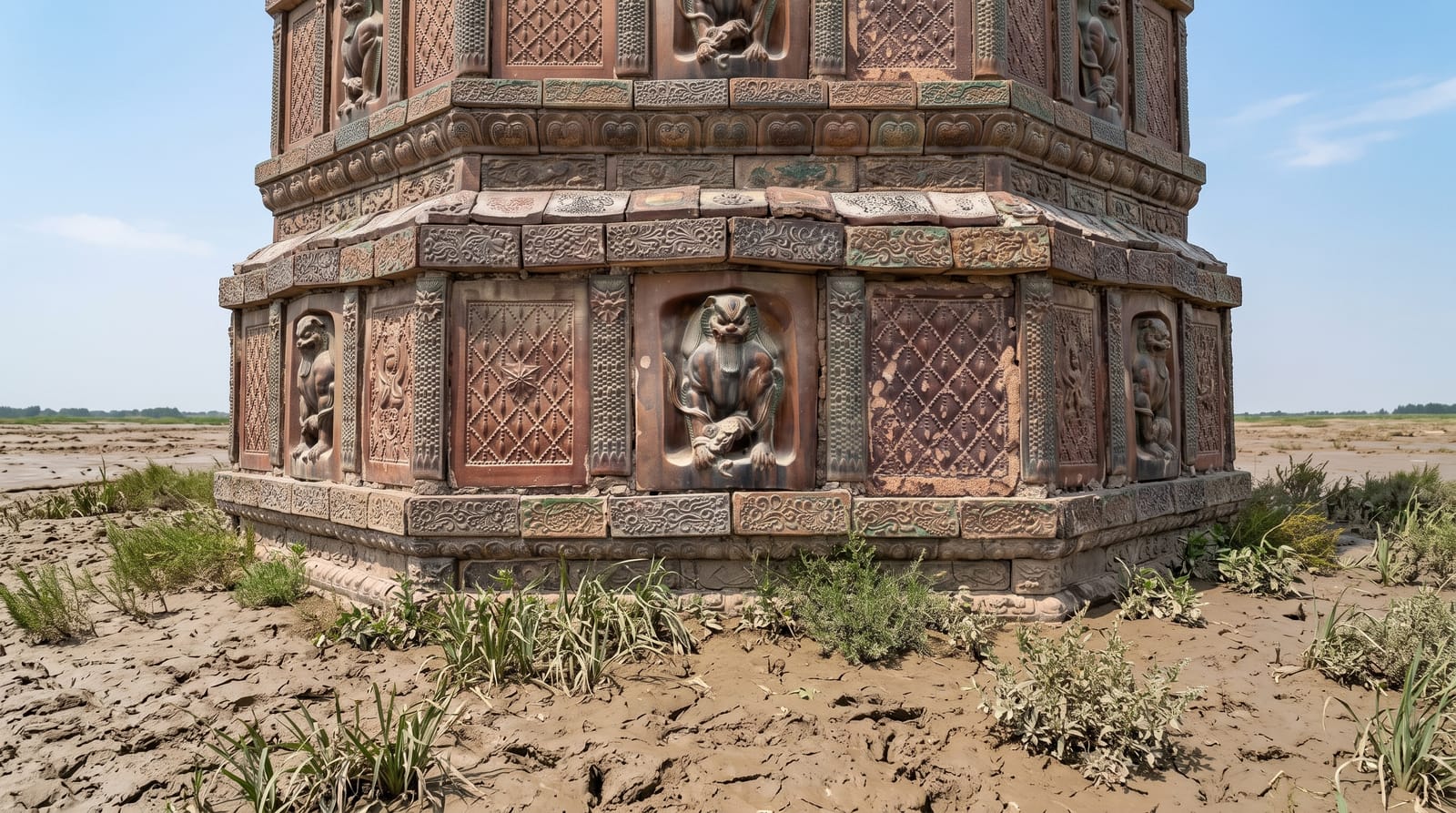
AI illustration
The Iron Pagoda is not iron: it was built in 1049 to replace a wooden tower destroyed by lightning, and faced entirely in glazed bricks of a dark brown that reads as rust at a distance, which gave it the name. Fifty-five metres tall and thirteen storeys, octagonal, it carries some fifty different brick patterns moulded with Buddhas, monks, dragons, musicians and flowers, an unusually rich decorative scheme. What is remarkable is its survival: Kaifeng has been flooded and buried repeatedly by the Yellow River, and the pagoda has come through 38 earthquakes, six floods and many other disasters - in 1847 the Yellow River flood brought down the temple around it - while the city around it was destroyed and rebuilt several times over.
History
Between 965 and 995 the architect Yu Hao built a famous wooden pagoda here at Youguo Temple in the Northern Song capital, but lightning burned it down in 1044. On the order of Emperor Renzong a new pagoda of fireproof brick and stone was finished by 1049, its glazed bricks of red, brown, blue and green looking iron-grey from afar, which gave it its name; in 1847 the Yellow River flooded and the temple collapsed, but the pagoda stood, and it has come through 38 earthquakes and six floods (Wikipedia, Iron Pagoda).
What you'll find
- The glazed brick facing - dark brown tiles that give the pagoda its name.
- The moulded patterns - some fifty brick designs of figures and creatures.
- The internal stair - a narrow spiral climbing inside the tower.
- The survival record - a Song building standing through centuries of floods.
When to go
April to May and September to November; the peony festival in April and chrysanthemum displays in autumn coincide with the best weather. Summer is hot. The site is quieter than Kaifeng's central attractions.
Before you go
The internal staircase is extremely narrow, dark and steep, and climbing is uncomfortable for larger visitors. The surrounding park is modest. Entry is charged for a short visit.
Nearby
Kaifeng's centre lies southwest; the Fan Pagoda is south of the old city.
Key facts
Source: Wikidata, item Q1561904, read on 18 October 2026.
What to pack for Iron Pagoda
Chosen from what this place is for. Tap a kit for the full checklist.
- Comfortable walking shoes - Sightseeing means kilometres of pavement and cobbles daily. Find on Amazon
- Modest clothing - Shoulders and knees covered - the single most common requirement. Find on Amazon
- A slim anti-theft daypack - Zips that close properly; keep it in front in crowds and on transit. Find on Amazon
- A scarf or shawl - To cover the head or shoulders on entry; women especially at mosques. Find on Amazon
Some links on this page are Amazon affiliate links - if you buy through them we may earn a small commission at no extra cost to you.
All packing kitsPlan your trip
Where to start if Iron Pagoda is going on the list.
Booking links on this page are affiliate links - if you book through them we may earn a small commission at no extra cost to you. It never changes what we write about a place.
Opening times, ticket prices and seasonal closures change - check the official source before you go: official site.