Longmen Grottoes
Limestone cliffs along the Yi River south of Luoyang, carved with tens of thousands of Buddhist figures over several centuries.
Updated 18 October 2026
AI illustration
UNESCO World Heritage
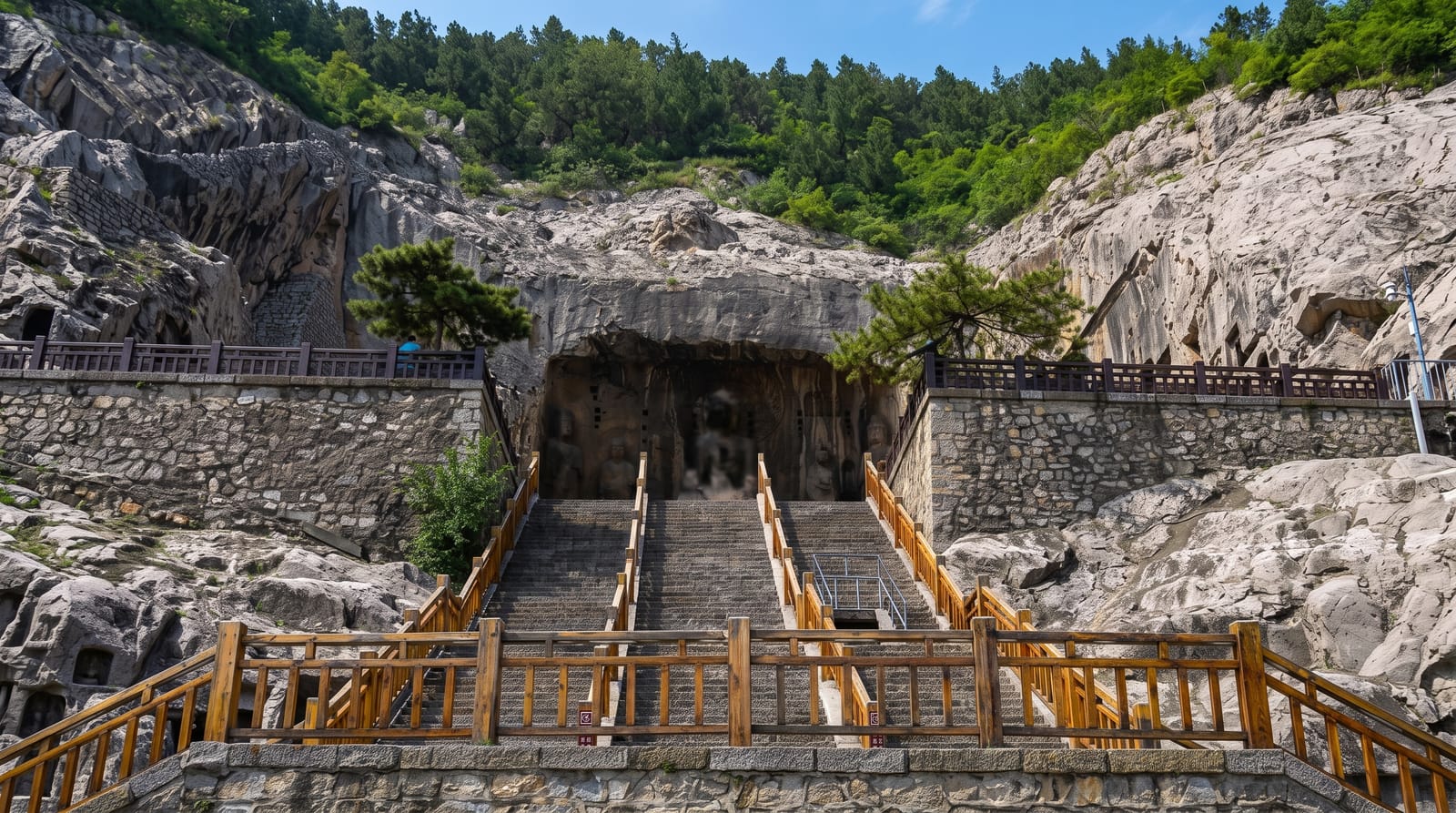
At Longmen the Yi River cuts between two limestone ridges, and both faces are honeycombed with Buddhist carving begun when the Northern Wei court moved to Luoyang and continued through the Tang. The count runs to more than two thousand caves and niches and tens of thousands of figures, from statues a few centimetres high to the seated Vairocana Buddha of the Fengxiansi group, about seventeen metres tall, with guardians and attendants ranged along its terrace. The walk follows a paved path along the west bank, climbing to the larger caves, then crosses a bridge and returns down the east side, which is quieter and gives the best view back across the water.
History
Carving began after Emperor Xiaowen of the Northern Wei moved his capital to Luoyang, and went on from 493 to 1127 in four phases. The first cave temple, Guyang, is credited to Xiaowen; his son Xuanwu spent 24 years on the three Binyang caves, in memory of his parents. The height came under the Tang, when about 60 per cent of the caves were made between 626 and 755 - the Fengxian cave was finished in 675, when Emperor Gaozong and Empress Wu Zetian ruled from Luoyang - and work faded under the Northern Song. After the fall of the Qing dynasty the site suffered badly: in the early 20th century Western collectors and souvenir hunters carried off major pieces (Wikipedia, Longmen Grottoes).
What you'll find
- Fengxiansi - the open terrace with the great Vairocana Buddha and its flanking guardian figures.
- The Binyang caves - early Northern Wei chambers with dense relief carving.
- The Ten Thousand Buddhas Cave - walls covered with rows of tiny seated figures.
- The east bank path - the return walk, with the whole carved cliff facing you across the river.
When to go
Spring and autumn are best, and April brings the Luoyang peony season, which also brings crowds. Go at opening time: the west bank path is narrow and the terrace below the great Buddha becomes a bottleneck by late morning. Allow three to four hours if you intend to walk both banks properly rather than turn back at the bridge.
Things to know
Weathering and old damage have left many niches empty or headless, and a number of the best known heads are in museums abroad. The site is long and largely unshaded, with a lot of steps. Signage explains less than you would like. Ticket prices are high by local standards and the shuttle from the gate is charged on top.
Nearby
The White Horse Temple and the Luoyang city museums are on the other side of town.
What to pack for Longmen Grottoes
Chosen from what this place is for. Tap a kit for the full checklist.
- Head torch + spare batteries - Hands-free light is essential; caves are truly dark. Find on Amazon
- Comfortable walking shoes - Sightseeing means kilometres of pavement and cobbles daily. Find on Amazon
- Modest clothing - Shoulders and knees covered - the single most common requirement. Find on Amazon
- Grippy closed shoes - Cave floors are wet, muddy and slick with formations. Find on Amazon
Some links on this page are Amazon affiliate links - if you buy through them we may earn a small commission at no extra cost to you.
All packing kitsPlan your trip
Where to start if Longmen Grottoes is going on the list.
Booking links on this page are affiliate links - if you book through them we may earn a small commission at no extra cost to you. It never changes what we write about a place.
Opening times, ticket prices and seasonal closures change - check the official source before you go: official site.