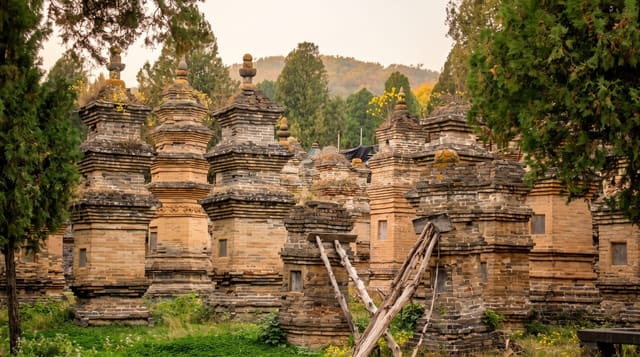
White Horse Temple
The first Buddhist temple founded in China, established in 68 at Luoyang, with modern halls given by four Buddhist countries.
Updated 19 October 2026
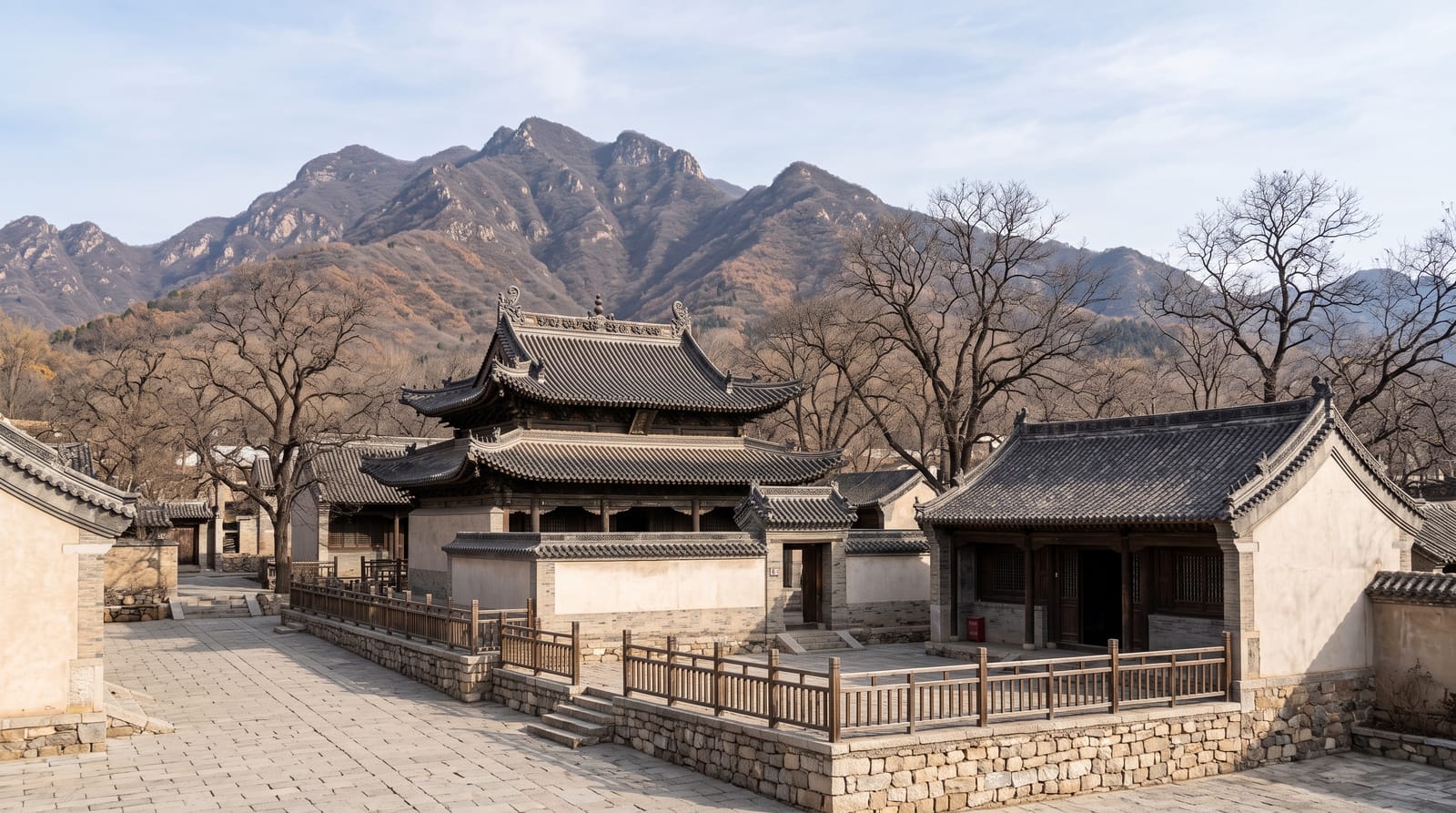
AI illustration
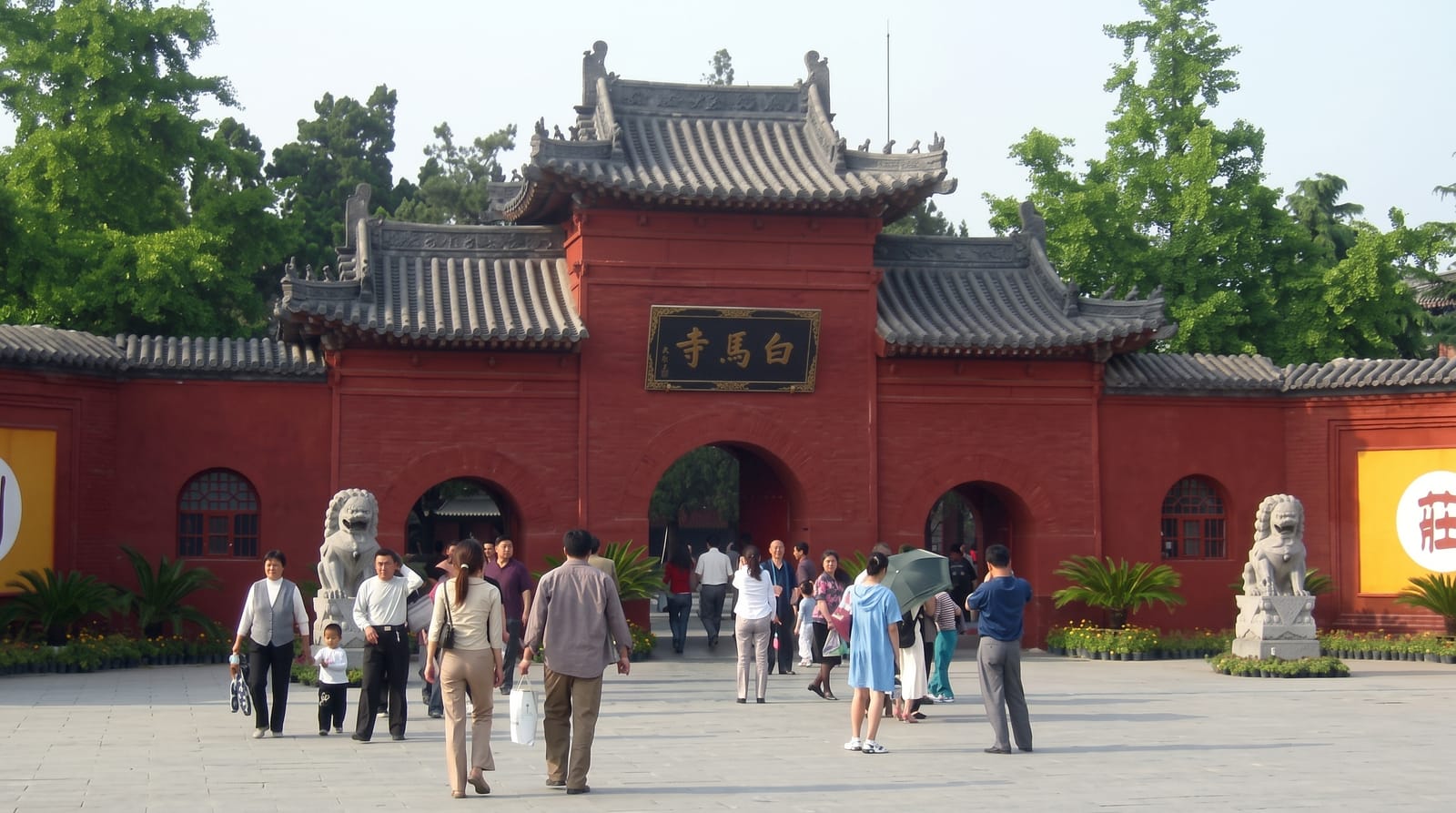
Baima Si was founded in 68 under the Han emperor Ming, who by tradition dreamed of a golden figure, sent envoys west, and received two Indian monks who arrived on white horses carrying sutras; the temple built to house them is counted as the first in China and the cradle of Chinese Buddhism. The monks are buried in the grounds. The present halls are largely Ming and Qing, and a Qi Yun pagoda of 1175 stands nearby. Since the 1990s the temple has added halls built and donated by India, Thailand, Myanmar and Cambodia in their own architectural styles, so the complex now includes an Indian-style stupa and a Thai golden temple.
History
Tradition says Emperor Ming of the Eastern Han dreamed of a golden figure, sent envoys west, and in 68 founded the temple for two Indian monks, Kasyapa Matanga and Dharmaratna, who came with sutras on white horses; they translated scriptures here, among them the Sutra of Forty-two Chapters, counted the first Buddhist sutra in Chinese, and are buried in the first courtyard. In 258 the Kuchean monk Po-Yen translated six texts here, and the translator Dharmarakṣa lived here in 289-290; an inscription of 1175 records that fire had destroyed the temple and its stupa fifty years before and that a Jin official raised the stone Qilun Pagoda, and the halls were restored under the Ming and Qing (Wikipedia, White Horse Temple).
The main sights
- The founding halls - the Ming and Qing buildings of the original temple.
- The Indian monks' tombs - the graves of the two founding teachers.
- The international halls - Indian, Thai, Burmese and Cambodian buildings.
- The Qi Yun pagoda - the 1175 brick tower beside the temple.
When to go
April to May and September to October; the peony festival in April fills Luoyang and its sites. Buddhist festivals bring worshippers. Mornings are quieter.
Good to know
Little of the original fabric survives; the buildings are later rebuilds. The international halls are recent and divide opinion. Entry is charged, and Luoyang's other major sites are separate.
Nearby
Luoyang lies west; the Longmen Grottoes are south of the city.
Key facts
Source: Wikidata, item Q1264618, read on 18 October 2026.
What to pack for White Horse Temple
Chosen from what this place is for. Tap a kit for the full checklist.
- Head torch + spare batteries - Hands-free light is essential; caves are truly dark. Find on Amazon
- Comfortable walking shoes - Sightseeing means kilometres of pavement and cobbles daily. Find on Amazon
- Modest clothing - Shoulders and knees covered - the single most common requirement. Find on Amazon
- Grippy closed shoes - Cave floors are wet, muddy and slick with formations. Find on Amazon
Some links on this page are Amazon affiliate links - if you buy through them we may earn a small commission at no extra cost to you.
All packing kitsPlan your trip
Where to start if White Horse Temple is going on the list.
Booking links on this page are affiliate links - if you book through them we may earn a small commission at no extra cost to you. It never changes what we write about a place.
Opening times, ticket prices and seasonal closures change - check the official source before you go: official site.