Cabo Polonio
A wild, off-grid bohemian idyll - a remote, car-free village of rustic shacks amid rolling sand dunes on a wild Atlantic cape, with no mains electricity, a lighthouse and Uruguay's largest sea lion colony.
Updated 18 October 2026
AI illustration
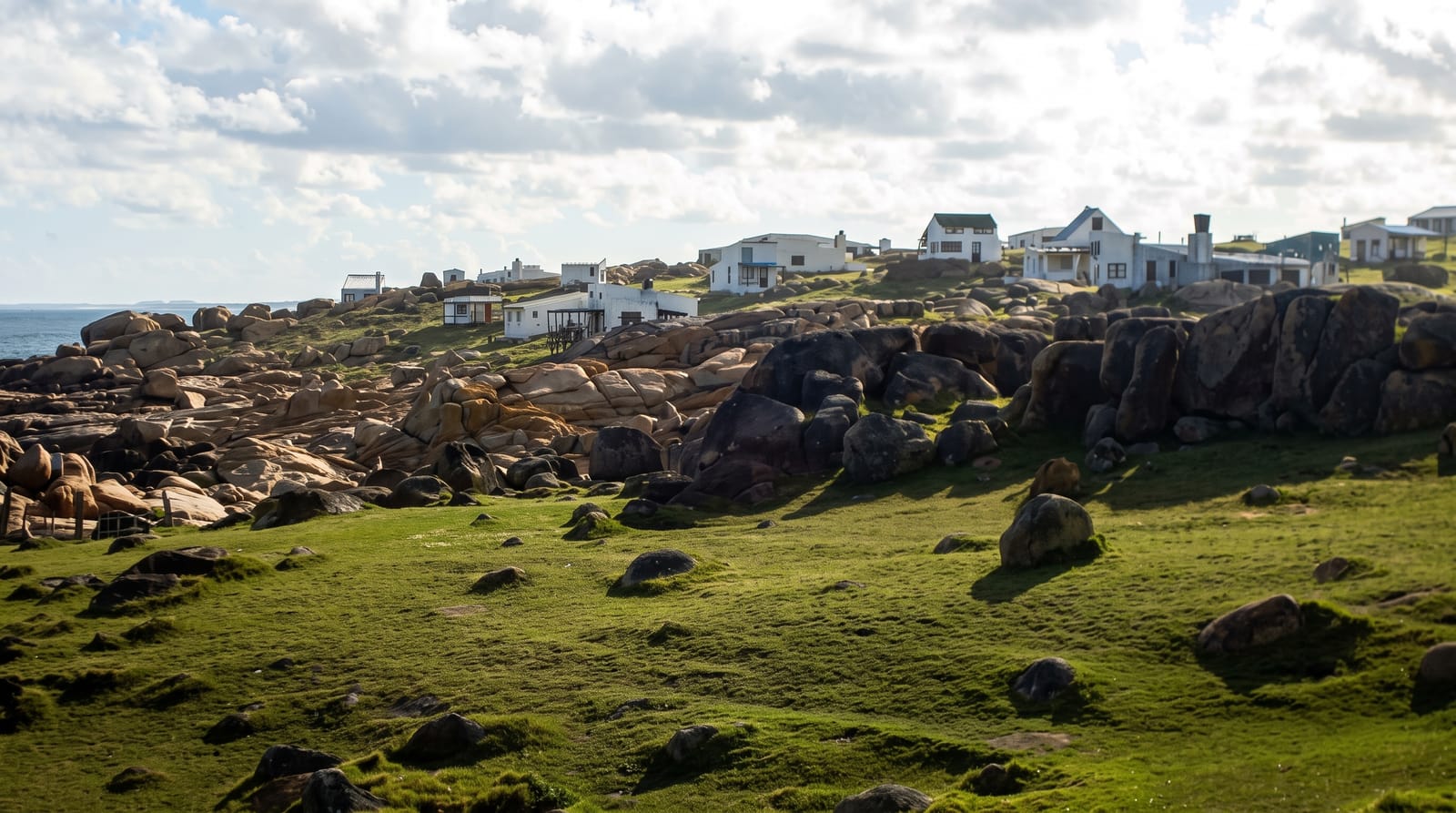
Cabo Polonio, on the wild eastern Atlantic coast of Uruguay, is a magical, off-grid bohemian idyll unlike anywhere else in the country, a remote and rustic village of colourful, ramshackle wooden shacks scattered amid rolling sand dunes on a windswept cape. With no roads in, no mains electricity and no running water in much of it, reached only by a bumpy truck ride over the dunes, it is a place of candlelight, brilliant starry skies, a lonely lighthouse, and Uruguay's largest sea lion colony barking on the rocks.
History
People have lived here since about 5000 BC, fishing and hunting the sea lions of the offshore islands, and mounds of the Cerritos de Indios near the Valizas stream hold their axes, pottery and mortars. Under Spanish rule the sea lions of the Islas de Torres were exploited, and the hill of Buena Vista marked the line between Spanish and Portuguese holdings set by the Treaty of Madrid of 1750. On 31 January 1753 the Spanish ship Nuestra Señora del Rosario ran aground 200 metres off the south beach on its way from Cádiz to Buenos Aires; all 316 people aboard survived, and the cape is named after its 25-year-old captain, José Poloní. The lighthouse was finished in 1881, and the first permanent homes of sea lion hunters and fishing families grew up around it, while wrecks continued, among them the Brazilian monitor Solimões in 1892, when 123 men drowned. Since 2009 the cape has been part of Uruguay's national system of protected areas (Wikipedia, Cabo Polonio).
The landscape
- The sea lion colony - the huge colony barking on the rocks by the lighthouse.
- The rustic village - the off-grid shacks amid the dunes.
- The dunes and beaches - the rolling sand dunes and wild beaches.
- The starry skies - the brilliant stars with no light pollution.
When to go
December to March, the southern summer, when the village is at its liveliest and the weather warmest, though even then it retains its rustic, off-grid character; outside summer it is very quiet, wild and windswept. It is reached only by the official truck over the dunes.
What to expect
It is genuinely rustic and off-grid, with little or no electricity, basic facilities and simple hostel and shack accommodation, reached only by a bumpy park truck over the dunes, so it is for those seeking a wild, back-to-basics escape, not comfort. It is remote. Its bohemian, off-grid magic, the dunes, the sea lions and the star-filled skies, though, are utterly unique and unforgettable.
Nearby
The beach towns of La Paloma and Punta del Diablo and the Santa Teresa park are along the coast.
Key facts
Source: Wikidata, item Q1024895, read on 18 October 2026.
What to pack for Cabo Polonio
Chosen from what this place is for. Tap a kit for the full checklist.
- Travel rod + reel - A packable multi-piece rod fits in a case and covers most holiday fishing. Find on Amazon
- Reef-safe sunscreen - High SPF that will not bleach the coral you are swimming over. Find on Amazon
- Loose, light, long clothing - Covering up beats bare skin in the desert - and locals dress this way for a reason. Find on Amazon
- A small tackle selection - Hooks, weights, line and a few lures or flies suited to local waters. Find on Amazon
Some links on this page are Amazon affiliate links - if you buy through them we may earn a small commission at no extra cost to you.
All packing kitsPlan your trip
Where to start if Cabo Polonio is going on the list.
Booking links on this page are affiliate links - if you book through them we may earn a small commission at no extra cost to you. It never changes what we write about a place.
Opening times, ticket prices and seasonal closures change - check the official source before you go: official site.