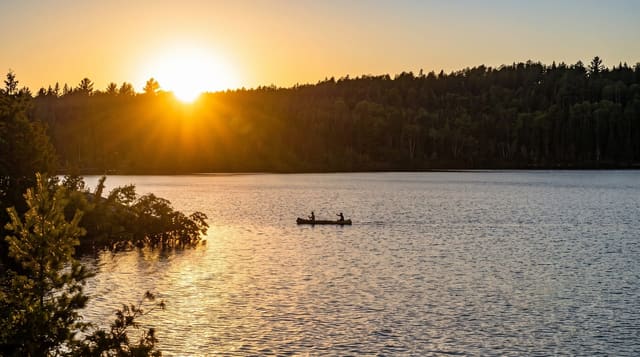
Porcupine Mountains
The largest old-growth hardwood forest between the Rockies and the Atlantic, saved in 1945 to keep the loggers out.
Updated 30 August 2026
The state bought this land in 1945 specifically because it held the last substantial stand of uncut northern hardwood in the region and logging was about to take it - around 14,000 hectares of old growth survives, sugar maple, hemlock and yellow birch, the largest such tract between the Rocky Mountains and the Atlantic coast. Lake of the Clouds sits in a valley between two escarpments and the overlook above it is reached by a short walk from the road, which is why it is the image of the park. Copper was mined here in the 1800s and the Nonesuch mine ruins remain. Around a hundred and forty kilometres of trail cross the park, with rustic cabins bookable in the backcountry.
What you'll find
- The largest old-growth hardwood tract in the east - about 14,000 hectares.
- Lake of the Clouds - the overlook a short walk from the road.
- Nonesuch mine ruins - from the copper era.
- Backcountry cabins - bookable along the trail network.
When to go
June to October; colour peaks in early October. A full day or several.
What to expect
Black flies and mosquitoes in June are severe. Trails are rooted, muddy and slower than distances suggest. Cabins book out months ahead. It is a long drive to reach - this is the far west of the Upper Peninsula.
Nearby
Lake Superior is at the northern boundary; Ontonagon is east.
Key facts
Source: Wikidata, item Q3322342, read on 18 October 2026.
What to pack for Porcupine Mountains
Chosen from what this place is for. Tap a kit for the full checklist.
- Broken-in walking shoes or boots - Grip and ankle support matter more than looks; never hike in brand-new boots. Find on Amazon
- Layers + a waterproof shell - Mountain weather turns fast; a packable rain jacket saves the day. Find on Amazon
- Daypack with rain cover - 20-30 litres holds water, snacks, layers and a first-aid kit. Find on Amazon
- Offline maps + a power bank - Download the trail before you lose signal; carry backup charge. Find on Amazon
Some links on this page are Amazon affiliate links - if you buy through them we may earn a small commission at no extra cost to you.
All packing kitsPlan your trip
Where to start if Porcupine Mountains is going on the list.
Booking links on this page are affiliate links - if you book through them we may earn a small commission at no extra cost to you. It never changes what we write about a place.
Opening times, ticket prices and seasonal closures change - check the official source before you go: official site.