Kodiak Island
Alaska's largest island, home to a brown bear subspecies isolated for twelve thousand years and grown to the largest on earth.
Updated 30 August 2026
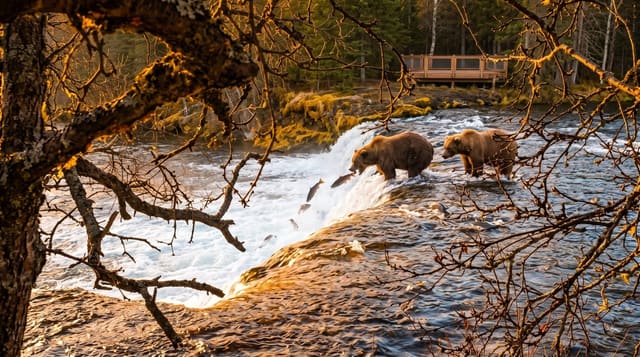
Kodiak is the largest island in Alaska and the second largest in the United States, and its brown bears have been genetically isolated from mainland populations since the last glaciation - roughly twelve thousand years - which combined with a rich salmon supply has produced the largest bears on earth, with big males reaching six hundred kilograms or more. Around three and a half thousand live on the archipelago. Kodiak National Wildlife Refuge covers about two thirds of the island and is roadless; access is by floatplane or boat, and viewing is done with guides. The island is also a major commercial fishing port and was the site of Russian colonial settlement from 1784. Rain and fog cancel flights routinely - it is called the Emerald Isle for a reason.
Highlights
- The largest brown bears on earth - isolated for twelve thousand years.
- Around three and a half thousand bears - across the archipelago.
- A roadless refuge - two thirds of the island, floatplane access only.
- A working fishing port - and a Russian colonial history from 1784.
When to go
June to September; salmon runs concentrate bears in July and August. Several days.
Good to know
Weather cancels flights frequently and travellers get stranded for days. Bear viewing requires guides and costs a great deal. Rain is constant. The road system covers a small fraction of the island.
Nearby
Katmai is across Shelikof Strait; Homer is north-east.
Key facts
Source: Wikidata, item Q204387, read on 18 October 2026.
What to pack for Kodiak Island
Chosen from what this place is for. Tap a kit for the full checklist.
- Travel rod + reel - A packable multi-piece rod fits in a case and covers most holiday fishing. Find on Amazon
- Reef-safe sunscreen - High SPF that will not bleach the coral you are swimming over. Find on Amazon
- Binoculars - The single best wildlife tool - even a compact pair transforms a sighting. Find on Amazon
- A small tackle selection - Hooks, weights, line and a few lures or flies suited to local waters. Find on Amazon
Some links on this page are Amazon affiliate links - if you buy through them we may earn a small commission at no extra cost to you.
All packing kitsPlan your trip
Where to start if Kodiak Island is going on the list.
Booking links on this page are affiliate links - if you book through them we may earn a small commission at no extra cost to you. It never changes what we write about a place.
Opening times, ticket prices and seasonal closures change - check the official source before you go: official site.