Ithaca
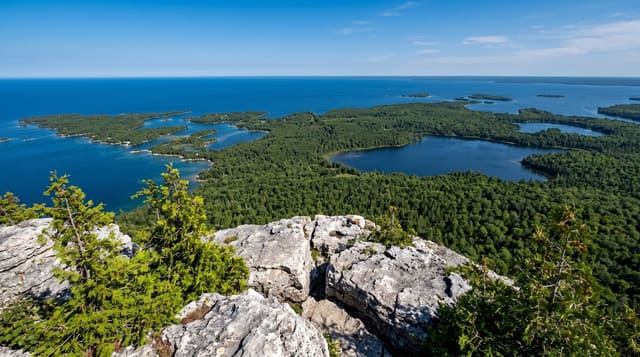
The island Homer gave Odysseus, two mountain masses joined by a narrow neck, with deep bays and almost no development.
Updated 19 October 2026

AI illustration
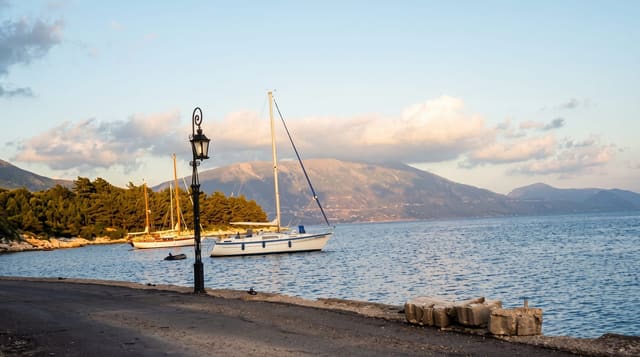
Ithaca is small, about 96 square kilometres, and shaped like a butterfly: two hilly halves joined by an isthmus a few hundred metres wide at Aetos. The capital, Vathy, sits at the end of one of the deepest natural harbours in the Mediterranean, a long inlet ringed by pastel houses rebuilt after the 1953 earthquake. Homeric associations are everywhere and archaeologically uncertain: the Cave of the Nymphs above Dexa bay, the Arethousa spring reached by a long cliff path, the School of Homer excavations in the north near Stavros, where a Mycenaean site has produced tantalising finds. The northern villages of Kioni and Frikes are small harbours of yachts and tavernas, and Anogi in the hills has a Byzantine church and standing stones.
History
The island has been inhabited since the 4th millennium BCE and in the Mycenaean period may have been the capital of a small kingdom, the realm Homer gives to Odysseus. The Romans took it in the 2nd century BCE, it later belonged to Byzantium and was ruled by the Normans in the 13th century, and under the Treaty of Campo Formio of 1797 it passed to France; a Russian and Ottoman force under Fyodor Ushakov and Kadir Bey took it in 1798, and it joined the Septinsular Republic (Wikipedia, Ithaca (island)).
What you'll find
- Vathy harbour - a deep inlet with the pastel-rebuilt capital around it.
- The Homeric sites - the Nymphs' cave, Arethousa spring and Stavros excavations.
- Kioni and Frikes - small northern harbours with yachts and tavernas.
- The isthmus at Aetos - the narrow neck with sea on both sides.
When to go
May, June and September for warm sea, open tavernas and quiet roads; August brings Greek and yachting visitors and rooms are scarce. Winter ferries reduce and many places close.
Before you go
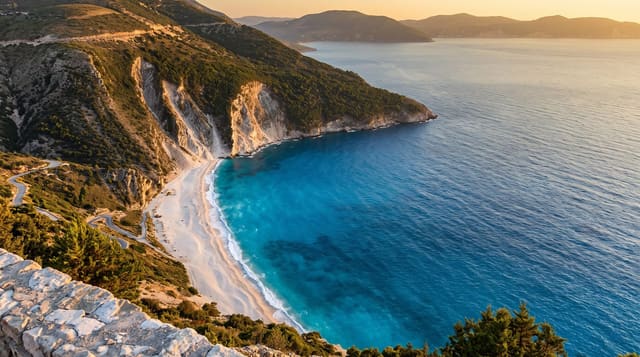
Beaches are pebble and small, and the island has no big resorts, sandy strands or nightlife, which is precisely what its regulars value. A car or scooter is needed. The Homeric sites are archaeologically ambiguous and visually slight.
Nearby
Kefalonia lies across the strait at Sami; Lefkada and the mainland ports are north.
Key facts
Source: Wikidata, item Q187471, read on 18 October 2026.
What to pack for Ithaca
Chosen from what this place is for. Tap a kit for the full checklist.
- Reef-safe sunscreen - High SPF that will not bleach the coral you are swimming over. Find on Amazon
- Head torch + spare batteries - Hands-free light is essential; caves are truly dark. Find on Amazon
- Quick-dry towel - A microfibre towel packs small and dries in minutes. Find on Amazon
- Grippy closed shoes - Cave floors are wet, muddy and slick with formations. Find on Amazon
Some links on this page are Amazon affiliate links - if you buy through them we may earn a small commission at no extra cost to you.
All packing kitsPlan your trip
Where to start if Ithaca is going on the list.
Booking links on this page are affiliate links - if you book through them we may earn a small commission at no extra cost to you. It never changes what we write about a place.
Opening times, ticket prices and seasonal closures change - check the official source before you go: official site.