Westminster Abbey
The coronation church of England - a soaring Gothic abbey where monarchs are crowned, married and buried, resting place of kings, poets and scientists, a UNESCO site.
Updated 18 October 2026
AI illustration
UNESCO World Heritage
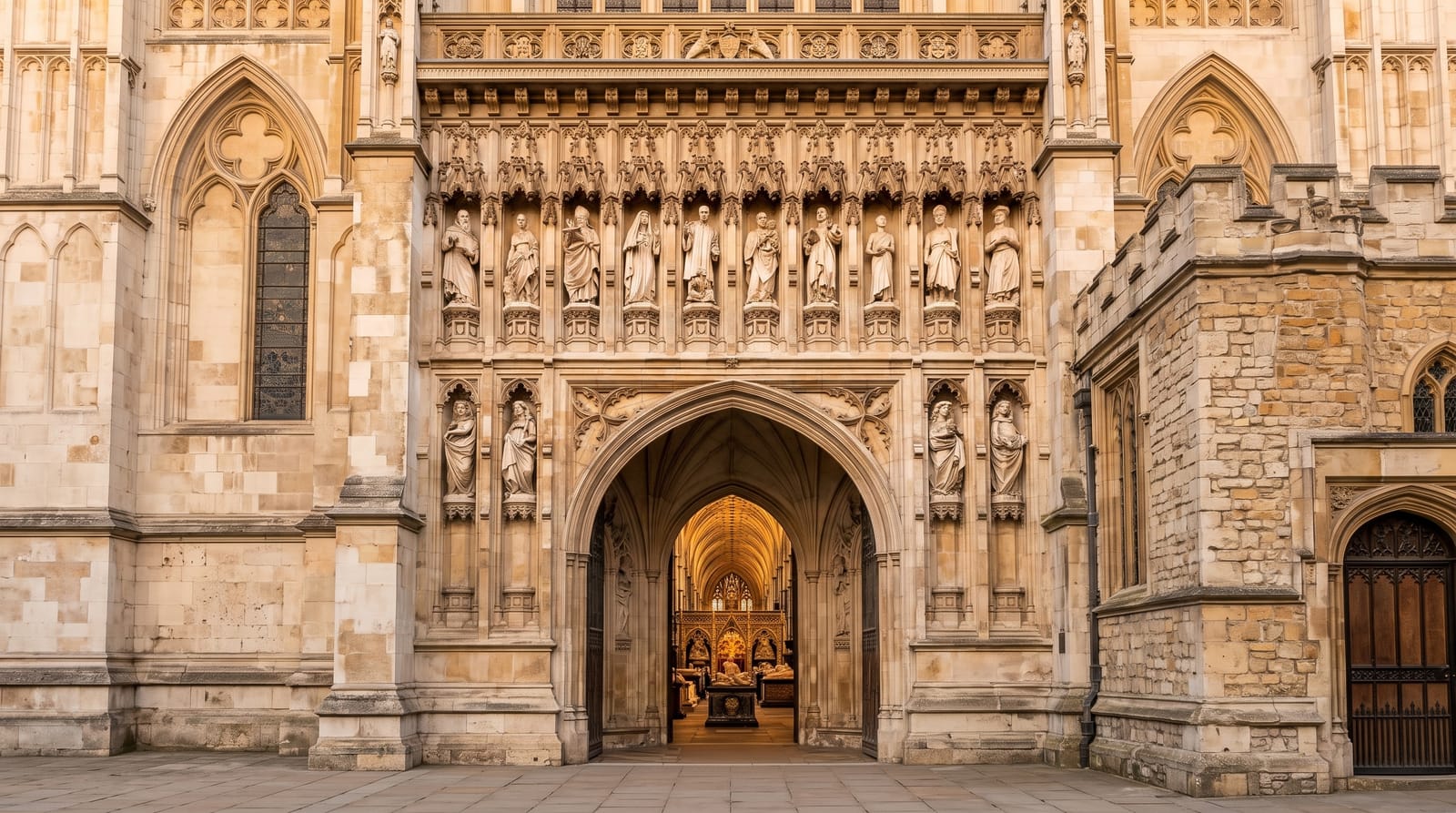
Westminster Abbey is a soaring Gothic masterpiece beside the Houses of Parliament, the coronation church of English and British monarchs since 1066, with the coronations of 40 monarchs held here from William the Conqueror to Charles III, and many married and buried. A UNESCO site, it is a national shrine crowded with the tombs and memorials of kings and queens, poets in Poets' Corner, statesmen and scientists including Newton and Darwin, a thousand years of history under one roof.
History
Legends credit its founding to King Sæberht of Essex or a vision of Saint Peter seen by a Thames fisherman, but the abbey is generally dated to about 959, when Dunstan and King Edgar settled Benedictine monks on Thorney Island. Between 1042 and 1052 Edward the Confessor began rebuilding it as his burial church, the first church in England on a cruciform plan, consecrated on 28 December 1065, a week before his death, and William the Conqueror's is the first documented coronation here. Henry III began the present church in 1245, the monastery was dissolved in 1559 and Elizabeth I made it a royal peculiar, answerable to the sovereign, and since 1066 it has seen the coronations of 40 monarchs; with the Palace of Westminster and St Margaret's Church it became a World Heritage Site in 1987 (Wikipedia, Westminster Abbey).
The main sights
- The coronation setting - the church where monarchs are crowned.
- Poets' Corner - the memorials to the great writers of England.
- The royal tombs - the resting places of kings and queens.
- The Lady Chapel - the fan-vaulted chapel of Henry VII.
When to go
Year-round; a fully indoor sight. It closes to visitors on Sundays and for services and special events, so check ahead and book a timed ticket; go early to avoid the biggest crowds.
What to expect
It is a working church, so it closes to sightseers on Sundays and for services and state events; check before going. It is busy and ticketed, and photography is often restricted inside. It is densely packed with tombs and memorials, rewarding an audio guide to make sense of it all.
Nearby
The Houses of Parliament and Big Ben are next door; St James's Park and Buckingham Palace are a walk away.
Key facts
Source: Wikidata, item Q5933, read on 18 October 2026.
What to pack for Westminster Abbey
Chosen from what this place is for. Tap a kit for the full checklist.
- Comfortable walking shoes - Sightseeing means kilometres of pavement and cobbles daily. Find on Amazon
- Modest clothing - Shoulders and knees covered - the single most common requirement. Find on Amazon
- A slim anti-theft daypack - Zips that close properly; keep it in front in crowds and on transit. Find on Amazon
- A scarf or shawl - To cover the head or shoulders on entry; women especially at mosques. Find on Amazon
Some links on this page are Amazon affiliate links - if you buy through them we may earn a small commission at no extra cost to you.
All packing kitsPlan your trip
Where to start if Westminster Abbey is going on the list.
Booking links on this page are affiliate links - if you book through them we may earn a small commission at no extra cost to you. It never changes what we write about a place.
Opening times, ticket prices and seasonal closures change - check the official source before you go: official site.