Norwich Cathedral
A Norman cathedral with the second-tallest spire in England and roof bosses carrying more than a thousand carved scenes.
Updated 12 October 2026
AI illustration
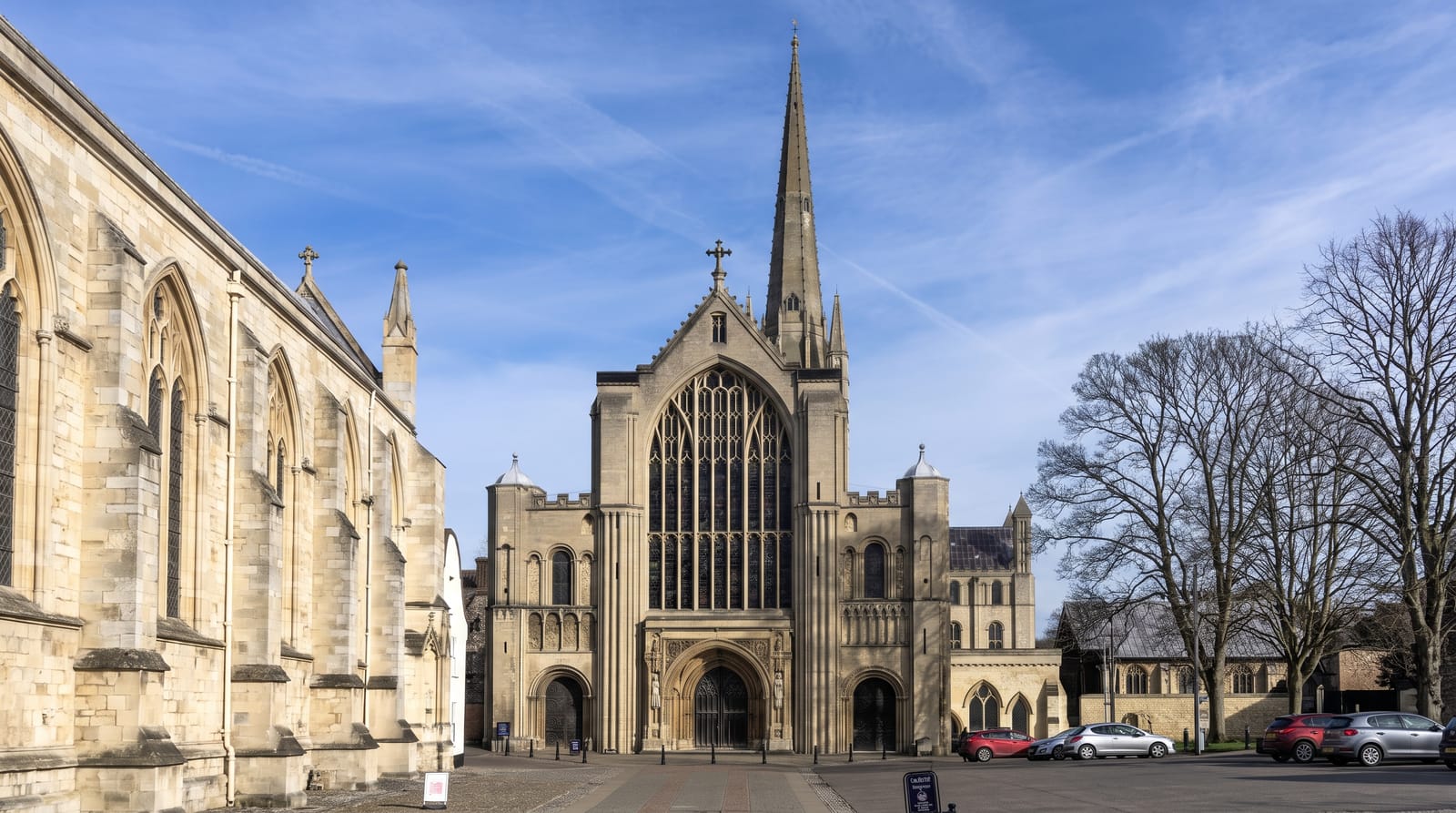
Begun in 1096 under Bishop Herbert de Losinga using Caen limestone shipped across the Channel and up the Wensum, it is one of the most complete Norman buildings in England, with the original apse and ambulatory intact. The spire, rebuilt in 1480 after lightning, reaches 96 metres and is the second-tallest in the country after Salisbury. The vaults hold over a thousand carved and painted roof bosses, the largest such set anywhere, running the biblical narrative from creation onward; they sit fifteen metres up and are best seen with the mirror trolleys provided. The cloister, built between 1297 and 1430, is the largest monastic cloister in England. Peregrines nest on the spire with a live camera feed, and Edith Cavell, the nurse executed in 1915, is buried outside the south transept.
The main sights
- The roof bosses - over a thousand carved scenes, viewed with floor mirrors.
- The Norman apse - the original 1096 east end, largely unaltered.
- The 96-metre spire - second-tallest in England, rebuilt in 1480.
- The cloister - England's largest monastic cloister, finished in 1430.
When to go
Year-round; entry is free and the cathedral opens daily around services. Peregrines are on the spire from spring, with a watchpoint in the close. Seasonal art installations occasionally fill the nave.
Practical notes
The bosses are high and hard to see properly without the mirrors, and the light in the vaults is dim on grey days. Services close areas at short notice. Tower access is not generally available.
Nearby
Norwich market and the castle are a short walk; the Broads begin just east.
Key facts
Source: Wikidata, item Q768692, read on 18 October 2026.
What to pack for Norwich Cathedral
Chosen from what this place is for. Tap a kit for the full checklist.
- Comfortable walking shoes - Sightseeing means kilometres of pavement and cobbles daily. Find on Amazon
- Modest clothing - Shoulders and knees covered - the single most common requirement. Find on Amazon
- A slim anti-theft daypack - Zips that close properly; keep it in front in crowds and on transit. Find on Amazon
- A scarf or shawl - To cover the head or shoulders on entry; women especially at mosques. Find on Amazon
Some links on this page are Amazon affiliate links - if you buy through them we may earn a small commission at no extra cost to you.
All packing kitsPlan your trip
Where to start if Norwich Cathedral is going on the list.
Booking links on this page are affiliate links - if you book through them we may earn a small commission at no extra cost to you. It never changes what we write about a place.
Opening times, ticket prices and seasonal closures change - check the official source before you go: official site.