National Museum of Scotland
A free museum joining a Victorian iron-and-glass hall to a modern sandstone block, holding Dolly the sheep and the Lewis chessmen.
Updated 4 September 2026
AI illustration
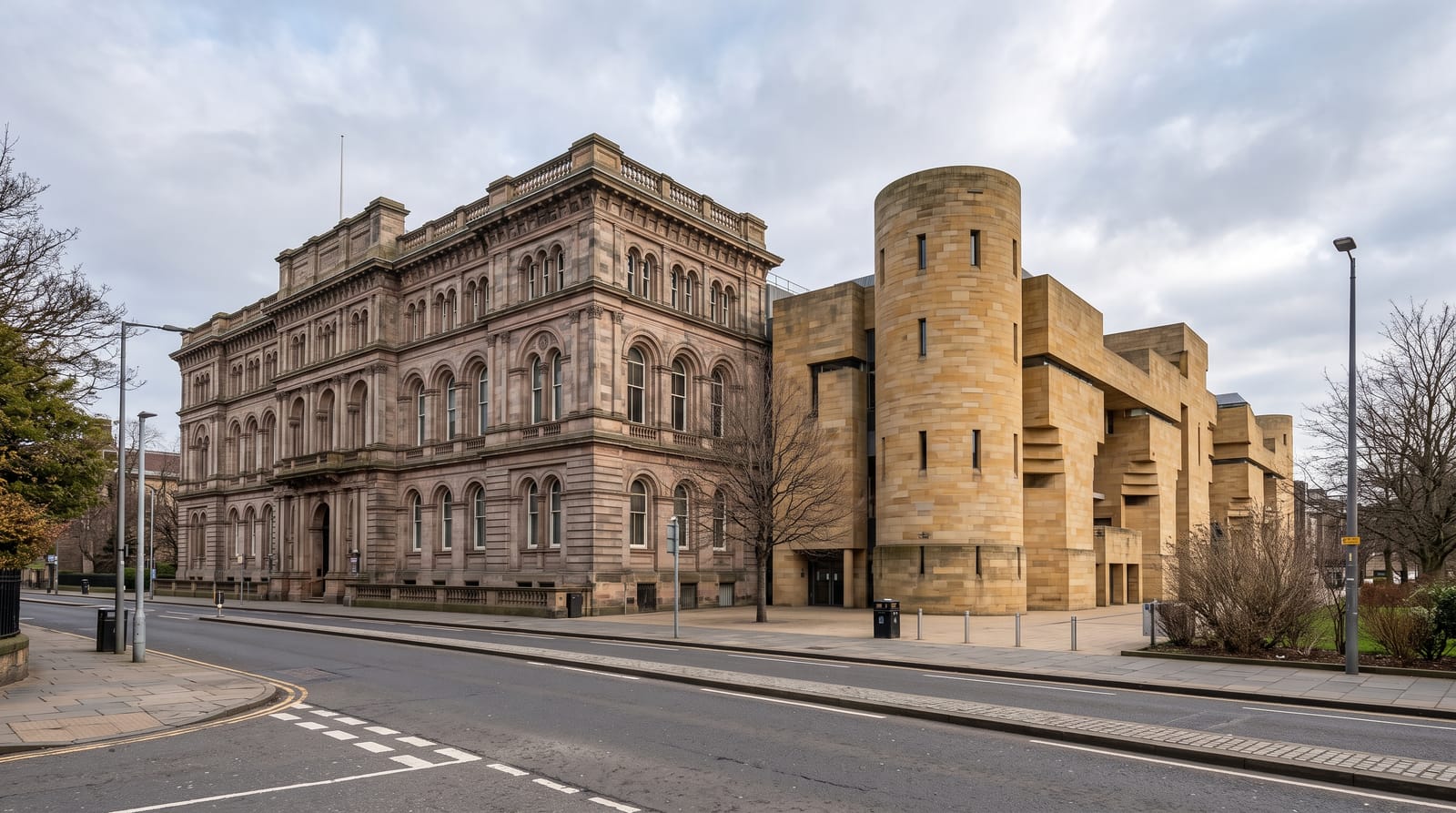
The museum is two buildings joined: the Victorian Grand Gallery of 1866, a hall of cast iron and glass on the model of the Crystal Palace, filled with light and hung with objects on several tiers, and a 1998 sandstone extension for the Scottish collections that steps up in a tower with a roof terrace. The collections cover Scottish history, natural history, science and world cultures. Dolly the sheep, the first mammal cloned from an adult cell, born in 1996 near Edinburgh, is preserved and displayed here. Eleven of the Lewis chessmen, twelfth-century walrus ivory pieces found on Lewis in 1831, are in the Scottish galleries with the rest in London. The Millennium Clock, a mechanical sculpture of figures and gears, performs on the hour. Entry is free.
What you'll find
- Dolly the sheep - the first mammal cloned from an adult cell, preserved.
- The Lewis chessmen - eleven of the twelfth-century walrus ivory pieces.
- The Grand Gallery - an 1866 iron and glass hall of tiered displays.
- The roof terrace - a free view over the Old Town from the 1998 tower.
When to go
Year-round; free and open daily, busiest on wet days and during the August festivals. The roof terrace closes in high wind. Special exhibitions are ticketed and book ahead.
What to expect
It is very large and cannot be covered in one visit. The layout across two joined buildings is confusing and people lose their bearings. School holidays and festival season fill the Grand Gallery with noise.
Nearby
Greyfriars Kirkyard is across the street; the Royal Mile and the castle lie north.
Key facts
Source: Wikidata, item Q1633842, read on 18 October 2026.
What to pack for National Museum of Scotland
Chosen from what this place is for. Tap a kit for the full checklist.
- Comfortable walking shoes - Sightseeing means kilometres of pavement and cobbles daily. Find on Amazon
- A slim anti-theft daypack - Zips that close properly; keep it in front in crowds and on transit. Find on Amazon
- A refillable water bottle - Many cities have public fountains; save money and plastic. Find on Amazon
- A light layer + compact umbrella - For museum air-con and a sudden shower. Find on Amazon
Some links on this page are Amazon affiliate links - if you buy through them we may earn a small commission at no extra cost to you.
All packing kitsPlan your trip
Where to start if National Museum of Scotland is going on the list.
Booking links on this page are affiliate links - if you book through them we may earn a small commission at no extra cost to you. It never changes what we write about a place.
Opening times, ticket prices and seasonal closures change - check the official source before you go: official site.