Melrose Abbey
A Border abbey with a bagpipe-playing pig carved on its roofline, and a lead casket of a heart buried in the chapter house.
Updated 20 October 2026
AI illustration
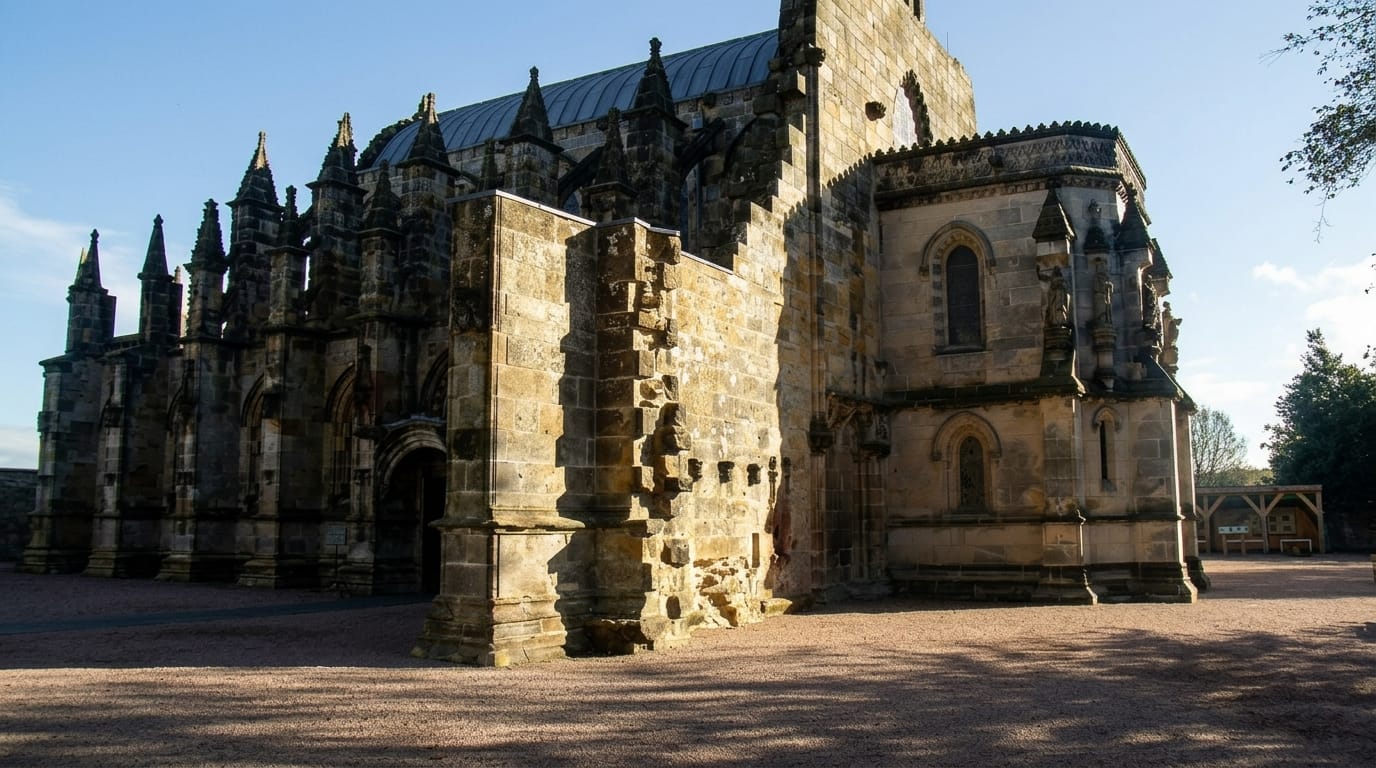
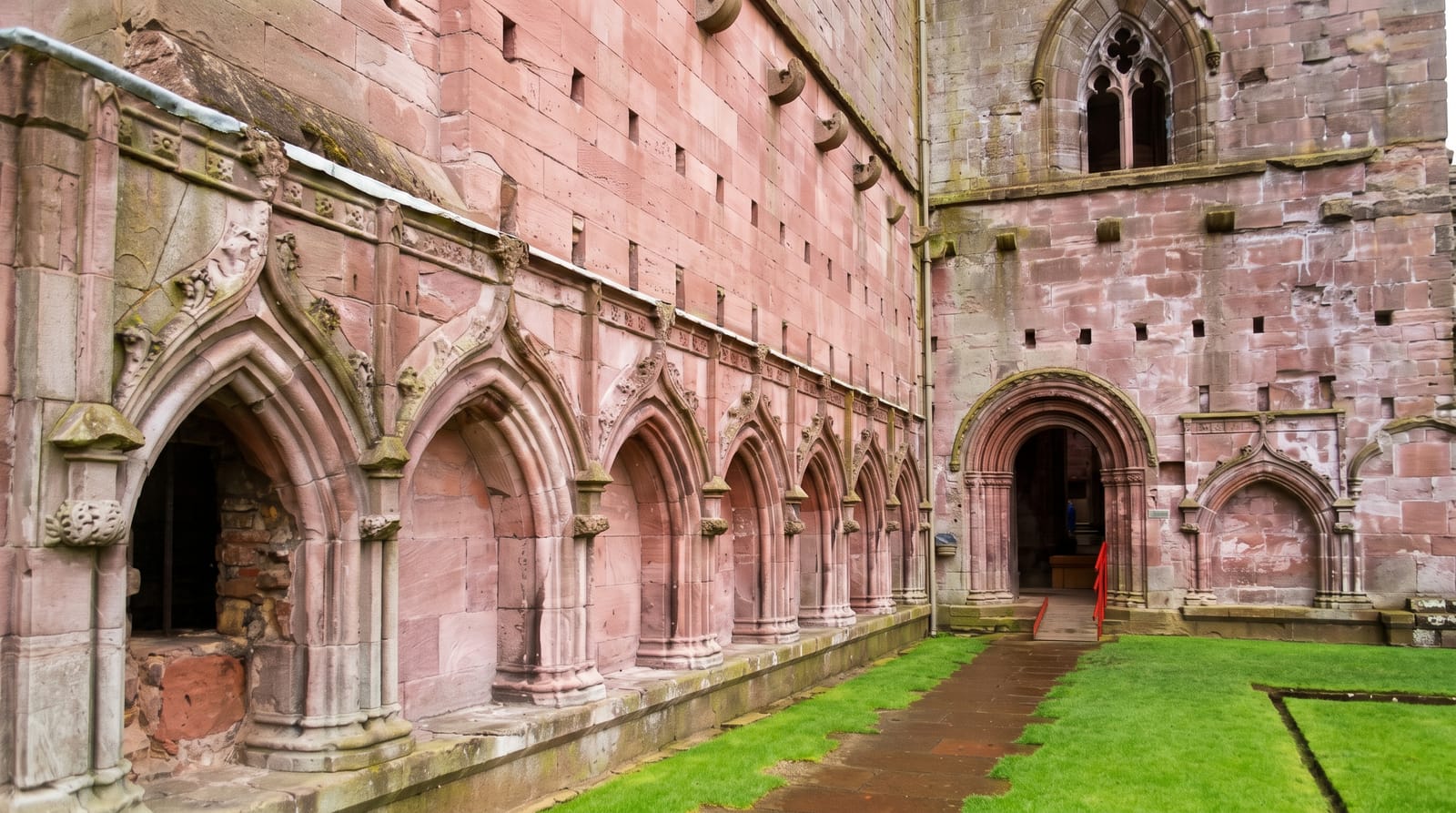
Founded in 1136 as the first Cistercian house in Scotland, Melrose was rebuilt repeatedly and the surviving fabric is largely late fourteenth and fifteenth century, in a French-influenced Gothic that is unusually elaborate for the Borders. The stone carving is the reason to come: gargoyles, saints, plants and a small figure of a pig playing the bagpipes, set high on the roofline, which has become the abbey's emblem. In 1921 a lead casket containing an embalmed heart was excavated from the chapter house, reburied, and re-excavated in 1998; it is generally held to be the heart of Robert the Bruce, which he asked to be taken on crusade and which was brought back. The site is exposed and roofless, with the presbytery vault the main surviving covered space. Melrose town sits immediately around it.
Highlights
- The bagpipe-playing pig - a carved figure high on the roofline.
- The elaborate carving - gargoyles, foliage and figures unusual for the Borders.
- The heart burial - the chapter house site marked where the casket was found.
- The presbytery vault - the main surviving roofed section of the church.
When to go
April to October for full opening; winter hours are shorter and parts close. Binoculars help considerably for the high carvings, which are hard to pick out with the naked eye.
What to expect
The abbey is roofless and offers no shelter. The best carvings are high up and easy to miss without magnification. The nave is largely gone, so the layout takes some reading.
Nearby
Abbotsford is a short drive; Dryburgh and Jedburgh abbeys are within the same circuit.
Key facts
Source: Wikidata, item Q1919732, read on 18 October 2026.
What to pack for Melrose Abbey
Chosen from what this place is for. Tap a kit for the full checklist.
- Comfortable walking shoes - Sightseeing means kilometres of pavement and cobbles daily. Find on Amazon
- A slim anti-theft daypack - Zips that close properly; keep it in front in crowds and on transit. Find on Amazon
- A refillable water bottle - Many cities have public fountains; save money and plastic. Find on Amazon
- A light layer + compact umbrella - For museum air-con and a sudden shower. Find on Amazon
Some links on this page are Amazon affiliate links - if you buy through them we may earn a small commission at no extra cost to you.
All packing kitsPlan your trip
Where to start if Melrose Abbey is going on the list.
Booking links on this page are affiliate links - if you book through them we may earn a small commission at no extra cost to you. It never changes what we write about a place.
Opening times, ticket prices and seasonal closures change - check the official source before you go: official site.