Lindisfarne
A tidal island reached by a causeway that floods twice a day, where the Lindisfarne Gospels were made around 700.
Updated 20 October 2026

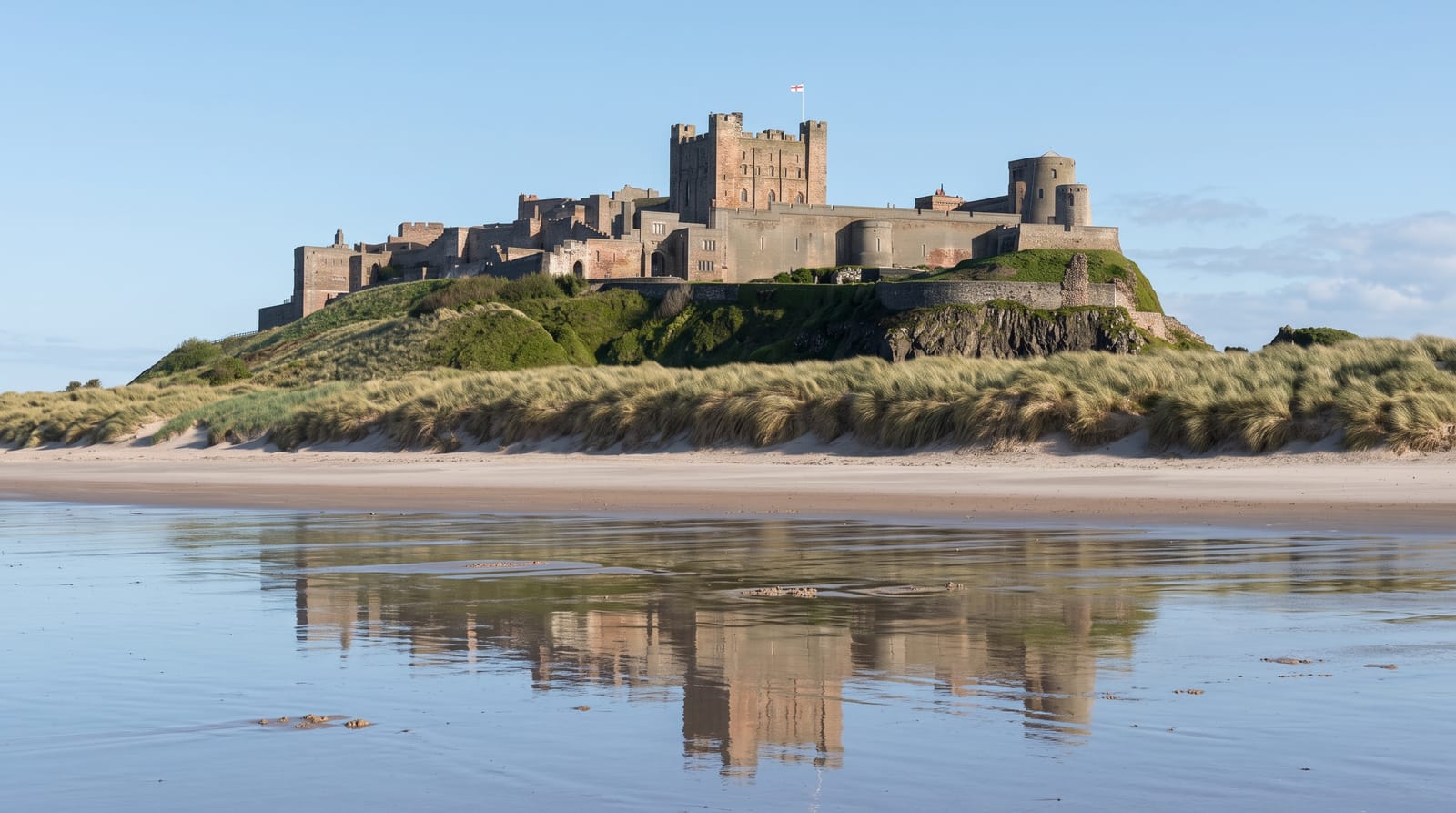
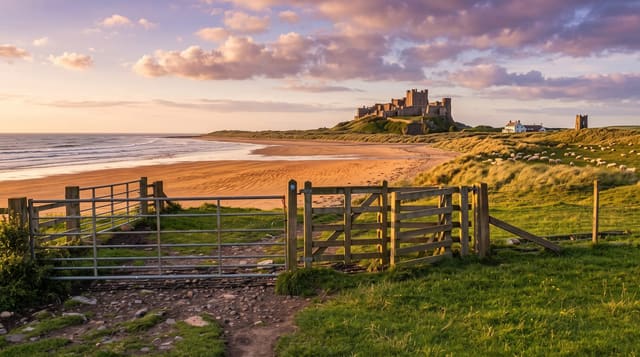
AI illustration
Aidan came from Iona around 634 and founded a monastery here that became the centre of Christianity in northern England; Cuthbert was its most famous bishop, and the Lindisfarne Gospels, an illuminated manuscript of extraordinary quality, were made on the island around 700 and are now in the British Library. A Viking raid in 793 on this monastery is the event usually taken as the start of the Viking age in England. The priory ruins are Norman, built after the community returned. Lindisfarne Castle, a small Tudor fort on a rock, was converted into a holiday house by Edwin Lutyens in 1901, with a walled garden designed by Gertrude Jekyll. The causeway floods twice daily and refuge boxes stand on stilts for drivers who ignore the tide tables.
Highlights
- The priory ruins - Norman rebuilding on the site of Aidan's monastery.
- Lutyens' castle - a Tudor fort remade as an Edwardian house in 1901.
- The Jekyll garden - a small walled planting scheme north of the castle.
- The causeway - a road that floods twice a day, with stilted refuge boxes.
When to go
April to October for full opening of castle and priory; crossing times are dictated by the tide, not the clock, so the safe window shifts daily and must be checked before setting out. Winter brings pilgrims and heavy weather.
Practical notes
The crossing window can be as short as a few hours and cars are wrecked on the causeway every year by drivers who chance it. The Gospels are in London, not here. The island is small and gets very crowded in the middle of the safe window.
Nearby
Bamburgh lies south; Berwick-upon-Tweed is north.
Key facts
Source: Wikidata, item Q213804, read on 18 October 2026.
What to pack for Lindisfarne
Chosen from what this place is for. Tap a kit for the full checklist.
- Comfortable walking shoes - Sightseeing means kilometres of pavement and cobbles daily. Find on Amazon
- Modest clothing - Shoulders and knees covered - the single most common requirement. Find on Amazon
- A slim anti-theft daypack - Zips that close properly; keep it in front in crowds and on transit. Find on Amazon
- A scarf or shawl - To cover the head or shoulders on entry; women especially at mosques. Find on Amazon
Some links on this page are Amazon affiliate links - if you buy through them we may earn a small commission at no extra cost to you.
All packing kitsPlan your trip
Where to start if Lindisfarne is going on the list.
Booking links on this page are affiliate links - if you book through them we may earn a small commission at no extra cost to you. It never changes what we write about a place.
Opening times, ticket prices and seasonal closures change - check the official source before you go: official site.