Bibury
A Cotswold village whose row of former weavers' cottages, Arlington Row, appears inside every British passport.
Updated 4 September 2026

AI illustration
Arlington Row was built around 1380 as a monastic wool store and converted to weavers' cottages in the seventeenth century, when the cloth woven there was taken to Arlington Mill to be fulled; the row of steep-gabled stone houses along a lane above the water meadow is the single most photographed street in the Cotswolds and has been reproduced in the British passport. William Morris called Bibury the most beautiful village in England, a line the village has traded on since. Rack Isle, the marshy meadow in front of the row, took its name from the racks on which the cloth was stretched to dry and is now a wildfowl reserve. Bibury Trout Farm, working since 1902, is one of the oldest in the country.
What to look for
- Arlington Row - fourteenth-century wool store turned weavers' cottages.
- Rack Isle - the meadow where cloth was stretched, now a wildfowl reserve.
- The trout farm - a working hatchery running since 1902.
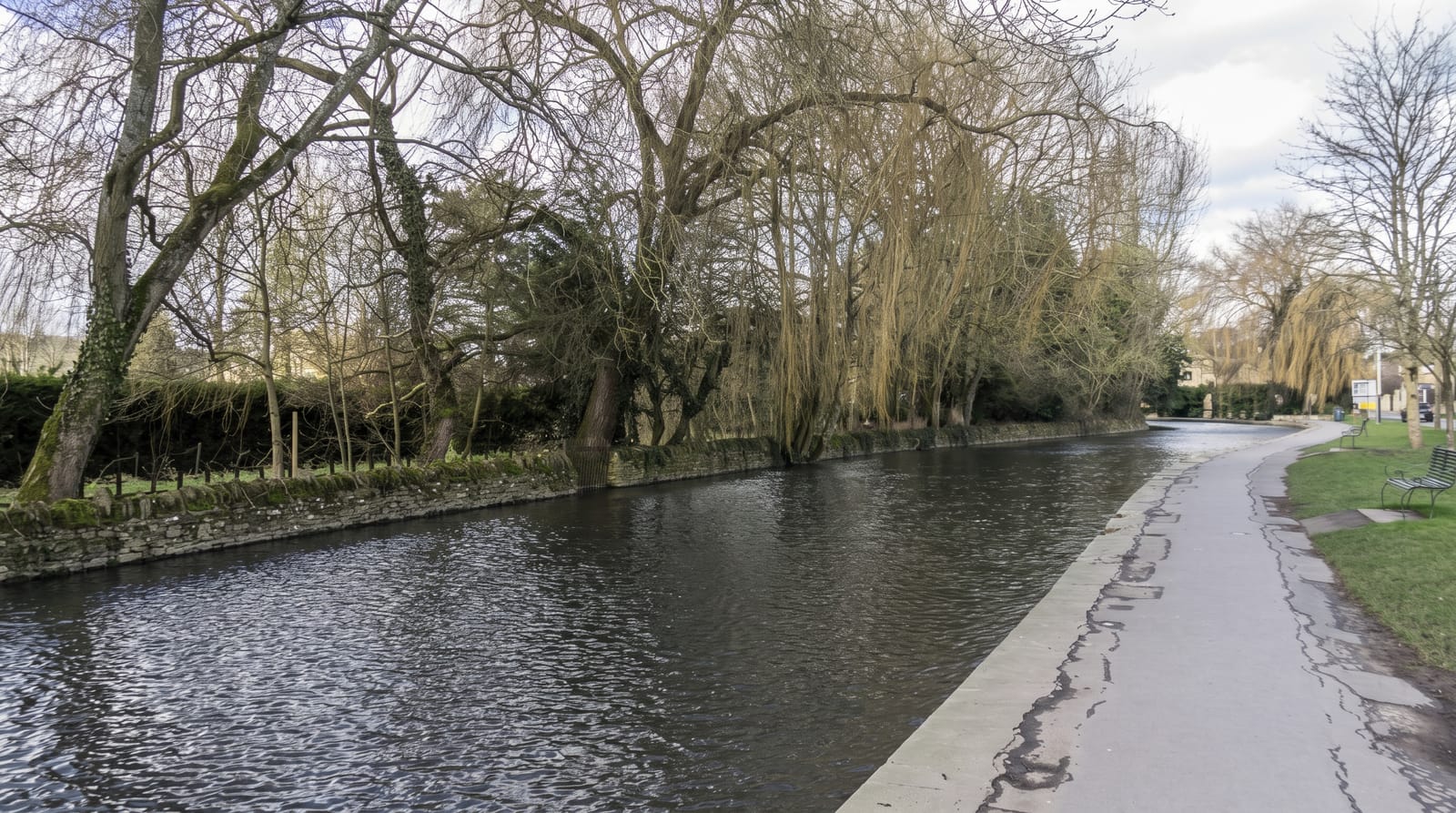
- The Coln - a clear chalk-fed stream running through the village.
When to go
April to October; early morning is the only realistic time to see Arlington Row without crowds. Autumn and winter weekdays are quiet and the stone looks better in low light.
Practical notes
Bibury is small and receives very large numbers of visitors, with coaches and cars filling narrow lanes; residents of Arlington Row live in the cottages and have had persistent problems with people photographing through windows. Parking is minimal and the village has asked visitors to use public transport.
Nearby
Cirencester lies southwest; Burford and the Coln valley villages are close.
Key facts
Source: Wikidata, item Q856722, read on 18 October 2026.
What to pack for Bibury
Chosen from what this place is for. Tap a kit for the full checklist.
- Comfortable walking shoes - Sightseeing means kilometres of pavement and cobbles daily. Find on Amazon
- A slim anti-theft daypack - Zips that close properly; keep it in front in crowds and on transit. Find on Amazon
- A refillable water bottle - Many cities have public fountains; save money and plastic. Find on Amazon
- A light layer + compact umbrella - For museum air-con and a sudden shower. Find on Amazon
Some links on this page are Amazon affiliate links - if you buy through them we may earn a small commission at no extra cost to you.
All packing kitsPlan your trip
Where to start if Bibury is going on the list.
Booking links on this page are affiliate links - if you book through them we may earn a small commission at no extra cost to you. It never changes what we write about a place.
Opening times, ticket prices and seasonal closures change - check the official source before you go: official site.