Hazar Nature Reserve
A Caspian coastal reserve protecting shallow bays used by wintering waterbirds.
Updated 21 October 2026
The Hazar reserve covers shallow bays and coastal flats on the southeastern Caspian south of Turkmenbashi, and it matters because those shallows hold very large numbers of wintering waterbirds: ducks, geese, flamingos, swans and waders that come down from the north when the northern Caspian freezes. It is a Ramsar site, and the reserve as a whole, including the Ogurjaly sanctuary, covers some 2,690 square kilometres. Caspian seals also use the area. The shore is bare and the reserve has almost no infrastructure. The reserve was established in the 1930s and has been monitored more or less continuously since, which makes its bird counts one of the longer runs of data on the Caspian.
What's there
- The wintering waterbirds - large concentrations of ducks, geese and flamingos.
- The shallow bays - the coastal flats the birds feed on.
- The Caspian seals - the animals using the waters off the reserve.
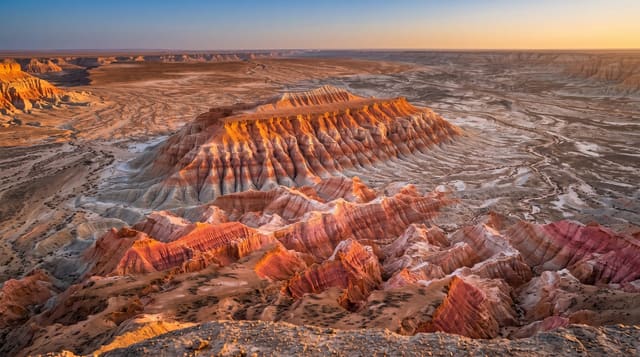
- The bare coast - desert running straight down to the sea.
When to go
November to March is the wintering season and the reason to come. Summer has far fewer birds and extreme heat. Permits take time to arrange.
Things to know
Permits are required and take arranging. There are no facilities, hides or marked routes. Caspian water levels have been falling and habitat is changing.
Nearby
Awaza is north, and Turkmenbashi is beyond it.
Key facts
Source: Wikidata, item Q4494644, read on 18 October 2026.
What to pack for Hazar Nature Reserve
Chosen from what this place is for. Tap a kit for the full checklist.
- Broken-in walking shoes or boots - Grip and ankle support matter more than looks; never hike in brand-new boots. Find on Amazon
- Loose, light, long clothing - Covering up beats bare skin in the desert - and locals dress this way for a reason. Find on Amazon
- Layers + a waterproof shell - Mountain weather turns fast; a packable rain jacket saves the day. Find on Amazon
- A wide-brim hat + sunglasses - Shade for your face and eyes where there is none overhead. Find on Amazon
Some links on this page are Amazon affiliate links - if you buy through them we may earn a small commission at no extra cost to you.
All packing kitsPlan your trip
Where to start if Hazar Nature Reserve is going on the list.
Booking links on this page are affiliate links - if you book through them we may earn a small commission at no extra cost to you. It never changes what we write about a place.
Opening times, ticket prices and seasonal closures change - check the official source before you go: official site.